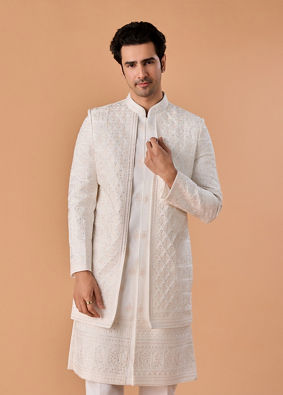
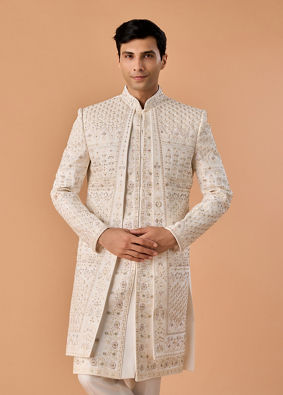
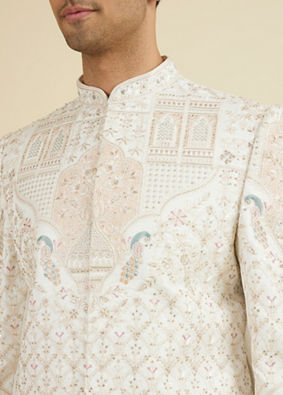
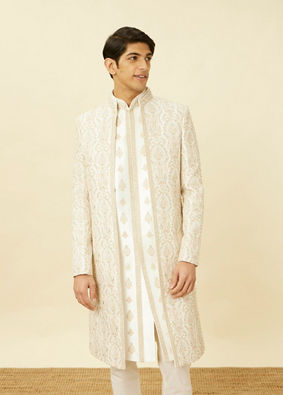
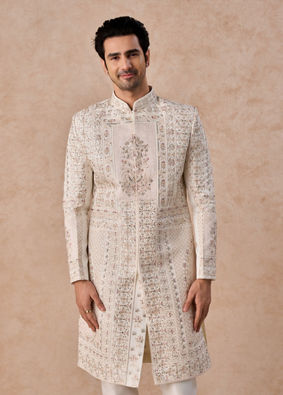
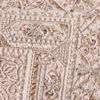
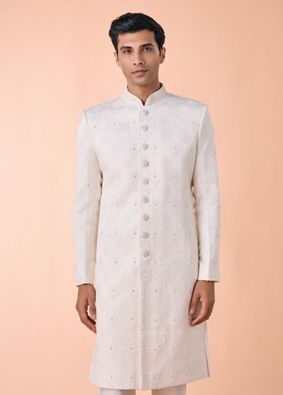
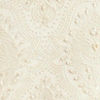
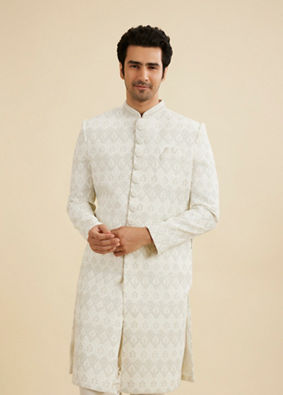
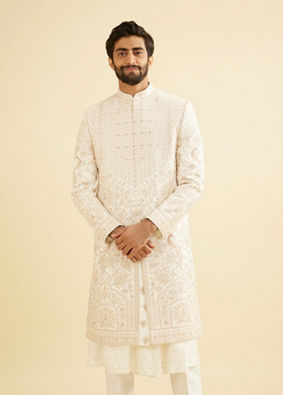
White sherwani for groom
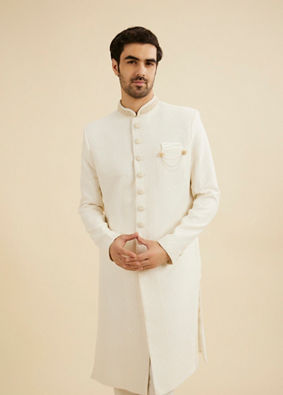
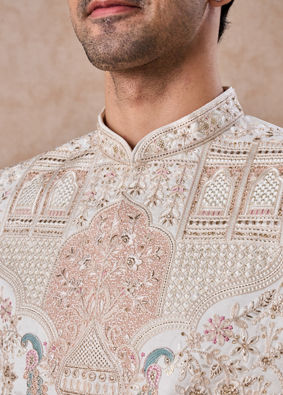
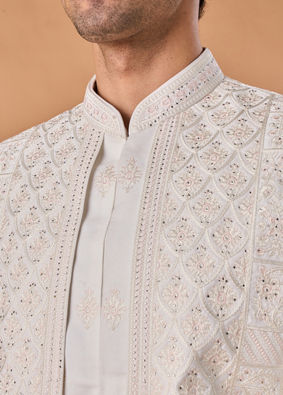
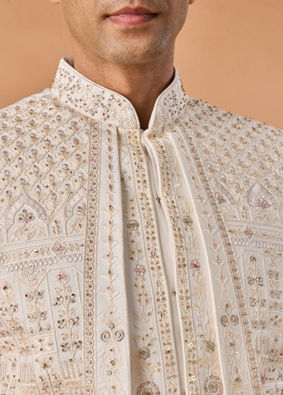
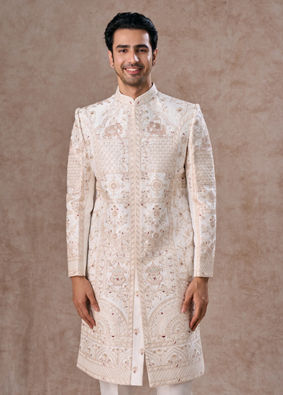
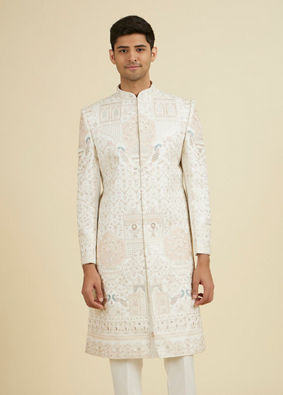
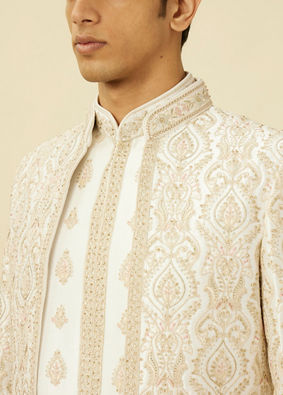
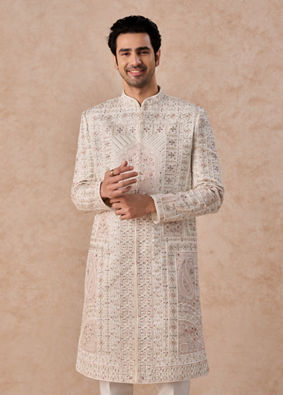
A white sherwani for groom is a long, structured jacket-style outfit, usually in white, warm white, or cream‑white tones, worn over a kurta with coordinated bottoms. It typically features a stand collar, front button placket, carefully placed embroidery or woven patterns, and a tailored fall that sits below the knee.
Manyavar’s sherwani for groom styles often come as sets with pants or churidar, and in many cases, the look is completed with dupattas, safas, malas, or brooches for a ready, aisle-to-stage outfit. Compared to regular occasionwear, the finishing and work on a sherwani for groom are more intricate, meant to mark you out as the one person the celebration revolves around.
Why this white sherwani for groom works right now
White sherwani has become a strong favourite because it feels fresh across different venue styles—open lawns, glass banquets, heritage hotels, and intimate home mandaps. White and warm white tones reflect décor beautifully, match floral setups, and sit well next to lehengas in reds, pastels, or metallics without clashing in photos.
Today’s wedding photos and reels are all about clean, well-lit visuals. It reads clearly on camera, helps jewellery and accessories stand out, and keeps the overall look timeless when you look back at the pictures years later. It also works well across seasons—you can style lighter fabrics for day functions and richer textures for cooler evenings.
Fabrics and feel
The fabric of a sherwani sets the tone for the entire look. Manyavar uses premium bases that hold embroidery well while remaining comfortable for long ceremonies. You’ll commonly find:
-
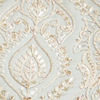
Art silk and brocade bases with self‑textured jaal or floral patterns, giving a soft sheen and rich depth to the sherwani.
-
Satin or satin-blend sherwanis with thread and sequin embroidery that pick up light beautifully for evening pheras and receptions.
-
Silk and silk‑blend fabrics with embroidered motifs that feel luxurious yet refined in warm white or cream tones.
Inside, these sherwanis are lined and structured so they sit neatly on the shoulders and chest without feeling too rigid. The idea is that you can handle rituals, sitting, standing, and greeting guests for hours while your sherwani maintains its shape.
Fits, silhouettes, and work
A good sherwani is defined by its fit and detailing. The silhouette is usually straight or slightly tapered, with enough ease for movement but enough structure to look sharp in every angle of a photograph. Common design features include:
-
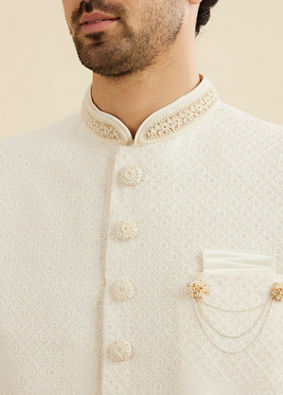
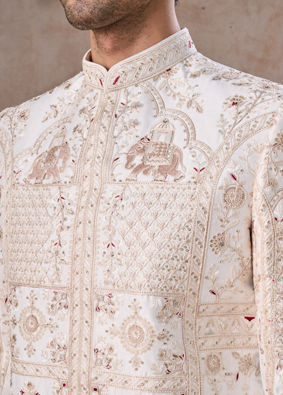
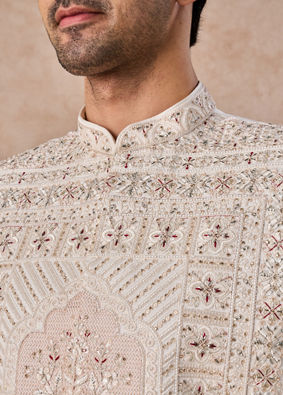
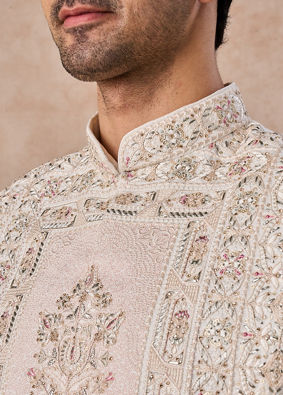
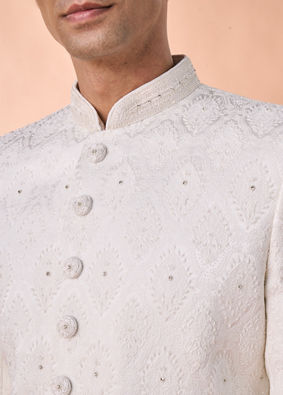
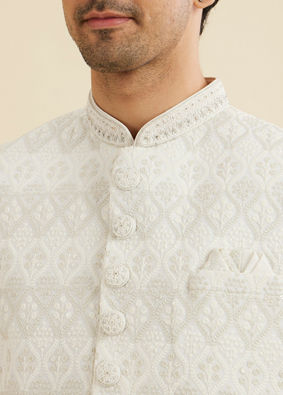
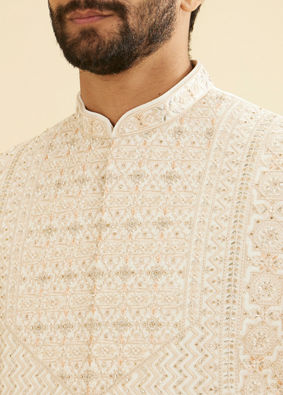
Stand (bandhgala) collars with embroidery or textured edges that frame the face nicely in close-up shots.
-
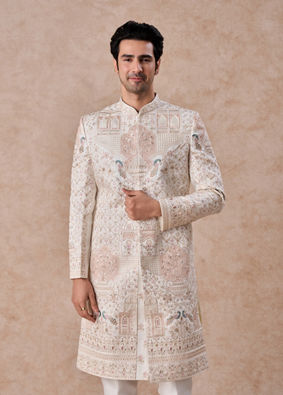
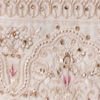
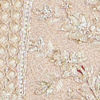
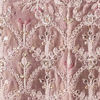
All‑over or jaal-patterned embroidery, self‑texture, or bel buti motifs that give the sherwani a rich, continuous surface interest.
-
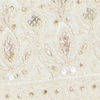
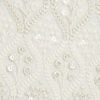
Rhinestone, thread, or sequinned work placed thoughtfully along the placket, collar, or body, creating sparkle under mandap lights without overwhelming the base.
Buttons, brooches, and pocket squares are often coordinated with the overall design, so the sherwani looks considered even before you add personal accessories.
Shades of white and how they read
Within “white sherwani for groom” there are several close shades, each with a slightly different personality. You’ll see:
-
Pristine white sherwanis that feel crisp and striking—great for cooler venues, evening functions, and strong contrast with colourful décor.
-
Warm white and cream‑white sherwani sets that feel softer and pair beautifully with gold jewellery, beiges, and champagne-toned lehengas.
-
Ivory and pearled white sherwani designs that sit in between, offering a subtle glow and working nicely with pastel bridal palettes.
Choosing between them often comes down to the time of day, your partner’s outfit, and how high‑contrast or blended you want the couple photos to appear.
Where it fits in the wedding
A sherwani is usually the hero outfit for one of your biggest functions, most often:
-
Main wedding ceremony and pheras, especially in day weddings where white pairs beautifully with marigolds, greens, and natural light.
-
Engagement or reception looks when you want an elegant, less traditional colour story but still very groom-forward.
-
Temple or intimate home ceremonies where a sherwani feels pure, refined, and respectful while still strongly bridal-party appropriate.
If your wedding has multiple functions, you might choose a more ornate sherwani for the main ceremony and a slightly lighter or different textured white or warm white sherwani for another key event.
Styling
Styling is where it really comes into its own. Small choices can completely change how the outfit lands.
Core elements to play with:
-
Bottoms: Pair your white sherwani with matching or slightly off‑white churidar or slim pants; dhoti or layered bottoms work if your décor and rituals lean more traditional.
-
Dupattas and stoles: A single jaal‑patterned or lightly worked dupatta draped over one shoulder or across the body instantly elevates the look. You can keep it tone‑on‑tone or bring in subtle colour.
-
Safa or pagdi: For many grooms, the safa is where they echo or complement the bridal outfit colours; a white sherwani gives you a clean base to do that.
Accessories to consider:
-
Mala or layered neckpieces in pearls, stones, or kundan to draw attention to the upper torso and match the formality of the event.
-
Brooches pinned at the chest or on the dupatta for a focal point that ties jewellery and outfit together.
-
Juti or mojaris in white, beige, gold, or soft metallics to complete the look head to toe without breaking the colour story of your sherwani
Because the base is white, you can let one accent—safa, dupatta, or jewellery—carry the stronger colour, keeping everything else relatively coordinated.
How the sherwani fits into your wardrobe
While it is usually bought for a specific milestone, it doesn’t have to be a single‑use piece. After the wedding, you can:
-
Rewear the sherwani for a sibling’s or close cousin’s big function by changing the safa colour, dupatta, and accessories.
-
Reuse the sherwani jacket with a different bottom and a lighter stole for anniversary celebrations or other high‑importance family events.
-
Keep it as your most formal outfit for future ceremonies, using simpler kurta sets or Indo‑western looks for smaller days on the calendar.
Planning with this in mind helps you choose a sherwani that feels both special for the wedding and flexible enough for a few important occasions ahead.
Frequently Asked Question (FAQs):
1. Is a white sherwani suitable for day or night weddings?
Yes, it works beautifully for both day and night; pristine white and ivory shine in daylight, while warm white and cream‑white with richer work look stunning under evening lights.
2. What fabrics are best in a white sherwani?
Art silk, brocade, satin, and silk‑blend bases are popular for a sherwani because they hold embroidery well and offer a refined sheen without feeling too heavy. Lighter blends are ideal for warmer venues, while denser weaves and velvets suit cooler weather.
3. How should a sherwani fit?
It should sit cleanly on the shoulders, follow a tailored but comfortable line through the chest and waist, and fall straight without pulling when you button it up. You should be able to sit cross‑legged for rituals without the fabric straining.
4. How can I style a white sherwani to match my partner’s outfit?
Use the neutral base of your sherwani and echo your partner’s colours through your safa, dupatta, mala, or pocket square. This keeps you coordinated in photos while letting each outfit stand out on its own.
5. How do I care for a white sherwani after the wedding?
Always dry clean your sherwani, especially when it has embroidery, sequins, or delicate fabrics like satin or brocade. Store it in a breathable garment cover, away from direct light, to preserve the colour and fabric for future occasions.
6. Why do some grooms choose a white sherwani over more traditional colours?
White symbolises purity and serenity and offers a calm, regal alternative to the more common cream, gold, or maroon sherwani — it also provides a neutral canvas that allows intricate embroidery to stand out clearly.
7. What accessories pair well with a white sherwani for a royal look?
Gold or beige accessories — a gold-toned safa, a beaded mala, and mojari with subtle gold embroidery — complement a white sherwani's regal, understated palette without overwhelming it.
Designer Groom Sherwani | Blue Sherwani For Groom | Off White Sherwani For Groom | Dark Pink Sherwani For Groom

 Filter