
STORIES BY MANYAVAR & MOHEY

Beyond Brother and Sister: The Many Bonds Celebrated on Raksha Bandhan
Date 07 Aug 2026 Reading time: 7-10 mins


Raksha Bandhan is traditionally associated with a sister tying a rakhi on her brother’s wrist. The ritual represents love, care, and a promise to stand by one another. But the relationships celebrated during the festival have never been limited to one simple format. In many families, cousins grow up as siblings, sisters become each other’s strongest support systems, and close friends are treated like family.
That is what keeps Raksha Bandhan feeling relevant. The festival has a familiar ritual, but the relationships behind it keep evolving. Protection is no longer understood as something that moves in only one direction. Brothers support sisters, sisters support brothers, and siblings show up for each other through changing stages of life.
Today, Raksha Bandhan can be a celebration of every relationship built on trust, affection, loyalty, and mutual support.
Sisters who stand by each other
Raksha Bandhan is often described in terms of the brother-sister relationship, but the bond between sisters can be just as strong. Sisters may share childhood memories, family responsibilities, personal advice, and a deep understanding that comes from growing up together.
For some sisters, Raksha Bandhan becomes a day to celebrate the person who has always been there — through school, career changes, marriage, parenthood, and everything in between. Their celebration may include exchanging rakhis, gifts, letters, or simply spending time together.
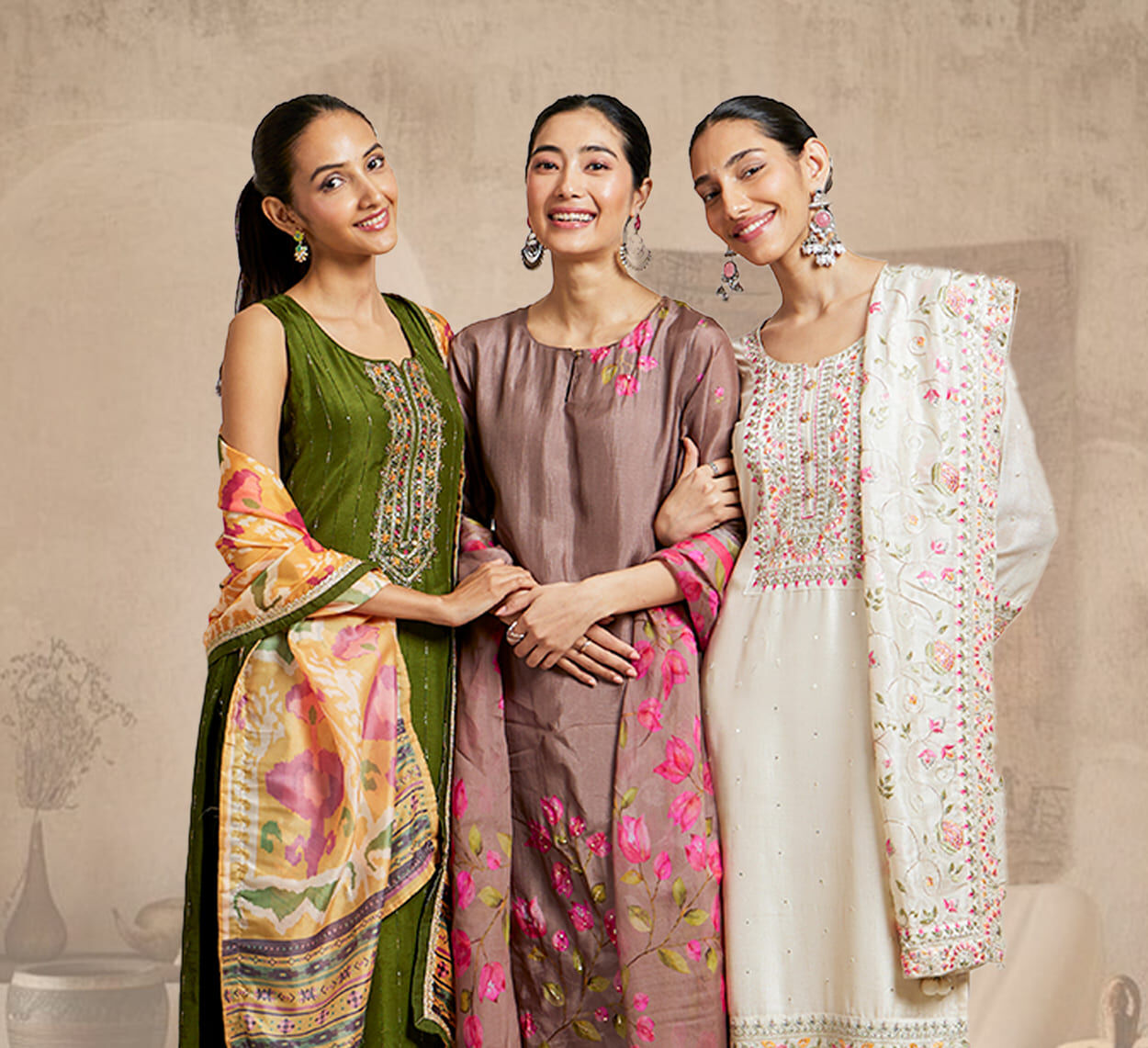
Dressing for a sister-to-sister celebration does not need to follow a traditional brother-sister format. Coordinated festive outfits can make the day feel special without making the siblings look identical. One sister may choose a Mohey saree, while another may choose a suit or a contemporary festive style in a complementary color. The visual connection can come from similar gold details, textures, or a shared palette.
Brothers and sisters: from rivalry to friendship
For many siblings, Raksha Bandhan brings together years of affection, arguments, teasing, and shared secrets. The relationship may have begun with childhood rivalry, but it often grows into one of the most dependable friendships in adult life.
The ceremony creates a moment to acknowledge that journey. The rakhi is tied, gifts are exchanged, and the siblings may laugh about old memories that nobody else in the family understands. These are often the moments that make the festival feel genuine.
For brothers, a festive Manyavar kurta can offer the right balance of tradition and contemporary style. A sister can coordinate with a Mohey outfit through color or detailing without wearing an identical look. For a more formal family gathering, a kurta jacket set can create a polished festive appearance.
Cousins who feel like siblings
In many Indian families, cousins are not distant relatives. They are childhood companions, holiday partners, classmates, confidants, and part of the same family routines. For cousins who have grown up together, Raksha Bandhan can feel just as meaningful as a celebration between biological siblings.
The festival may bring the entire cousin group together for a shared ceremony, family lunch, photographs, and playful gift exchanges. Older cousins may help organize the celebration, while younger ones bring energy and humor to the gathering.
Cousin groups can coordinate their outfits without following a strict dress code. Brothers may choose kurtas in different shades from the same color family, while sisters and cousins select complementary Mohey styles. For a large group photograph, a common palette such as ivory and gold, pastel tones, or jewel colors can create harmony without making everyone look the same.

Siblings-in-law and new family bonds
Raksha Bandhan can also mark relationships that develop after marriage. A brother’s wife may become part of the sibling circle, while a sister’s husband may build a new bond with her brothers and sisters. These relationships may begin formally, but over time they can grow into easy companionship, shared humor, and genuine affection.
In some communities, the Lumba Rakhi tradition recognizes the brother’s wife as part of the Raksha Bandhan relationship by tying a rakhi to her bangle. This reflects a wider understanding of family bonds and acknowledges the role of new members within the sibling circle.
Dressing can help make everyone feel included in the celebration. A brother may choose a classic Manyavar kurta, while his sister-in-law or other women in the family can explore Mohey’s Raksha Bandhan collection. Coordinated colors or similar festive details can create a shared family look without making the relationship feel staged.
Adopted and blended families
Not all families look the same, and Raksha Bandhan can hold meaning in blended, adopted, and step-family relationships too. Siblings may not share the same biological parents, but they can still share a home, childhood memories, responsibilities, and affection.
For these families, the festival can be an opportunity to celebrate the relationship they have built. A rakhi, gift, or family photograph becomes a way of acknowledging that belonging is created through care and time.
The clothing chosen for the occasion can reflect that warmth. Family members can dress in a shared palette or choose outfits that reflect their individual styles. What matters is that nobody feels like an outsider in the celebration.
Friends who feel like family
Some people have friends who have become siblings in every way that matters. They may have supported each other through college, work, relocation, difficult periods, or major milestones. For them, Raksha Bandhan can become a personal way to recognize that bond.
A rakhi exchanged between close friends does not have to replace the traditional sibling ritual. It can simply extend the festival’s central values — care, trust, support, and the promise of being present.
This kind of celebration may be smaller and more informal. Friends may meet for a meal, exchange thoughtful gifts, take photographs, or create their own ritual. Festive clothing can make the moment feel distinct from an everyday outing. A comfortable kurta for one friend and a complementary Mohey outfit for another can create a simple but meaningful visual connection.
From protection to mutual support
The meaning of Raksha Bandhan has expanded in a positive way. The traditional promise of protection can now be understood as mutual support. A brother may stand by his sister, but a sister may also guide, encourage, and protect her brother. Both siblings may support each other emotionally, financially, or through important life decisions.
This change does not take away from tradition. It gives the festival a more contemporary meaning. Relationships are strongest when care moves in both directions, and Raksha Bandhan can acknowledge that shared responsibility.
The gifts exchanged on the day can reflect this mutuality. Instead of treating a gift as a one-sided reward, siblings can choose presents based on what the other person genuinely enjoys or needs.
Dressing for the relationship
Festive dressing is one way to express the importance of the bond. The goal is not to dress for a generic occasion, but to choose a look that fits the relationship and the celebration plan.
For men, a Manyavar kurta-pajama set from can work for a traditional Raksha Bandhan outfit for home ceremony, while a contemporary Indo-Western style may suit a sibling lunch or evening gathering.
For women, Mohey offers options across traditional dresses, sarees, suits, and festive silhouettes, making it easy to find the perfect Raksha Bandhan dress for women. A sister may choose a saree for a family ceremony, while a cousin or sibling-in-law may prefer a suit that offers comfort and movement.
Coordinated dressing can be especially meaningful when it reflects the relationship:
- Brothers and sisters can share a color palette.
- Sisters can choose complementary festive styles.
- Cousins can coordinate for a group photograph.
- Siblings-in-law can echo one another’s detailing.
- Friends can choose similar tones without matching exactly.
Gifting with thought
A thoughtful gift begins with paying attention to the person receiving it. A brother who prefers classic dressing may appreciate a timeless kurta. A sister who enjoys festive fashion may like a saree, suit, or contemporary Mohey outfit. A cousin or sibling-in-law may value something versatile that can be worn for future family occasions.
A Manyavar gift card can also be considered when the recipient’s style is difficult to predict or when siblings live in different cities.
The most meaningful gifts often include a personal element: a handwritten note, a childhood photograph, a shared memory, or a message about what the relationship means. The outfit or gift is only one part of the gesture. The thought behind it is what gives it emotional value.
Celebrate the relationship
Raksha Bandhan may begin with a rakhi, but its meaning is much broader than a single ritual. It celebrates sisters who support each other, brothers and sisters who grow into friends, cousins who feel like siblings, new family members, blended families, and friends who become part of the family story.
Manyavar and Mohey can be part of these celebrations by offering festive styles for different relationships, personalities, and occasions. A kurta, saree, suit, gift, or coordinated look can help make the bond visible, but the relationship will always remain at the center.
Beyond brother and sister, Raksha Bandhan celebrates everyone who shows up, stands by us, and makes life feel a little more connected.

MADE IN INDIA

ASSURED QUALITY

SECURE PAYMENTS

