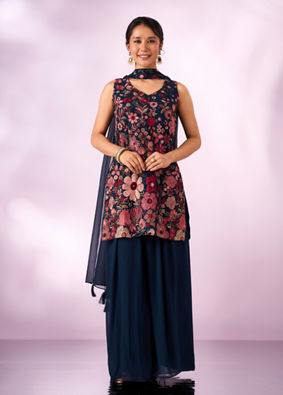
Why It Matters
The biggest advantage of a stitched suit is simple: the fit is already taken care of. Instead of planning a separate tailoring visit or worrying about whether the pieces will come together properly, you can wear the outfit right away and focus on styling it your way. That makes it especially useful for women with busy schedules, frequent event plans, or a strong preference for practical fashion.
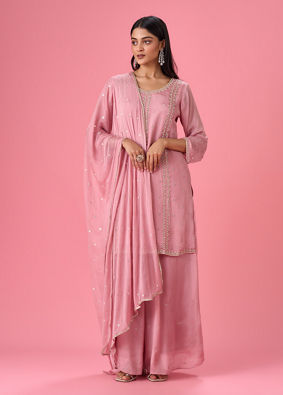
A stitched suit also feels more relaxed than some other categories of occasionwear because it provides structure without too much effort. Whether you prefer a straight suit, an anarkali suit, a sharara suit, or a more flowing frock-style silhouette, the ready-to-wear format gives you an easy base that still looks complete and occasion-ready.
Styles Inside The Range
What makes this category interesting is the variety inside it. A stitched suit is not one fixed look—it can shift depending on the shape, the bottom, and the mood of the outfit.
-
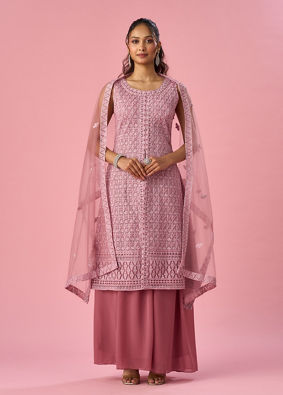
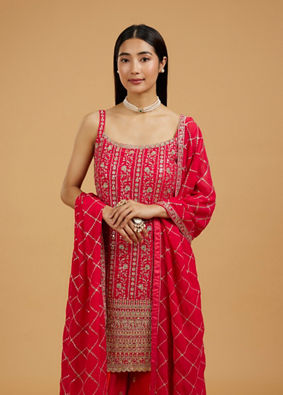
Straight suits work well when you want a neat, simple, and polished line that feels ideal for office events or smaller festive gatherings.
-
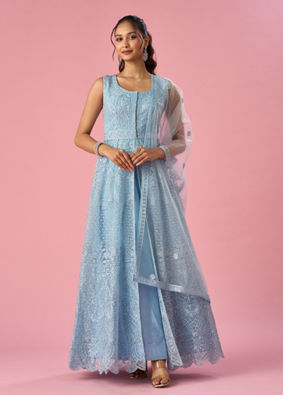
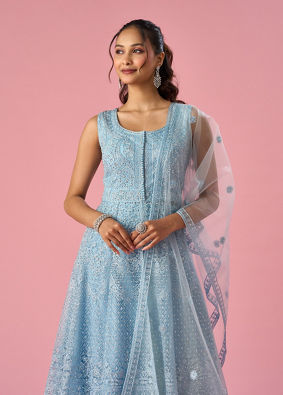
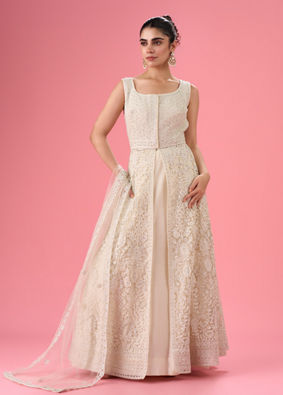
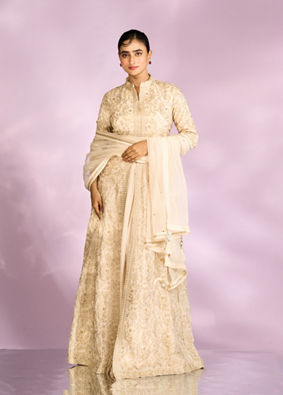
Anarkali suits give you a softer flare and a more elegant, flowing presence, especially for weddings or more celebratory evenings.
-
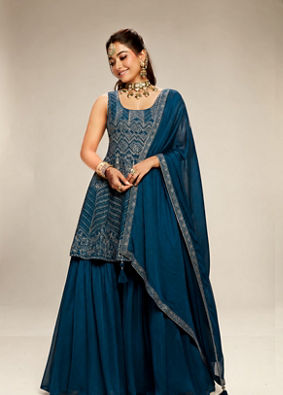
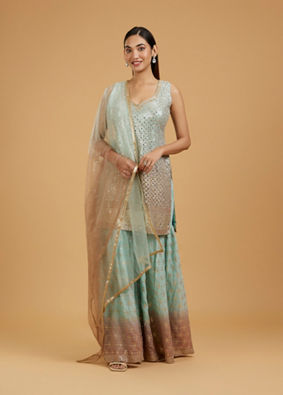
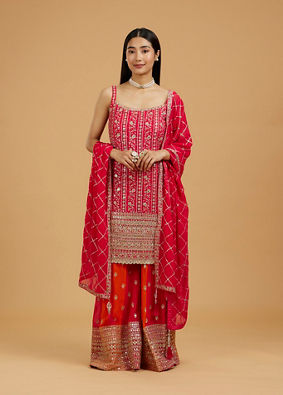
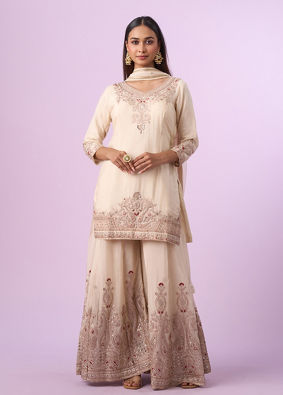
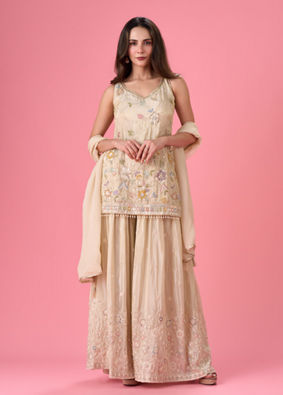
Sharara suits add movement and a little drama, making them perfect for mehendi, festive dinners, and family celebrations.
-
Frock-style or long suits bring a slightly playful, youthful mood that feels easy to wear and style.
That mix means you can choose a suit based on the occasion, not just the silhouette you already know. For some women, that is exactly what makes the category so useful.
Color Changes Everything
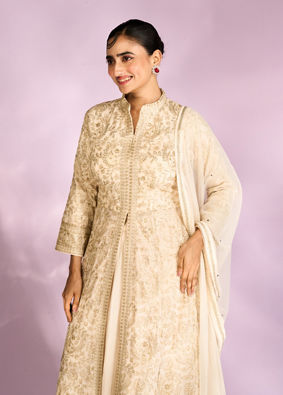
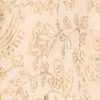
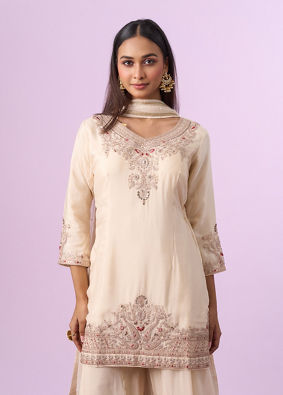
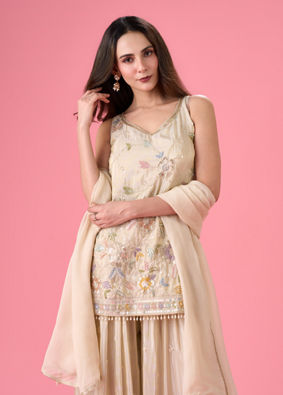
Color is one of the fastest ways to change the tone of a stitched suit. Creams, ivories, and soft beige tones feel calm, graceful, and versatile, which is why they work so well for daytime functions or family gatherings where you want a softer look.
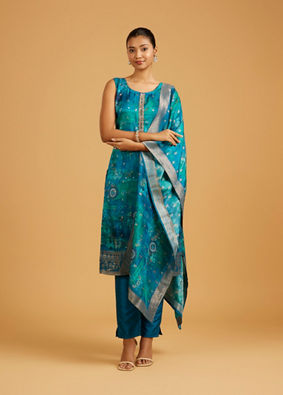
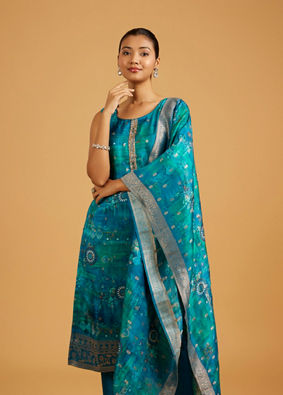
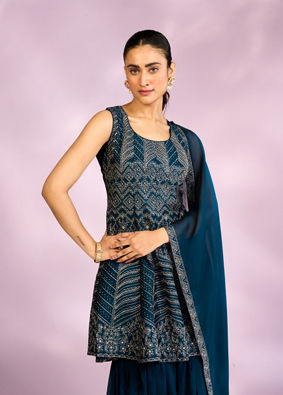
Richer colors like wine, teal, green, purple, and orange instantly make the outfit feel more festive and occasion-led. These shades work especially well for evening celebrations, receptions, and weddings where a little depth and drama can make the outfit stand out beautifully.
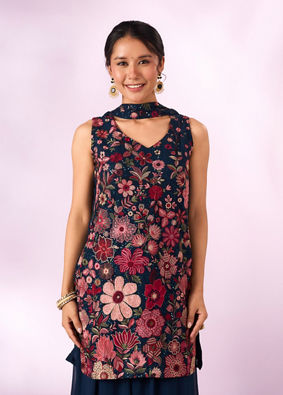
If you want the look to feel younger and more energetic, printed or botanical color stories can soften the outfit without making it boring. That is useful for women who want a suit that feels modern but not too loud, especially when the plan is more about being effortlessly put together than making a grand entrance.
Fabrics And Fall
Fabric plays a big role in how a suit feels on the body. Chinon, georgette, tissue, silk blends, and other fluid fabrics all help the silhouette fall neatly while keeping the outfit light enough to wear for long stretches. When the fabric moves well, even a very simple silhouette starts to feel special.
This is also where the category becomes more practical than it may first appear. A stitched suit in a breathable fabric is much easier to wear through a full day of functions, food, travel, and photographs than a heavier, more structured outfit. Mohey’s ready-to-wear approach supports that by keeping the garment polished without making it difficult to live in.
Fit Without The Stress
One of the quiet strengths of a suit is that it removes guesswork. There is no need to imagine how a tailor might interpret the look or how the final fit might turn out. The structure is already in place, so you can spend more time styling and less time adjusting the basics.
That certainty matters, especially for women who are shopping for multiple occasions at once or need something dependable for an upcoming event. Mohey’s suits are designed to offer that ready-made ease while still feeling flattering, modern, and occasion-appropriate. Whether the outfit is sharp and straight or soft and flared, the goal is the same: make dressing easier without losing elegance.
Styling The Look
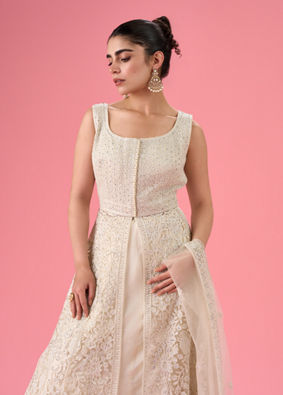
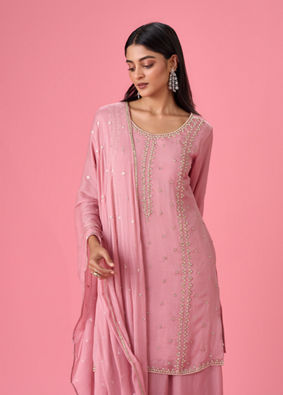
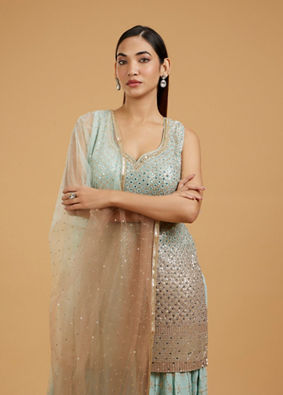
The best thing about a stitched suit is that the styling can be as simple or expressive as you want. A cleaner straight suit can be elevated with statement earrings, a sleek dupatta drape, and a strong lip color. A more festive anarkali or sharara version can carry heavier jewelry, a bolder hairstyle, or a more layered festive look.
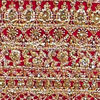
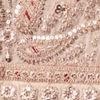
Footwear also changes the mood quickly. Juttis keep the look soft and traditional in feeling, while low block heels make the outfit feel a little more structured and polished. For a more modern edge, some women like to keep the shoe simple and let the outfit take the lead, especially if the suit already has detailed embroidery or surface work.
When It Fits Best
A stitched suit is one of those category staples that works across a very wide range of occasions. It is ideal for festive lunches, family get-togethers, Karwa Chauth evenings, Diwali plans, office celebrations, wedding guests, and even smaller functions where you want to look presentable but not overdressed.
It also makes sense for women who like wardrobe pieces that work in a variety of settings. The same suit can feel formal enough for a pooja, comfortable enough for a home celebration, and stylish enough for a dinner out depending on how you style the hair, jewelry, and footwear. That flexibility is a big part of why the category is so useful in real life.
Wear It Again
A good stitched suit should not feel like a one-time buy. The beauty of ready-to-wear separates is that you can often restyle them in different ways later, especially if the color palette is versatile. A kurta can sometimes work with straight trousers, a sharara bottom can be reused with a different top, and a dupatta can bring life to another outfit altogether.
That makes the suit one of the more practical festive purchases in the wardrobe. For women who want value, convenience, and style in one place, this category offers a strong return on investment because the pieces can serve beyond their original function and continue to work across seasons.
Care And Storage
Because suits often involve embroidery, lining, or delicate fabric blends, a little care goes a long way. Air the outfit after wearing, especially if it has been worn for many hours, and store it in a cloth bag or muslin wrap if the surface detailing is delicate. If you steam or iron it, keep the heat light and avoid direct contact with decorative work.
These habits help the suit keep its shape and finish over time. Since the category is built around repeat wear and convenience, keeping the outfit in good condition means it can stay in rotation for multiple events.
Frequently Asked Questions (FAQs)
1. What is the main benefit of a stitched suit?
The main benefit is convenience, since the outfit is already ready to wear and does not need separate tailoring before the occasion.
2. Which stitched suit style is best for festive events?
Anarkali and sharara suits usually feel more festive, while straight suits are great for simpler gatherings and more polished everyday occasion wear.
3. What fabrics work best in stitched suits?
Chinon, georgette, tissue, silk blends, and other light-flowing fabrics work well because they keep the outfit comfortable and flattering.
4. Can I wear a stitched suit to a wedding function?
Yes, especially if you choose a richer color, festive embroidery, or a silhouette like anarkali or sharara for a more dressed-up feel.
5. How do I style a stitched suit for a more modern look?
You can keep the jewelry minimal, choose a clean footwear style, and drape the dupatta neatly to make the outfit feel sharper and more current.
6. Can stitched suits be reworn for other occasions?
Absolutely. They work well for repeated wear at festive events, family gatherings, and semi-formal occasions when styled each time differently.
7. What is an anarkali suit and how is it different from a regular salwar suit?
An anarkali suit has a fitted bodice at the chest or waist that flares out into a long, voluminous, floor-length or ankle-length skirt-like kurta, typically paired with a churidar, palazzo, or straight-cut bottom — in contrast to a regular salwar suit's straighter, less dramatically flared kurta.
8. What is included in a full anarkali suit set with dupatta?
A complete set includes the flared anarkali kurta, matching or contrasting bottoms (churidar, palazzo, or straight pants), and a dupatta, which is typically draped across the chest to let the flare of the outfit remain visible.
9. What is the difference between a plain, simple, and heavy anarkali suit?
A plain or simple anarkali suit has minimal embellishment and works well for daily wear or small gatherings, while a heavy anarkali suit features intricate embroidery, zari, or embellishment and is reserved for weddings or grand celebrations.
10. What is a party wear anarkali suit versus a bridal anarkali suit?
Party wear anarkali suits favour lighter fabrics like georgette or chiffon with moderate embellishment suited to evening functions, while bridal anarkali suits use richer fabrics like silk or velvet with heavier zardozi or mirror work for the wedding itself.

 Filter