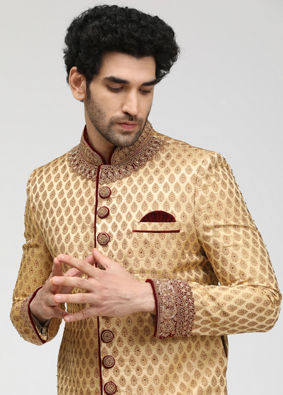
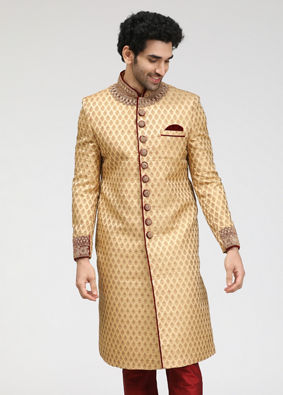
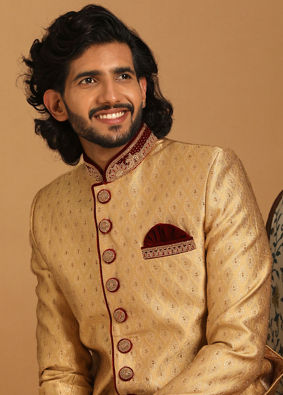
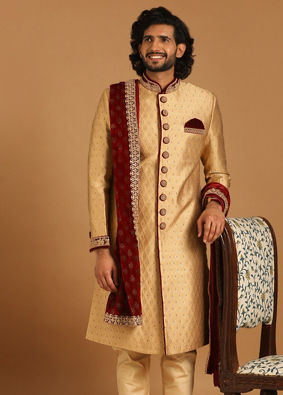
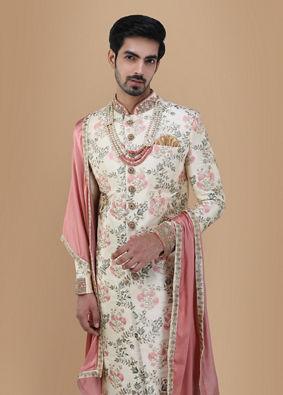
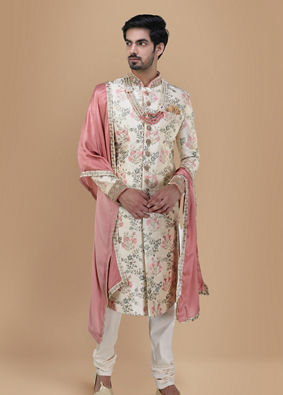
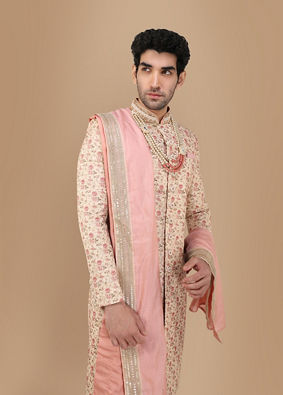
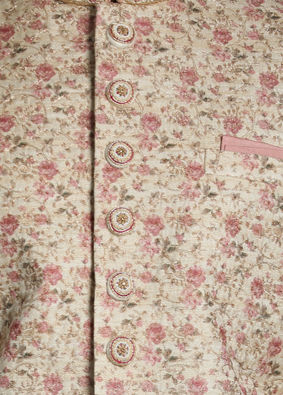
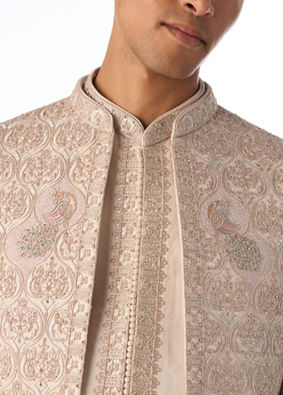
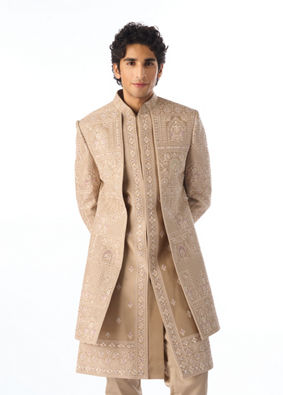
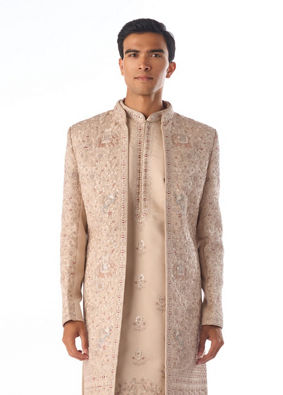
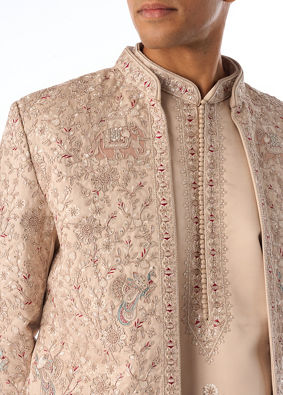
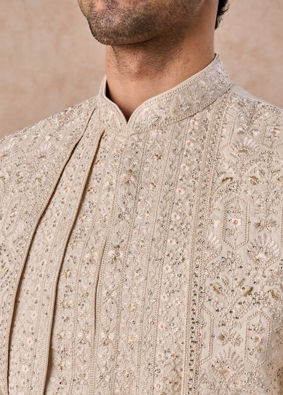
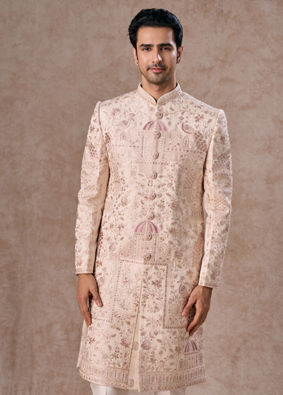
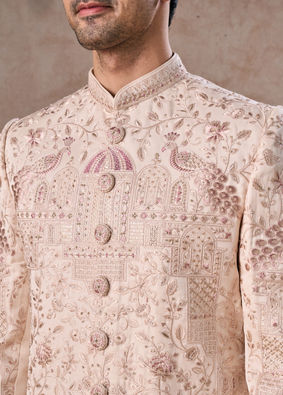
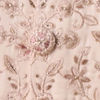
Choosing a sherwani for the groom is about more than finding the most elaborate outfit. The right look brings together the setting, the ceremony, your partner’s attire, and the details you enjoy wearing. You might prefer a softly textured neutral, a floral design, a richly embroidered piece, or an open sherwani that makes its layers part of the look.
Start with the complete outfit you want to create, then consider color, surface detail, and fit. A considered choice should feel special when you first try it on—and remain comfortable through the moments that matter.
Picture the complete wedding look
Before narrowing the collection, think about where you will wear your sherwani and what the day will involve. A garden ceremony, an indoor wedding, and an evening celebration may lead you toward different colors, layers, and finishes.
A daytime ceremony
For a daytime wedding, consider a lighter palette and details you enjoy seeing up close. Cream, beige, fawn, and champagne offer several ways to create a refined wedding look, whether you prefer subtle texture or more visible embroidery.
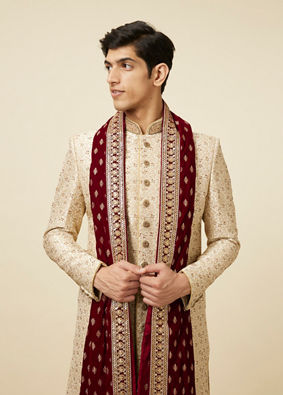
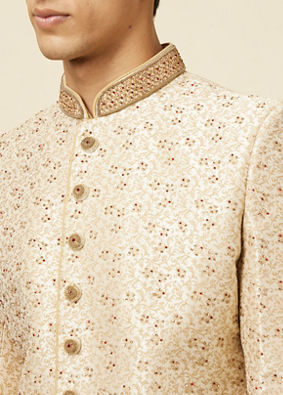
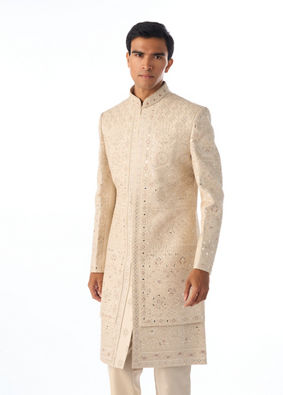
The Beige Jacquard Groom Sherwani introduces a texture-led option within this palette. Build on it with complementary footwear and a safa, and choose a stole only if it adds to the complete outfit. For an outdoor ceremony, consider the weather and the weight of every layer before finalizing your look.
An evening wedding
For an evening ceremony, decide how much of the statement should come from color, craftsmanship, or accessories. A neutral sherwani can feel just as occasion-ready as a deeper shade when its detailing and proportions are thoughtfully chosen.
The Champagne Elegance Sherwani offers a champagne-colored direction for the celebration. Try it with your intended accessories rather than judging the garment alone; the safa, stole, and footwear will influence the overall effect.
An intimate celebration
A smaller wedding does not require a less meaningful outfit. You may simply prefer fewer layers, restrained detailing, or a look that feels closer to your everyday sense of style.
The Fawn Groom Sherwani provides a neutral starting point for this approach. Keep the styling personal: a carefully chosen brooch, a favorite jewelry piece, or a contrasting safa can give the outfit identity without requiring several competing accessories.
Closed-front or open-front: find your preference
How your sherwani is constructed changes the way the complete ensemble looks. Compare the front, neckline, and layers before deciding which direction feels most natural to you.
A classic, composed front
A closed-front sherwani presents the garment as the main feature. This is a useful direction if you want the color, buttons, motif, or embroidery to read clearly across the outfit.
The Cream Bel Buti Patterned Sherwani set brings a motif-led option to the collection. When the sherwani has a visible pattern, keep the surrounding layers comparatively simple so the design remains clear.
An open sherwani with visible layers
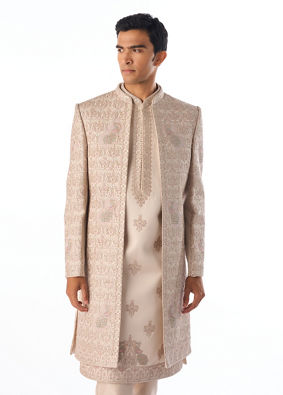
An open-front design makes the inner outfit part of the composition. Consider the color balance, the length of each layer, and how the ensemble looks both standing and seated.
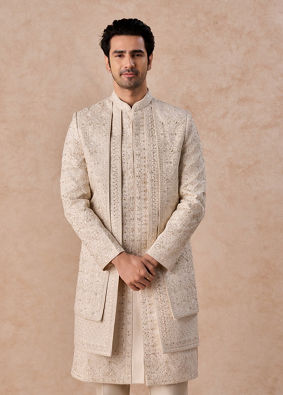
The Champagne Opulence Open Sherwani offers this layered direction. Try the complete combination: an appealing outer garment still needs an inner layer and bottoms that match its proportions.
A lighter neutral with a layered finish
If you like the open-front approach but prefer a softer base color, explore beige and cream options. These give you room to introduce contrast through the inner layer or accessories without making every element equally prominent.
The Beige Elegance Open Sherwani is another option in the live collection. Decide whether you want a tonal ensemble or a contrasting look, then keep that decision consistent through the safa, stole, and footwear.
Decide what deserves the spotlight
A groom’s outfit can have presence through texture, motifs or embroidery—not just the amount of embellishment. Choose the feature you want people to notice first.
Texture that rewards a closer look
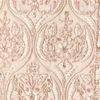
Jacquard, brocade and self-textured designs offer alternatives for grooms who enjoy surface interest without wanting every detail to sparkle. The collection includes these design directions alongside more embellished options.
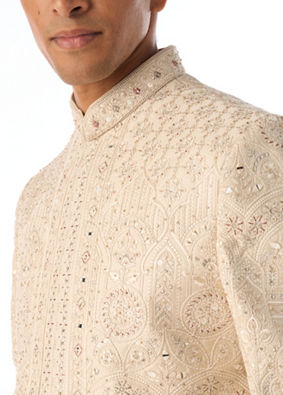
Look at both close-up images and full-length photographs. A texture that appears subtle on screen may become a significant part of the finished outfit, particularly once accessories are added.
Floral designs with personality
Floral details can give the wedding look a more expressive character. If you are drawn to a motif-led outfit, consider its scale and placement across the front, sleeves, and lower portion of the sherwani.
The Floral Designer Sherwani For Groom offers a floral option to explore. Pair it with accessories that support the design rather than repeating a prominent pattern in every element.
Embroidery as the main statement
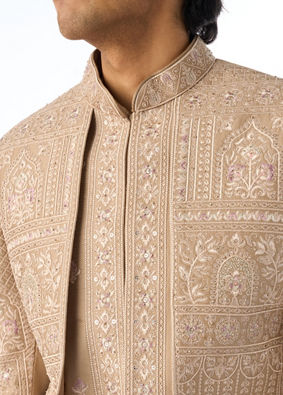
For a detail-led wedding look, focus on the embroidery you genuinely enjoy wearing. The collection includes thread embroidery, hand embroidery, zardozi, zari, bead or stone work, and other decorative finishes.
The Beige Silk Sherwani with Embroidery is one such option. Check its individual product details for fabric composition, included pieces, and care instructions, then assess the complete outfit with your planned jewelry.
Distinctive motifs for a less expected look
A motif can make a sherwani feel personal without relying on an unusual color. Explore designs beyond familiar florals if you want something that catches your attention for a different reason.
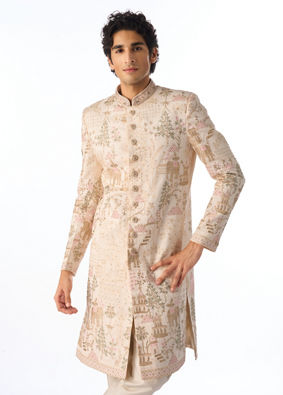
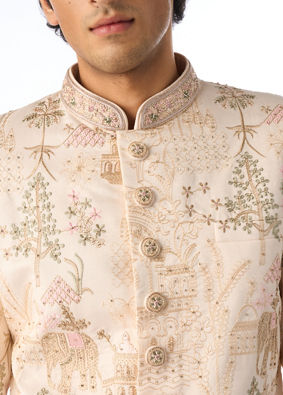
The Champagne Open Sherwani Set with Fauna Motifs introduces this possibility. Let the motif be the conversation piece, keeping the rest of the ensemble deliberate and uncluttered.
Coordinate with your partner, without matching everything
The two wedding outfits should feel connected, but they do not have to be identical. Start with a shared direction: warm or cool tones, lighter or deeper colors, restrained or elaborate detailing.
Echo a detail, not the entire outfit
You might pick up a color from your partner’s border, embroidery, or jewelry in your safa or stole. This creates a connection while letting each outfit keep its own character.
If one ensemble is especially intricate, consider whether the other would benefit from a calmer base. View the two looks together before deciding how much contrast you want.
Use the wider palette
Manyavar’s collection includes cream, beige, champagne and fawn, alongside pink, peach, green, purple, blue and other shades. Rather than choosing by color name alone, compare product images and, where possible, see the outfits together in person.
The Blissful Beige Groom Sherwani offers another neutral option for grooms exploring a coordinated wedding palette. Use accessories to connect the two looks, rather than expecting the sherwani alone to do everything.
Keep your own preferences visible
Coordination shouldn't leave you wearing a color or level of detail you don't enjoy. Agree on the overall mood, then leave room for individual choices. Your outfit will feel more convincing when it reflects your taste and the wedding setting.
The groom’s fitting-room checklist
A wedding sherwani needs to work while you sit, walk, greet relatives, and take part in the ceremony. Give the trial enough time to assess more than the standing silhouette.
Check the shoulders and closure
The shoulders should sit comfortably, and the front should close without noticeable pulling. Raise your arms gently, bring them forward, and check whether the back or upper sleeves restrict movement.
For an open design, check that the layers fall as intended rather than shifting awkwardly when you move. Try it with the inner pieces you plan to wear on the day.
Sit before you decide
Take a seat and, if relevant to your ceremony, check whether you can sit comfortably at a lower level or cross-legged. Pay attention to the waist, upper legs, neckline, and the way the sherwani settles.
A close fit should not prevent the movements your wedding requires. Discuss any discomfort during the fitting rather than assuming it will resolve once you start wearing the outfit.
Bring the intended footwear
Footwear affects how the bottoms fall and how the overall proportions look. Try the ensemble with the pair you plan to wear, and check that the hems don't catch beneath your shoes.
Walk for a few minutes as part of the trial. Choose a pair that feels secure and comfortable, not simply one that matches the embroidery.
Confirm what is included
Check the individual product description for the components supplied with the sherwani. Do not assume that a photographed stole, safa, necklace or footwear is included.
Confirm the size guide, availability, and any alteration requirements before ordering. Leave room in your wedding schedule for a full trial with the complete outfit.
Choose your finishing pieces with intention
Accessories should complete the sherwani, not hide the details that made you choose it.
Safa and stole
A Safa can bring color and a distinct groom identity to the ensemble. A stole can add another layer of texture or contrast, but it should be manageable through the ceremony.
Try different arrangements before settling on one. Check that the stole stays in place and doesn't unintentionally cover the sherwani’s main motif or embroidery.
Jewelry and brooches
A mala, brooch, or safa ornament can add character, but you don't need every accessory at once. Start with one main feature, then decide whether the outfit needs anything else.
The Regal Cream Sherwani offers a cream-colored base for a considered accessory combination. Try the pieces together and remove anything that competes with the effect you want.
A final photograph and movement check
Take full-length photographs from the front, side, and back during your trial. A short walking video can also reveal how the layers, stole, and bottoms sit in motion.
Use this to make final adjustments to proportions and accessories—not to chase a pose that only works while standing still. The outfit should support the wedding day as you will actually experience it.
Questions before the big day
How do I choose a sherwani for the groom?
Begin with your ceremony, venue, personal style, and preferred level of detailing. Then compare the complete ensemble: sherwani, inner layers, bottoms, footwear, and accessories. Fit and freedom of movement should be part of the decision from the first trial.
What color sherwani should a groom wear?
There is no single color every groom must choose. Manyavar’s collection includes cream, beige, champagne, fawn, white, pink, peach, green, and deeper shades. Consider your traditions, partner’s outfit, and wedding setting, then choose a color you feel confident wearing.
Is an open-front sherwani suitable for the wedding ceremony?
It can be, depending on your preferred style and ceremony requirements. An open-front sherwani makes the inner layers visible, so assess the entire combination rather than the outer garment alone.
Does a groom’s sherwani need heavy embroidery?
No. Texture, tailoring, color, and motifs can create a distinctive wedding look without dense embellishment. Choose the level of work you enjoy, then use accessories to complete the outfit.
How should a wedding sherwani fit?
It should sit comfortably at the shoulders, close without pulling, and allow the movements required during your ceremony. Check it while seated, walking, and standing. Try it with the intended inner layers and footwear before finalizing alterations.
Should the groom’s sherwani match the bridal outfit?
It does not need to match exactly. You can coordinate through a shared color family, an embroidery tone, or accessories such as the safa and stole. Aim for a connection between the outfits while preserving each person’s style.
What accessories can I wear with a groom sherwani?
Options include a safa, stole, brooch, mala, and traditional footwear. Choose accessories that match the sherwani’s neckline, color, and detailing, and focus on one or two key pieces rather than adding everything available.
How should I care for my sherwani after the wedding?
Follow the garment’s care label and any product-specific instructions, particularly for embroidery, stones, and delicate finishes. If it needs cleaning after the celebration, use a professional service familiar with embellished occasionwear before storing it.

 Filter