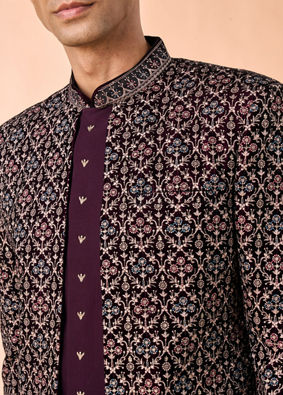
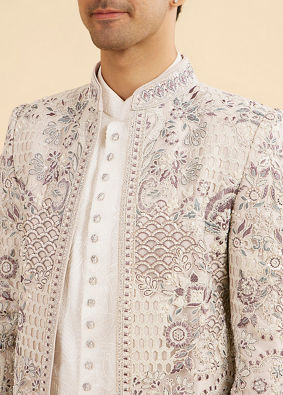
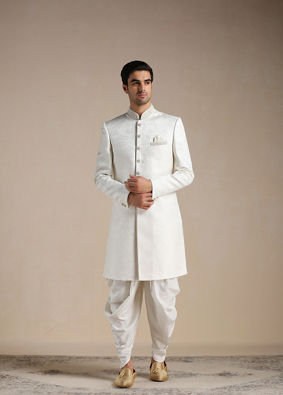
What is sherwani and Indo-western
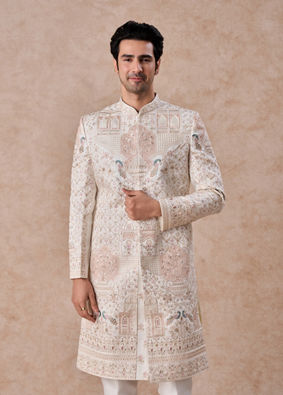
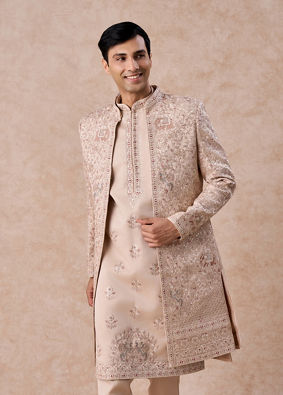
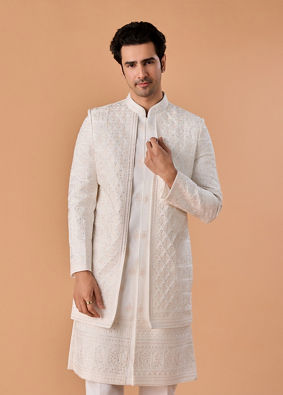
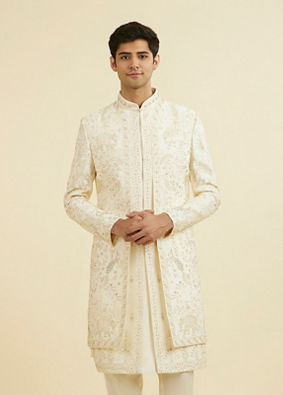
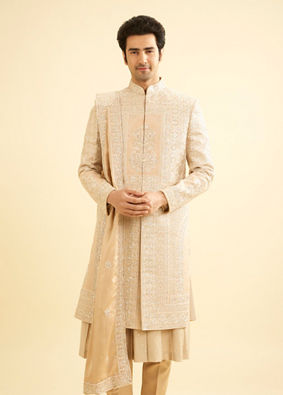
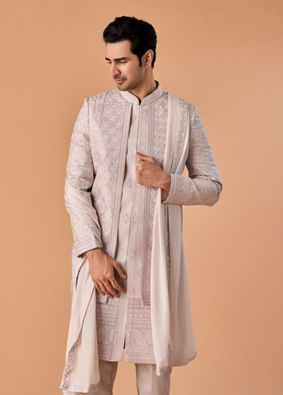
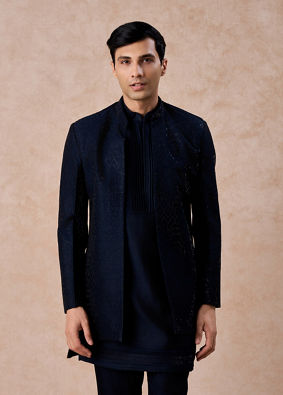
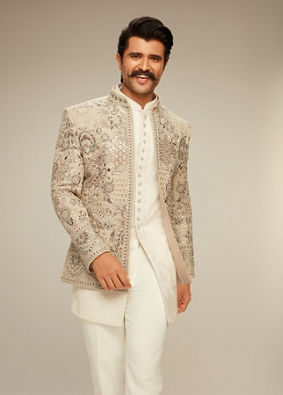
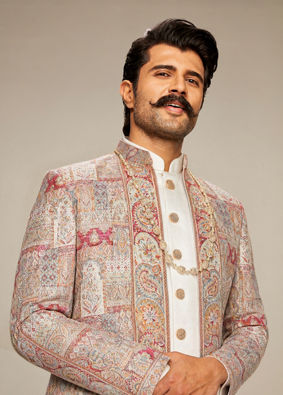
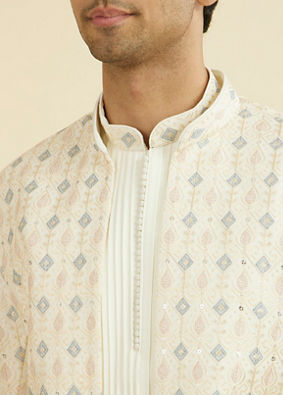
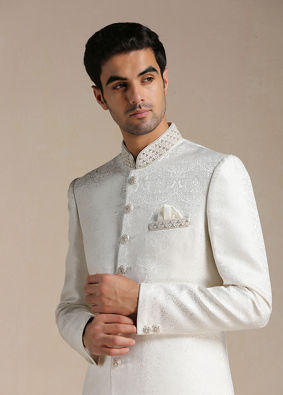
A sherwani is a long, structured, front-open outfit that usually sits below the knee, worn over a kurta with churidar, straight pyjama, or dhoti-style bottoms. It has a sharper, more royal presence—ideal when you are the groom, in the close family, or playing a key role at the event.
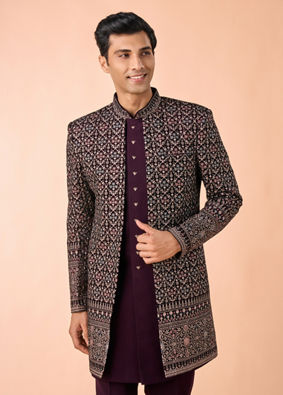
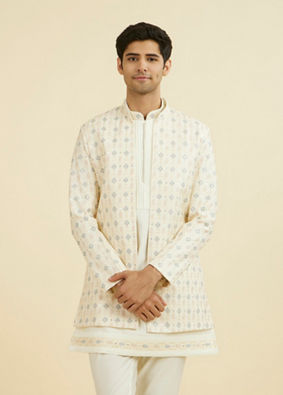
Indo-western outfits blend this sherwani/bandhgala energy with contemporary cuts and styling—think shorter lengths, asymmetric hemlines, layered jackets, or trouser-style bottoms instead of classic churidars. These are perfect when you want a modern, slightly experimental look while still feeling rooted in occasionwear.
Why it fits today’s celebrations
Celebrations today are spread across multiple functions—roka, engagement, haldi, mehndi, sangeet, cocktail, reception—and each one has its own mood. These outfits help you match that variety: a full sherwani for the main ceremony, and Indo-western looks for sangeets, cocktails, or smaller events around it.
There’s also a stronger expectation around photos and reels; you’re likely to be tagged, recorded, and remembered through what you wore. A well-chosen sherwani or Indo-western set naturally looks styled and complete, so you don’t have to overthink layering and accessories at every step.
Texture, weight, and wearability
Manyavar’s lines use fabrics that balance structure with comfort, especially across long ceremonies and warm venues. You’ll find:
-
Rich brocades, art silk, and jacquard for sherwanis that hold their shape and carry intricate patterns beautifully.
-
Velvets and plush blends for deeper tones and winter or evening functions where you want drama and depth.
-
Lighter, breathable blends in Indo-western pieces that keep you cooler through sangeet performances and reception dance floors.
Inside, jackets are structured with linings and tailored cuts to sit neatly on the shoulders and chest, so you get a sharp profile without feeling overly stiff.
Silhouettes, and design details
The looks differ in how they sit and move, but both are built around clean, flattering lines.
Sherwanis usually feature:
-
Long, straight or slightly tapered cuts ending below the knee.
-
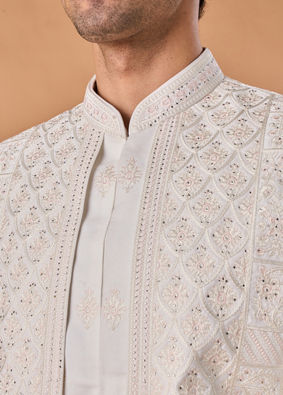
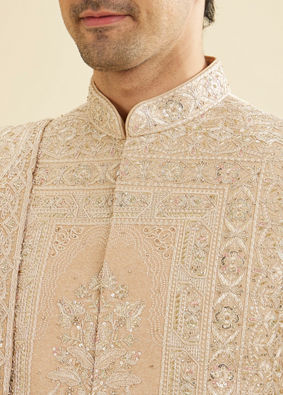
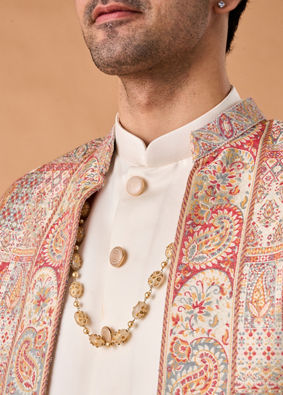
Stand collars, front button plackets, and side or back slits for ease of movement.
-
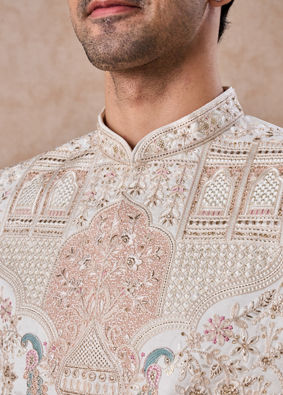
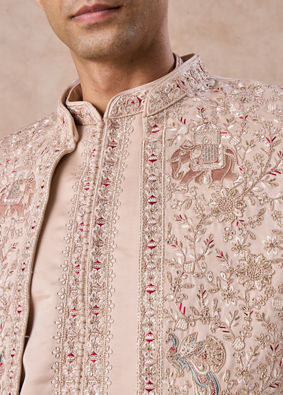
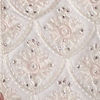
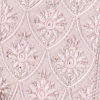
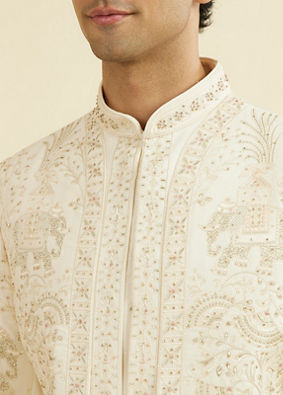
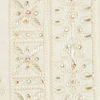
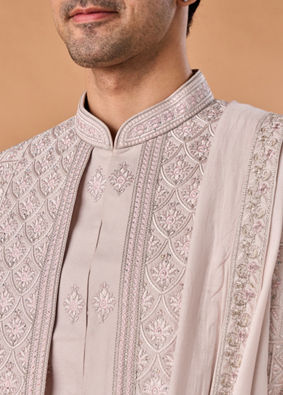
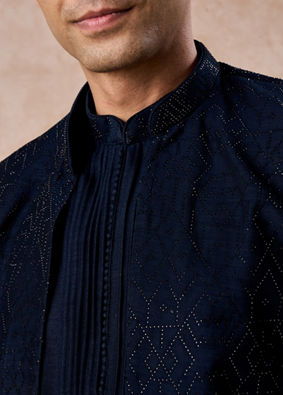
Embroidery, woven motifs, or textured patterns—ranging from subtle to heavy—depending on how grand the function is.
Indo-western outfits often play with:
-
Varied lengths—mid-thigh or just above the knee—and sometimes asymmetric or layered hems.
-
Fusion elements like jodhpuri-style jackets, cowl drapes, or panelled fronts paired with trousers instead of classic churidars.
-
Mixes of texture and detailing—self-design fabrics, zardozi touches, stone work, or statement buttons.
Across both, the idea is a tailored shoulder, clean chest, and a fall that lets you stand, sit, and walk comfortably through the day.
From shade card to outfit
These lines carry a wide palette so you can match the function’s vibe and your own comfort with colour. Common directions include:
-
Creams, ivories, and soft golds for classic sherwani looks that feel timeless and ceremony-ready.
-
Deeper tones like navy, bottle green, maroon, wine, and dark brown for evening events or when you prefer richer colours.
-
Patterned and textured Indo-western sets that mix subtle motifs with modern cuts, ideal for sangeets and receptions.
Work can range from self-textured designs and thread work to more elaborate zardozi, dori, and stone embellishments, especially on sherwanis designed for the groom or close family.
For days that need a bit more effort
You can almost map functions to whether a sherwani or Indo-western will feel right.
Sherwanis are perfect for:
-
Main wedding ceremonies and pheras, especially if you are the groom, brother, or very close family.
-
Reception looks when the invitation leans more traditional and you want a regal, structured presence.
-
Key rituals at home or in banquet halls where you’re at the centre of things—tilak, engagement, or formal roka.
Indo-western outfits shine at:
-
Sangeets and cocktails, where a fusion silhouette pairs well with music, dance, and a more experimental dress code.
-
Reception and after-parties where you want something dressy but more contemporary than a classic sherwani.
-
College farewells, formal campus events, or office celebrations held at hotels or clubs, where a full sherwani might feel too heavy.
Together, these pieces help you build a line-up that can cover everything from home rituals to big ballroom nights.
Styling sherwanis
For a sherwani, small styling choices make a big difference. You can:
-
Pair your sherwani with churidar, slim pyjamas, or dhoti/south dhoti depending on how traditional or modern you want to go.
-
Choose coordinated juti or mojaris and a matching stole or dupatta to complete the look, especially if you’re part of the main ceremony.
-
Add a safa, brooch, or layered neckpiece when you’re the groom or in the core family circle, keeping accessories lighter if you’re a guest.
Because sherwanis already carry significant detailing, you rarely need heavy layering beyond the stole and accessories.
Styling Indo-western looks
Indo-western sets are ideal for experimenting a little while staying polished. You can:
-
Wear an Indo-western jacket with matching or contrast trousers and a simple inner layer—kurta, shirt, or band-collar top—depending on the design.
-
Pick footwear based on the mood: mojaris or juti for a more classic finish, loafers or dress shoes when the venue feels more contemporary.
-
Let one element stand out—either the cut, the fabric, or the accessory—so the look feels intentional, not crowded.
Indo-western pieces also work well as group outfits for cousins or friends; coordinated colours or silhouettes make photos look cohesive with very little planning.
When you’ll be glad you own it
These outfits are not everyday pieces, but they’re important anchors for big moments. If you attend weddings often or have a milestone celebration coming up, it can help to think in terms of roles. A simple structure that works for many people is:
-
One key sherwani for the biggest rituals and most formal events—ideally in a versatile tone like ivory, gold, or a rich, deeper shade you love.
-
One Indo-western set for sangeets, cocktails, receptions, or formal evenings where you want something modern and comfortable.
With these in place, you can fill the in-between days with kurta sets, kurta–jacket combinations, and accessories, using these outfits as your strongest, most photographed looks.
Frequently Asked Question (FAQs):
1. When should I choose a sherwani vs Indo-western?
Go for a sherwani for the main wedding ceremony, important rituals, and very formal functions; pick Indo-western outfits for sangeets, cocktails, receptions, and events with a more contemporary or relaxed dress code.
2. Are sherwani and Indo-western comfortable for long events?
Yes, Manyavar’s styles are made with structured yet breathable fabrics and considered cuts, so you can sit through rituals, stand for photos, and dance without feeling overly restricted.
3. What bottoms work best with sherwani and Indo-western looks?
Sherwanis usually pair with churidars, straight pyjamas, or dhoti-style bottoms, while Indo-western outfits often come with tailored trousers or fusion bottoms that complement their modern cuts.
4. How can I make my sherwani or Indo-western look more special without overdoing it?
Focus on one or two strong accessories—like a well-chosen stole, statement brooch, or coordinated footwear—and let the garment’s fabric and cut do the rest. This keeps the look elevated but still clean.
5. Can I reuse sherwani and Indo-western outfits for different functions?
Absolutely; you can restyle the same sherwani or Indo-western by switching bottoms, safas, stoles, jewellery, and footwear so it feels fresh across different events and cities.





 Filter