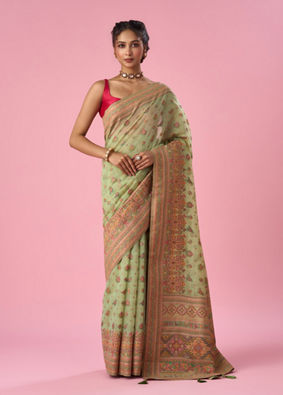
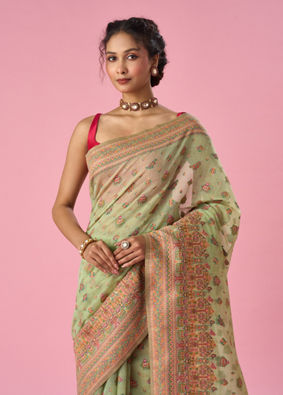
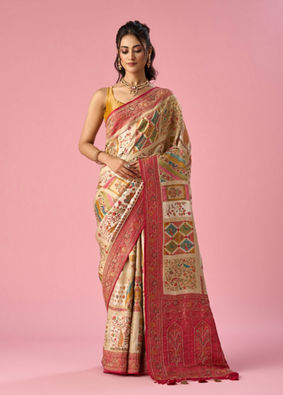
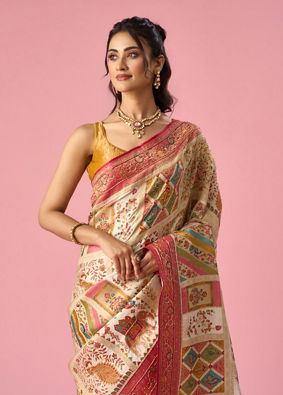
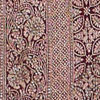
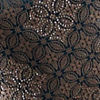
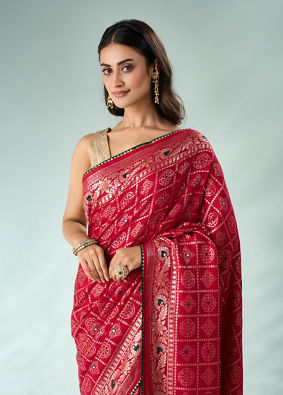
The Banarasi signature
Whether you are selecting a saree for a wedding ceremony, an engagement, a family puja or a reception dinner, a Banarasi-inspired weave adds depth without needing excessive embellishment. The fabric’s body creates beautiful pleats, while woven details and borders bring natural richness to the drape.
This collection moves from quiet elegance to full festive presence: choose a subtle cream or dusty-pink saree for daytime rituals, a brighter rani-pink or indigo style for a celebration, or stone work and denser weaving when the event calls for a more elevated look.
Sarees for landmark moments
A Banarasi saree can take you through many celebrations. The event, its timing, and the amount of detail you want to wear will help narrow the choice.
Wedding ceremonies and traditional rituals
For pheras, temple weddings, important pujas, and traditional family occasions, choose a Banarasi saree with visible weave, a rich color, or a classic cream-and-gold direction. These details give the saree a ceremonial presence while remaining timeless in photographs.
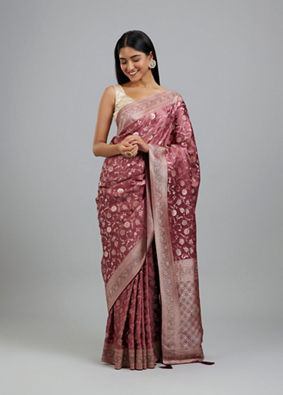
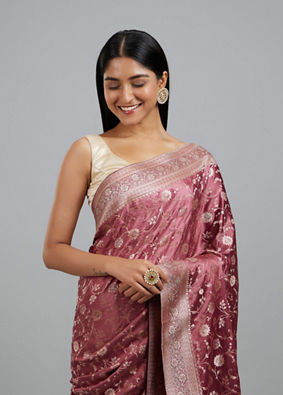
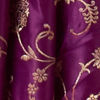
The Purple Silk Banarasi Saree with Weave Design is a strong choice for a wedding function when you want a regal color with heritage-inspired character. Pair it with a traditional blouse, gold or kundan jewelry, and a neatly pinned pallu for an elegant, formal look.
Engagements and family celebrations
Engagements and family functions call for a look that feels festive and polished without needing bridal-level heaviness. Softer colors, woven textures, and delicate motifs work especially well for daytime celebrations and family photos.
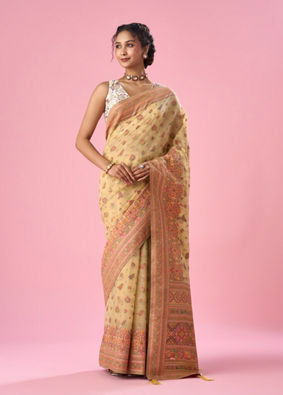
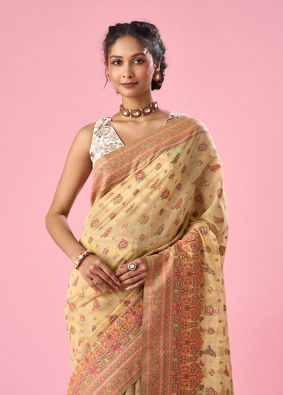
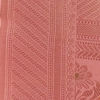
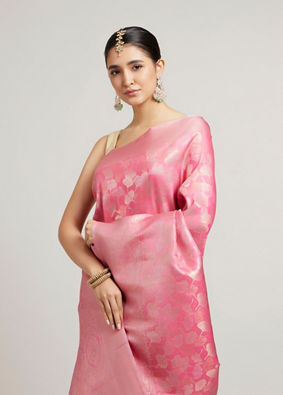
The Dusty Pink Silk Banarasi Saree with Weave gives you this balance. The dusty pink tone feels graceful and modern, while the weave keeps the saree special for an engagement lunch, roka, festival, or important family gathering.
Daytime festivities and pujas
For daytime pujas, festive lunches and celebrations held in natural light, choose a lighter palette or a saree with controlled pattern rather than dense shimmer. Soft pink, cream, and leafy motifs can create a warm festive look that remains comfortable for a long day.
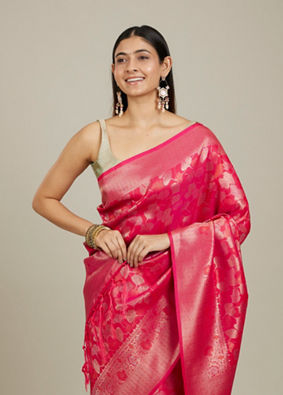
The Rani Pink Lotus Leaf Patterned Saree adds joyful color and visual detail to a daytime event. Its lotus leaf pattern gives the saree a festive personality, while the rani-pink tone keeps it expressive enough for a special celebration.
Evening aartis and festive dinners
Evening events allow you to choose deeper colors, bolder motifs, and light-catching stone work. Banarasi-style sarees look particularly striking under warm lights because the woven surface and details create natural depth across the drape.
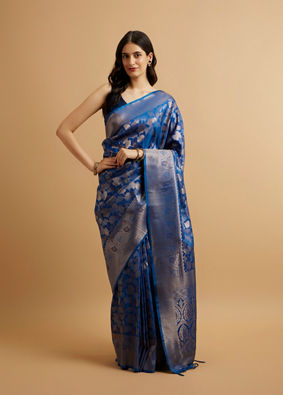
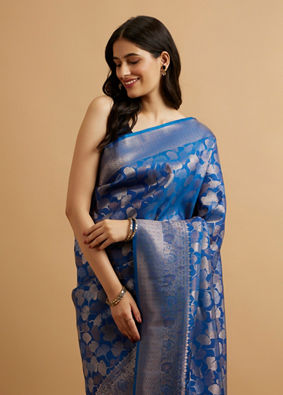
The Indigo Blue Leaf Patterned Saree suits an evening aarti, dinner, or cultural celebration. Indigo creates a sophisticated, contemporary color story, while the leaf pattern adds enough detail to stand out without a heavily embellished blouse.
Receptions and formal celebrations
For receptions, sangeet nights, and formal festive dinners, choose a saree with more visible work, a richer finish, or a slightly more elevated color story. Stone work, intricate weaving and statement borders offer the right amount of occasion value.
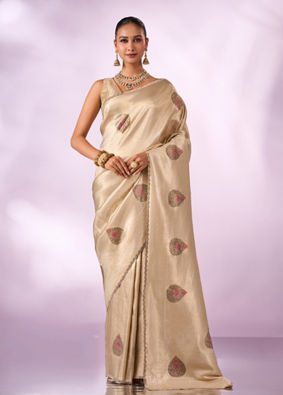
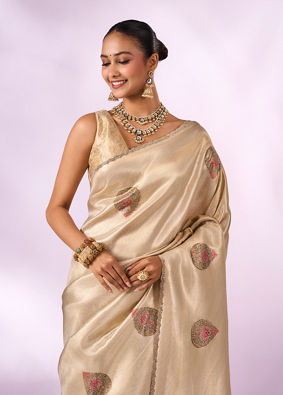
The Cream Silk Saree with Print and Stone Work offers a refined reception direction. Its cream base feels elegant, while the print and stone detail bring a soft, light-catching finish. Style it with a gold or metallic blouse, statement earrings, and a compact clutch.
Festivals and repeat-wear celebrations
A Banarasi saree can be one of the most useful pieces in a festive wardrobe when you choose a versatile color and moderate detail. These sarees can move from Diwali and Durga Puja to weddings and anniversary dinners simply by changing the blouse and jewelry.
The Bubblegum Pink Leaf Patterned Saree offers a cheerful option for festivals and social celebrations. Its playful shade and pattern work well with lighter accessories for daytime, then transition into an evening look with a contrast blouse and more defined jewelry.
A palette with presence
Banarasi-style sarees carry color beautifully. The weave adds texture to softer shades and makes rich tones feel even more ceremonial.
Purple and regal tones
Purple adds richness without following the most expected red-and-gold route. It works especially well for receptions, evening pujas, wedding events, and family functions where you want a color that feels formal and distinctive.
The Purple Silk Banarasi Saree with Weave Design makes a strong choice for this mood. Pair it with gold jewelry for a traditional finish, or use silver-toned earrings and a tonal blouse for a cooler, more contemporary look.
Dusty pink and soft romantic shades
Dusty pink brings a softer, more modern feeling to a Banarasi-inspired weave. It is ideal for day functions, engagement ceremonies, and celebrations where you want an elegant but not overly intense color story.
The Dusty Pink Elegance Banarasi Saree works beautifully for these occasions. Style it with pearl, rose-gold, or antique-gold jewelry, and choose a blouse in a related pink, cream or wine tone for a polished finish.
Rani pink and bright pinks
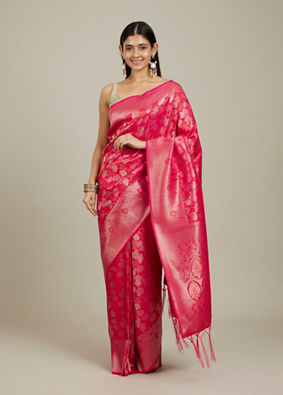
Rani pink is full of celebration energy. It is bright enough for wedding festivities and festivals, yet remains deeply rooted in Indian occasionwear traditions.
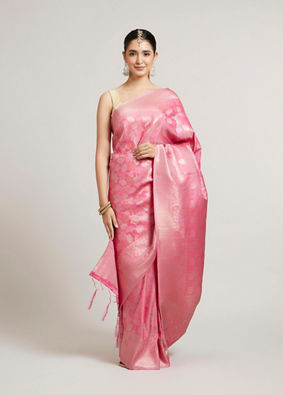
The Pink Silk Banarasi Saree with Weave Design brings a richer pink option for a special event. The woven design gives it visible texture, making it a fitting choice for an engagement, sangeet, or festive dinner. Let the saree lead with a simple blouse and gold earrings.
Indigo and blue tones
Indigo and blue make a Banarasi saree feel contemporary, elegant, and slightly unexpected. They work particularly well for evening events, cultural programs and dinners, where a darker color can create a more composed, formal mood.
The Indigo Blue Leaf Patterned Saree is a useful choice when you prefer a cooler palette but still want a festive motif. Pair it with a cream, gold, or deep-blue blouse, and finish with pearl or gold accessories depending on the level of formality.
Cream and neutral tones
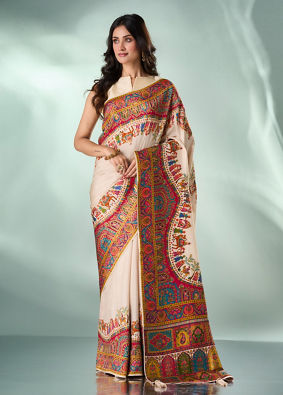
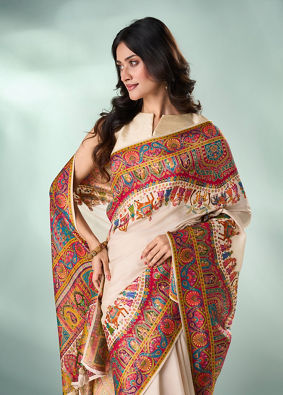
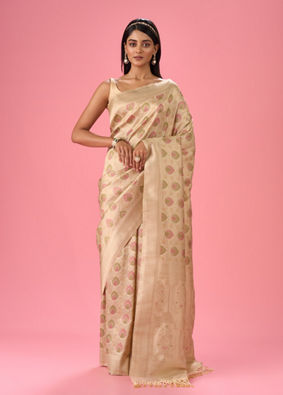
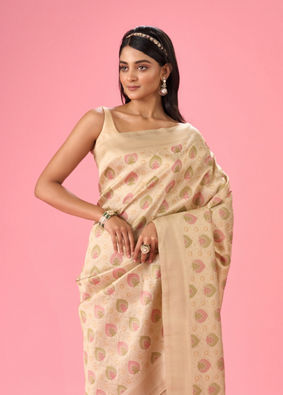
Cream, ivory and warm neutrals give Banarasi sarees an heirloom-like elegance. These shades are ideal for morning pujas, intimate family rituals, receptions, and occasions where jewelry and blouse styling should take a larger role.
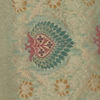
The Elegant Cream Brilliance Banarasi Saree creates this refined, traditional mood. Pair it with a red, wine, green, or gold blouse depending on the event, then add temple jewelry, kundan or pearl accessories for a look that feels both classic and personal.
Motifs, weave and finishing
The artistry of a Banarasi-style saree lies in its weave and surface detail. Choosing between woven texture, leaf motifs, stone work, and print can help you find the right level of occasion value.
Woven Banarasi sarees
Woven silk sarees offer texture and richness without needing heavy embellishment. They are ideal for weddings, pujas, and celebrations where you want a traditional look that can be re-worn across years.
The Dusty Pink Silk Banarasi Saree with Weave gives you a softer take on this heritage-inspired style, while the Pink Silk Banarasi Saree with Weave Design offers a brighter, more festive expression. Choose woven styles when you want the saree's craftsmanship—not sparkle alone—to lead the look.
Leaf and lotus patterned sarees
Leaf and lotus patterns bring a more expressive, contemporary note to Banarasi-inspired sarees. They are ideal for festivals, daytime celebrations, family functions, and occasions where you want a detailed saree without a very heavy border.
The Rani Pink Lotus Leaf Patterned Saree, Indigo Blue Leaf Patterned Saree and Bubblegum Pink Leaf Patterned Saree show how the same motif-led direction can shift with color—from celebratory and traditional to cool and evening-ready, or soft and playful. Pair a patterned saree with a solid blouse so the motif stays visible.
Stone-worked Banarasi sarees
Stone work adds subtle sparkle and makes a Banarasi-inspired saree especially effective for receptions, formal dinners, and evening wedding events. It creates a light-catching finish while allowing the silk and weave to remain the main feature.
The Dusty Pink Silk Saree with Stone Work is a suitable choice for an evening event where you want romance and shimmer in equal measure. Keep the jewelry focused on statement earrings or one elegant neckpiece so the stone work does not compete with too many accessories.
Printed and embellished silk sarees
A printed Banarasi-style saree with controlled embellishment works well for shoppers who want a lighter, modern alternative to densely woven traditional designs. It can transition easily from a daytime gathering to an evening celebration.
The Cream Silk Saree with Print and Stone Work is a good example of this balance. Use it for a reception, engagement dinner, or Diwali party, then change the blouse and jewelry later to rewear it for a family function.
The traditional finishing touch
Banarasi-style silk already brings color, texture, and shine, so the best styling complements the weave rather than competing with it.
Blouses that honor the weave
For traditional woven or Banarasi-style sarees, a well-fitted blouse in a complementary color is often all you need. Choose a classic sleeve length and neckline for weddings and rituals, or introduce a structured sleeveless blouse, higher neck, or interesting back detail for a more contemporary event.
Style cream sarees with contrasting red, wine, green, or gold blouses. Purple and indigo styles pair beautifully with gold, cream or tonal blouses. With bright pinks, use a deep pink, red, purple or antique-gold blouse to create depth without adding too many colors.
Jewelry and accessories
Temple jewelry, gold, kundan and polki work beautifully with woven Banarasi sarees, especially for weddings and pujas. Pearls and diamond-style jewelry offer a lighter option for dusty pink, cream, and softer printed styles.
If the saree includes stone work or a rich border, choose one jewelry focal point—statement earrings, a choker, or bangles—rather than using every piece at once. A small potli or clutch completes an evening look without distracting from the pallu.
Drape and footwear
A Banarasi saree looks best with neat, defined pleats and a secure pallu. Use a well-fitted petticoat, make the pleats cleanly, and pin the pallu at the shoulder for all-day comfort. The fabric’s body helps it hold a classic Nivi drape beautifully.
Pair the saree with block heels, embroidered juttis or dressy sandals. Check the saree length with your footwear before the event, especially for a wedding or venue with steps, where a long hem can be hard to manage.
Hair and makeup
For day events, soft eyes, peach or rose blush and warm nude lips suit dusty pink, cream and lighter patterned sarees. A low bun, braid or relaxed waves will keep the look elegant without taking away from the weave.
For evening celebrations, add a defined eye, berry or wine lip and a sleeker hairstyle. A low bun with flowers works beautifully with a traditional Banarasi saree and gives wedding or festival styling a timeless finish.
Frequently Asked Questions (FAQs)
What is a Banarasi saree?
A Banarasi saree is known for its silk base, intricate weaving, rich motifs, and zari-style detailing inspired by Varanasi's heritage weaving traditions. People often choose it for weddings, festivals, religious rituals, and formal Indian celebrations because of its rich, ceremonial look.
Are Banarasi sarees suitable for weddings?
Yes. Banarasi sarees are one of the most traditional choices for weddings, pheras, engagement ceremonies, receptions, and important family functions. Woven designs, richer colors, stone work, and detailed borders make them especially suitable for occasions that call for a more formal look.
Which Banarasi saree color is best for a wedding?
Rani pink, purple, deep pink, cream, red, maroon and jewel tones all work well. The best choice depends on your function, jewelry preference, and whether the event is held during the day or evening.
Can I wear a Banarasi saree for a daytime function?
Yes. Choose softer colors such as dusty pink, cream, light pink, or a leaf-patterned style for a daytime event. Pair it with lighter jewelry, fresh makeup, and comfortable footwear to keep the look refined rather than overly formal.
How do I style a Banarasi saree for a reception?
Choose a richer color, stone work, visible weave, or a strong border. Pair the saree with a structured blouse, statement earrings, a compact clutch, and a secure pallu drape. Keep the jewelry focused so the saree’s craftsmanship remains the main highlight.
What jewelry works with Banarasi sarees?
Gold, temple jewelry, kundan and polki complement classic woven Banarasi sarees beautifully. Pearls and diamond-style jewelry work well with cream, dusty pink, and lighter contemporary styles. Match the jewelry to the saree’s border, motifs, and overall formality.
How should I care for a Banarasi saree?
Follow the care label; dry cleaning is generally the safest option for silk, zari, stone work, and intricate weaving. Store the saree folded in breathable muslin or cotton cloth, away from direct sunlight and moisture. Avoid hanging heavy silk sarees for long periods, and refold them occasionally to prevent permanent creases.
How many Banarasi sarees should I own?
A useful starting wardrobe could include one rich woven saree for weddings and major rituals, one lighter or patterned saree for daytime functions and festivals, and one evening-ready piece with stone work or a deeper color. Each can be re-styled with different blouses and jewelry for years of celebrations.

 Filter