A dark red saree is for evenings that feel intimate but important—house pujas that run into dinner, roka functions, festive office parties, or a cousin’s reception where you want to look dressed without going full bridal. This page keeps it simple with two fuss‑free drapes that give you all the richness of red in silhouettes you’ll actually repeat.
Dark red sarees on this page
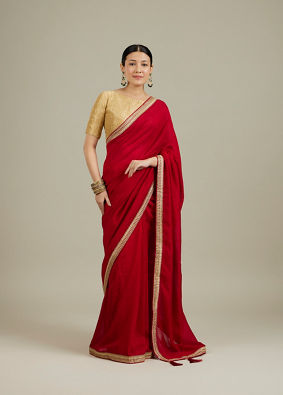
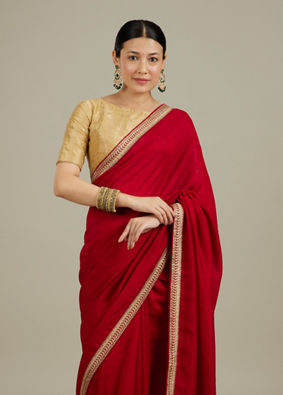
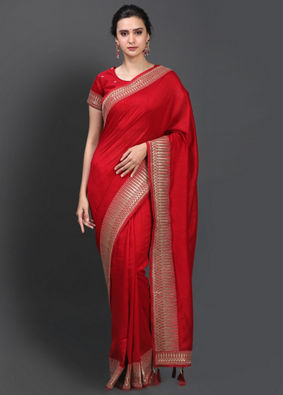
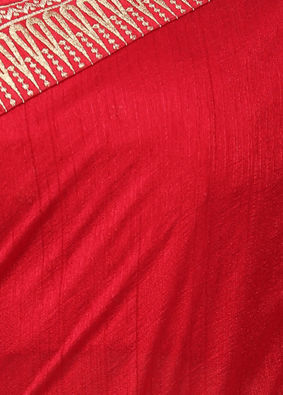
Splendid Dark Red Saree - ₹ 2,999 - is the simple, dependable one: a deep red drape with a clean border and a fluid fall that behaves beautifully when you pleat it. It has just enough detail to frame the saree and pallu without making it a heavy bridal piece. This is the saree you put on for a house puja where you’re also managing food and guests, for a Diwali lunch at work, or for a temple visit followed by a family meal. It looks traditional and polished, but never fussy, and it works with the kind of plain gold or beige blouse you probably already own.D
Dark Red Floral Sequinned Saree with Tassels Latkans - ₹ 3,499 - This one takes the same dark red base and turns the volume up by one notch. Along the border, floral sequins catch the light, and tassel latkans at the pallu add a bit of movement and fun. It still feels light and wearable, but visually it sits on the more festive side. This is your pick for card parties, evening aartis, roka functions, or intimate sangeets where you’re a guest and know there will be plenty of photos and reels. You drape it in minutes—the extra shimmer at the edge does the rest.
Why red sarees are a festival essential
Red sarees are more than a trend; they’re a tradition that refuses to go out of style. Across regions and communities, red keeps returning at every festival because it carries meanings that go beyond the surface: prosperity, power, love, and auspicious new beginnings. Women reach for red during major celebrations because it instantly signals “special day” without needing elaborate styling.
Over the years, this association has only deepened. A red saree is linked with goddesses like Durga and Lakshmi, and with the idea of Shakti—strength and feminine energy—which is why you see so much red during Navratri, Durga Puja, Karwa Chauth, and Diwali. At the same time, it has quietly become an everyday festive staple too: not every red saree is bridal, and not every occasion that calls for red has to be grand. That’s exactly the space these dark red styles are designed to live in.
Everyday‑festive, not bridal‑only
The beauty of these particular sarees is that they sit comfortably in the “festive but repeatable” bucket. There’s no heavy, all‑over zardozi that you’ll wear once and then pack away. Instead, you get clean bases, manageable borders, and focused detailing along the edges so the saree looks dressed but still light.
This matters in real life. You might be hosting a Diwali house party where you cook, light diyas, and then sit on the floor for cards. You might be going straight from office to temple to dinner. You might be traveling home for a festival and need something that looks good even after a few hours in a suitcase. A dark red saree that is festive without being delicate or bulky becomes the obvious answer in all those situations.
When a dark red saree feels just right
Red has a reputation for being “too much”, but darker shades soften its impact and make it surprisingly versatile. Deep red looks rich under warm yellow lights, elegant in natural daylight, and sharp in photos taken with phone cameras and flashes. That’s why it works across so many everyday‑festive settings:
-
At home, for Lakshmi puja or Satyanarayan katha, when you’re both the host and the one performing rituals.
-
At work, for Diwali, ethnic day, or that one annual celebration where everyone shows up in Indian wear and takes a hundred group pictures.
-
For roka, tilak, or ring ceremonies in the family, where you want to honor the occasion without competing with the bride.
-
For Navratri or Durga Puja visits, when red feels almost expected, but you still value comfort as you move between pandals or events.
-
As a newlywed, for your first festivals after the wedding, when elders often expect red, but you may not want to repeat your bridal saree.
In all of these scenarios, a dark red saree looks intentional and meaningful, but because the detailing is modest, you never feel overdressed if the gathering turns out to be smaller than you imagined.
How these sarees will photograph
We live in a world of candid photos, phone flashes, and reels; what you wear has to look as good on camera as it does in person. Dark red does a lot of heavy lifting here. It pops against neutral walls, beige sofas, and pastel decor, making sure you don’t fade into the background in group pictures. At the same time, it doesn’t blow out or look harsh in bright light the way some more neon reds can.
On the simpler saree, the focus is on the silhouette and the face. The clean body of the drape lets your jewelry, hair, and expression stand out. On the sequinned‑border saree, tiny points of light appear as you move, especially when you walk up stairs or turn for a photo, which adds a sense of motion without overwhelming the frame. In videos, both sarees look graceful and fluid rather than stiff or bulky, which matters when you’re dancing, doing aarti, or just moving around a crowded living room.
Styling red sarees for different moods
One of the biggest advantages of investing in accessible, everyday‑festive sarees like these is how easily they respond to styling changes. You can create very different moods without changing the saree itself.
Blouses:
-
For traditional pujas and temple visits, pair them with a classic gold or beige blouse—maybe with elbow‑length sleeves or a boat neck. It keeps the look rooted and respectful.
-
For evenings and parties, switch to a sleeveless, strappy, or deep‑neck blouse. Even a simple textured fabric or subtle self‑pattern immediately modernizes the drape.
-
If you like experimenting, try a contrast blouse in black, deep green, or even a soft pink. Red is strong enough to handle color blocking.
Jewelry:
-
Minimal studs, a small pendant, and a slim stack of bangles are enough for quiet, family‑only occasions.
-
For bigger nights, layer a choker with a long chain, or go for heavy jhumkas and a statement ring. Red loves gold, kundan, and polki, but it also looks contemporary with oxidized silver if you prefer a boho spin.
Makeup and hair:
-
Soft kohl, a hint of mascara, and a neutral lip keep the look light for long days.
-
For evenings, you can choose between a stronger eye (kohl‑rimmed, bronzy lids) or a stronger lip (classic red, wine, or berry). With a dark red saree, you rarely need to push both at once.
-
Hair can be a simple low bun with gajra, a mid‑height ponytail for practicality, or loose waves for a relaxed, modern feel. The sarees are uncomplicated enough that almost any hairstyle sits well with them.
Making one red saree work many times
Because these sarees sit in that sweet everyday‑festive space, the real value lies in how often you can repeat them. A few strategies help:
-
Change the blouse each time—sleeves, necklines, and fabrics make a bigger difference than most people realize.
-
Switch jewelry styles: traditional gold for Diwali with family, dainty, minimal pieces for the office, and chunkier oxidized sets for a more casual gathering with friends.
-
Play with drapes. A simple Nivi drape works everywhere, but you can slightly pleat the pallu for formal settings or leave it looser and more fluid for parties.
-
Let your hair and makeup signal the tone of the occasion. Even when the saree is the same, a bun and subtle makeup versus open hair and bolder kajal tell totally different stories.
Over time, the same two red sarees can quietly show up at dozens of different events, looking a little different every time—a practical, budget‑friendly way to build a festive wardrobe.
Frequently Asked Questions (FAQs)
1. Are these dark red sarees suitable for brides?
They’re better suited to everyday‑festive roles—pujas, Diwali, roka as a guest, office functions—than for heavy bridal looks. A bride could wear them as a lighter change‑over outfit, but they aren’t designed as main wedding‑day sarees.
2. Can I wear these to work events?
Yes. The simpler saree is especially work‑friendly; paired with a neat blouse and modest jewelry, it looks elegant and professional for office Diwali or ethnic day. The sequinned‑border one works well for after‑office celebrations and evening gatherings.
3. Will dark red suit my skin tone?
Deeper reds are generally flattering across a wide range of undertones. They tend to add warmth without making the face look washed out, and they balance well with gold jewelry, which most festive wardrobes already have.
4. How do I keep the look from feeling “too bridal”?
Go easy on very heavy jewelry, skip layered hair accessories, and choose blouses that are stylish but not exaggerated. Focus on one highlight—like statement earrings or a bold lip—rather than styling everything at full intensity.
5. How should I care for these sarees so they last?
Dry-clean them when needed, hang or fold them carefully, and keep them in breathable covers, away from direct sunlight, to prevent fading. Store the tasseled pallu inwards so it doesn’t snag on other garments.
6. Can I travel with these sarees easily?
Yes. Their relatively lightweight and manageable work mean they pack and unpack well. Roll or soft‑fold them, place them in a saree bag, and do a quick steam or gentle ironing on the reverse side before wearing.

 Filter