
STORIES BY MANYAVAR & MOHEY

Lifestyle
New Year, Three Ways: Manyavar & Mohey Looks for Poila Baisakh, Baisakhi, and Vishu
Date 8 April 2026 Reading time: 7-10 mins


April does not bring just one new year, it brings a whole season of fresh starts across India. Poila Baisakh in Bengal, Baisakhi in Punjab, and Vishu in Kerala are rooted in different histories, but they share the same feeling: beginning again with colour, ritual and togetherness. For couples, this is a beautiful moment to celebrate regional roots through coordinated Manyavar and Mohey looks that feel festive yet very wearable.
Think of this as your mini April festive wardrobe guide: one month, three New Year celebrations, and multiple outfit ideas that keep the soul of each festival intact while staying modern, comfortable, and camera-ready.
Understanding the three New Year festivals
Before choosing outfits, it helps to know what each festival actually celebrates and how that reflects in its colours and dress codes.
Poila Baisakh (Bengali New Year): Marked in West Bengal and among Bengali communities, Poila Baisakh marks the beginning of the Bengali calendar, with rituals such as haal khata (new account books), temple visits, and family gatherings. The visual language is dominated by red and white—laal–shada—which symbolizes auspicious new beginnings and cultural pride.
Baisakhi (Punjabi harvest/new year): In Punjab and among Punjabi communities, Baisakhi celebrates the harvest season and also marks the formation of the Khalsa in Sikh history. The mood is energetic and outdoorsy, with giddha, bhangra, fairs and processions—and outfits in bright, saturated hues that mirror that joy.
Vishu (Kerala new year): Vishu signals the astronomical new year in Kerala, centered around the Vishukkani—the first auspicious sight of the morning—and temple visits. The palette here is elegant and calm: ivory, off-white, and gold, with subtle hints of colour and traditional jewellery.
Once you understand these cores—laal–shada, bright Punjabi vibrancy, ivory–gold quiet luxury—it becomes easier to design Manyavar and Mohey looks that feel authentic for each celebration.
Poila Baisakh: Laal–shada love for Manyavar & Mohey
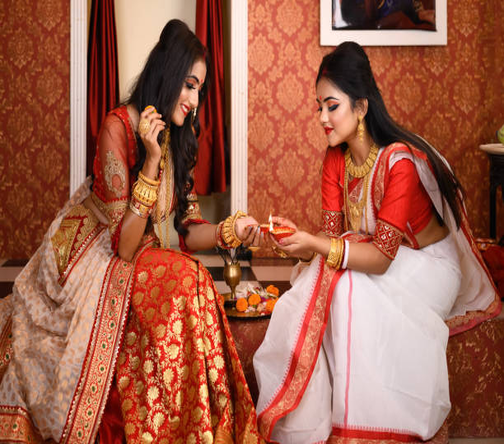
Poila Baisakh is defined by the iconic red-and-white palette—laal–shada—that instantly signals “Shubho Noboborsho”. Manyavar and Mohey can echo this through timeless silhouettes that work from morning pujo to evening haal khata visits.
For her (Mohey)
Classic laal–shada saree: White or off-white saree with a red border, or red-and-cream silk, styled with red bangles, a small bindi, and gold jewellery for a rooted Bengali look. Works beautifully for temple visits, pranam to elders, and early-morning rituals.
Handloom and jamdani-inspired drapes: Soft handloom or jamdani-style sarees in red, cream, or yellow give a slightly lighter, everyday-luxury feel. Ideal if you are moving between home, para events, and casual outings.
For him (Manyavar)
Daytime classic: White or cream kurta with pajama and a red stole, or a subtle red-detailed kurta that picks up the red from her saree. Simple, breathable fabrics keep the look practical for mid-April heat.
Evening upgrade: For evening meets or haal khata visits, a deeper red or maroon kurta with white churidar keeps the laal–shada spirit intact while feeling slightly dressier and more structured.
A Couple styling tip
Keep footwear and accessories simple—mojaris or kolhapuris for him, classic sandals for her—so the red and white story remains the hero of the look instead of getting lost under heavy styling.
Baisakhi: Vibrant Punjab energy in coordinated outfits
Baisakhi is all about harvest joy, fairs, music, and dance, and the outfits mirror that energy with bold colour and movement-friendly silhouettes. This is where Manyavar and Mohey can lean into bright hues, phulkari motifs, and playful details.
For her (Mohey)
Punjabi suit or Patiala set: A classic Punjabi suit or Patiala set in bold tones like mustard, red, orange, rani pink, or bottle green, paired with a flowing dupatta. Comfortable for giddha, visiting gurudwaras, and long days at melas.
Phulkari highlight: Phulkari-inspired embroidery or dupattas instantly read as Punjabi and look stunning in daytime photos and videos. Even a simple suit comes alive when paired with a statement phulkari dupatta.
For him (Manyavar)
Colour-blocked kurta sets: Kurta–pajama or Pathani-style kurta in colours that complement her suit—mustard with pink, red with cream, blue with orange, or green with yellow. These combinations pop beautifully in outdoor light.
Turban touch (optional): For a more traditional or photogenic look, add a matching or contrasting turban that ties your couple palette together.
A Couple styling tip
Because Baisakhi usually involves dancing and outdoor events, prioritize breathable fabrics and cuts that allow easy movement for both of you—think cottons, cotton-silk blends, and non-restrictive fits. You can go heavier on colour and pattern here, because the energy of the festival supports it.

Vishu: Understated gold and white elegance
Vishu in Kerala is about quiet grace—the Vishukkani, the first sight of the morning, and temple visits in elegant, minimal outfits. The colour code shifts from bright primaries to ivory, off-white, and gold, with gentle accents of colour that never overpower.
For her (Mohey)
Kasavu saree or Kerala set mundu: A traditional kasavu saree or Kerala set mundu in off-white or cream with a golden border, styled with temple jewellery and jasmine in the hair. This is the most classic Vishu look and photographs beautifully in natural morning light.
Pastel twist with gold: Soft pastels like mint, baby pink or pale yellow, as long as the gold border remains the hero, also feel perfect for Vishu morning and small get-togethers.
For him (Manyavar)
Traditional mundu pairing: A crisp white or cream kurta paired with a traditional mundu or dhoti in off-white with a gold border for temple visits and Vishukkani. Clean lines and a good drape make all the difference here.
Kurta–churidar with gold accents: For those who prefer trousers, a gold-accented kurta with a cream churidar still preserves the Vishu aesthetic and can be easier to carry through the day.
A Couple styling tip
Vishu looks come alive with details—well-ironed fabrics, simple sandals, matching gold accents in jewellery and watch straps, and fresh, understated grooming. The goal is serene elegance, not over-styling.
If you celebrate more than one of these at home
Many families today are multicultural—Bengali–Punjabi, Malayali–North Indian, or couples who simply love celebrating multiple regional new years. In that case, your April calendar may have Poila Baisakh, Baisakhi, and Vishu all within days of each other.
To keep things practical and stylish:
- Repeat silhouettes, change colour stories
- Use similar base silhouettes (kurtas for him, sarees/suits for her) and let colour and surface details do the cultural switch.
- Example:
- White kurta + red stole for Poila Baisakh.
- Same or similar kurta with bright phulkari-inspired stole for Baisakhi.
- Ivory or gold-bordered mundu-style drape for Vishu-style photos.
- One hero piece each
- For her: one Mohey saree that works with different blouses and jewellery to move from Noboborsho to Vishu, plus one bright Punjabi suit.
- For him: one neutral Manyavar kurta (white/cream) and one bright Baisakhi-toned kurta.
- Plan your couple palette for photos
- Poila Baisakh: red–white/cream.
- Baisakhi: bright, contrasting jewel tones.
- Vishu: ivory–gold with a very soft accent colour.
This way, your Manyavar and Mohey outfits feel fresh at each festival without needing a completely new wardrobe for every single date.
Pre-wedding and just-married couples: making April extra special
If you are newly married or engaged, April’s new-year festivals can double up as mini couple shoots without booking anything separately.
- Coordinate levels, not exact outfits
- Let one person go slightly heavier and the other lighter:
- Poila Baisakh: heavier Mohey laal–shada saree, simpler Manyavar kurta for him.
- Baisakhi: statement phulkari for her, solid bright kurta for him.
- Vishu: detailed kasavu saree, plain kurta–mundu for him.
- Use rituals as natural backdrops
- Vishukkani, haal khata, Gurudwara visits or family lunches make beautiful, candid backdrops for photos.
- Your coordinated Manyavar and Mohey looks will automatically tie these memories together visually.
- Subtle jewellery and grooming sync
- Match metal tones—gold for Vishu and Poila Baisakh, mixed metals or oxidized for Baisakhi if you want a younger vibe.
- Keep makeup fresh and hair easy to manage across heat and long days; for him, a well-groomed beard or clean shave makes the outfits look sharper.
Fabrics, comfort, and accessories across regions
No matter which festival you are dressing for, April’s weather demands comfort-first choices.
- Fabrics
- Choose cottons, cotton-silk, linen blends, and lightweight weaves that breathe well in humid climates.
- Keep heavily embellished pieces for evenings or indoor events.
- Footwear
- For him: mojaris, kolhapuris, or simple sandals that work across kurta–pajama, mundu, and slightly Indo-western looks.
- For her: block-heeled sandals, juttis, or classic flats that can handle temple steps, melas, and family homes.
- Accessories
- Poila Baisakh: red bangles, bindis, subtle gold, and maybe a gamchha-inspired stole for him.
- Baisakhi: phulkari dupattas, colourful parandas, playful bangles.
- Vishu: temple jewellery, jasmine flowers, gold-toned watches, and minimal clutches.
One festive season, many stories
Whether you are celebrating one of these festivals or blending multiple cultures in the same family, Manyavar and Mohey outfits can help you honour each tradition through thoughtful colour, fabric, and silhouette choices. Red and white for Poila Baisakh, bright Punjabi hues for Baisakhi, and ivory–gold minimalism for Vishu together turn April into a beautifully styled journey of new beginnings—for you, your partner, and the shared stories you are just beginning to write.

MADE IN INDIA

ASSURED QUALITY

SECURE PAYMENTS

