
STORIES BY MANYAVAR & MOHEY

Lifestyle
Ugadi & Gudi Padwa Outfit Ideas for Couples and Families
Date 17 March 2026 Reading time: 10-12 mins


Ugadi and Gudi Padwa mark the New Year in many parts of India, and both festivals are all about fresh beginnings, family time, and starting the year on an auspicious note. Homes are cleaned, rangolis are drawn, special dishes are prepared, and everyone gets ready for morning puja, temple visits, and family get-togethers. Dressing up becomes a big part of this joy—not just individually, but as couples and families.
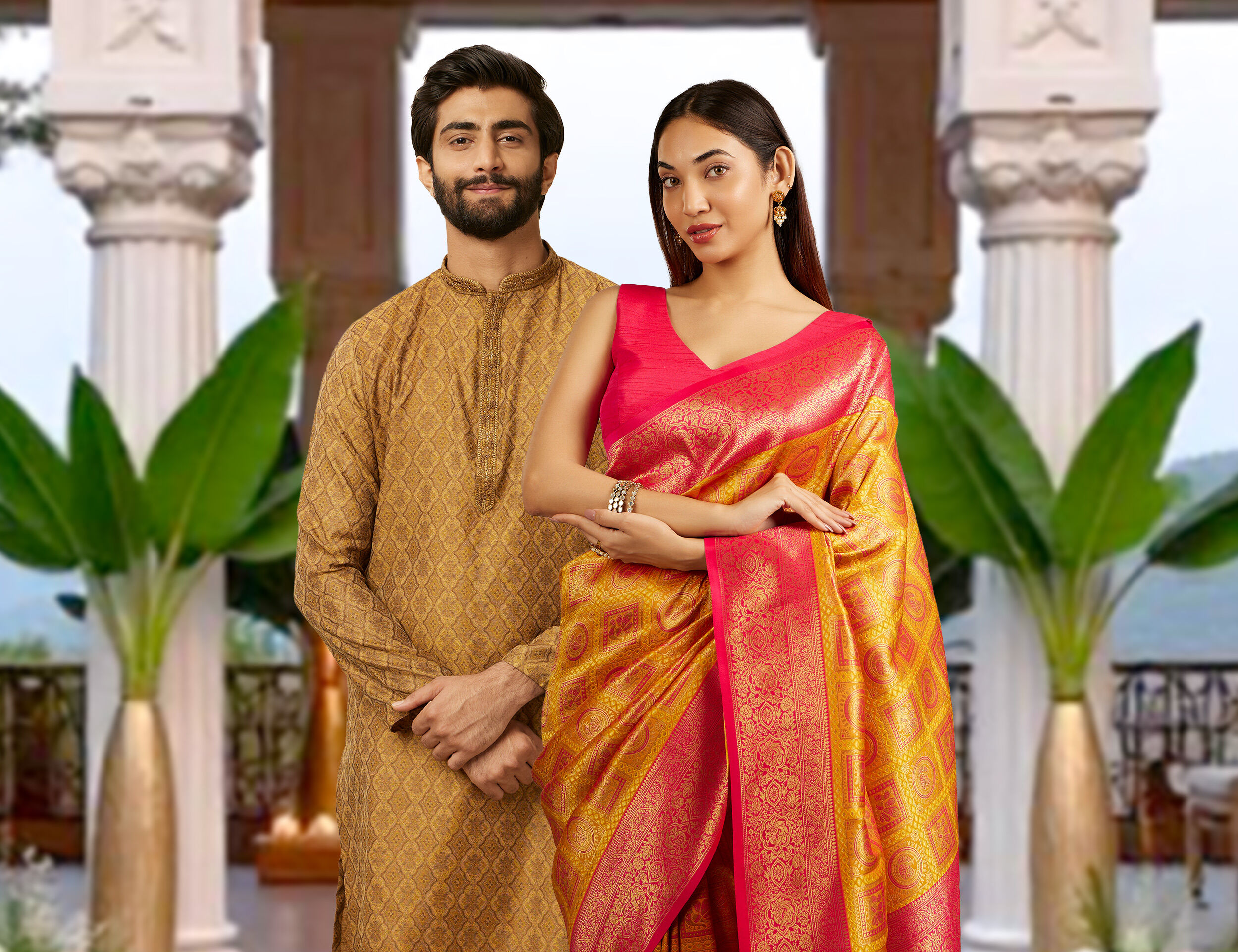
If you’re celebrating with your partner, kids, or extended family this year, coordinated outfits can make your photos look beautiful, and your memories feel even more special. Think of it less as “matching from head to toe” and more as sharing a colour story or mood through Manyavar kurtas and Mohey sarees/suits.
Why coordinate for Ugadi and Gudi Padwa?
Coordinated outfits do three things at once:
- They make family photos and videos look more cohesive and memorable (good for social media and for those framed photos at home).
- They visually reflect the idea of starting the New Year together—a small but powerful symbolism.
- They help you plan faster: once you fix a colour palette or theme, choosing individual outfits becomes easier.
The goal isn’t to look identical. It’s about creating a sense of harmony—through colours, fabrics, or details—while still letting each person’s personality shine through.
Colour palettes that work for everyone
Before you pick specific outfits, decide on a family colour palette. This makes shopping and styling much simpler.
1. Yellow and cream
Perfect for both Ugadi and Gudi Padwa, yellow represents prosperity and happiness, while cream/white adds calm and purity.
Works well for:
- Morning puja at home
- Temple visits
- Early family brunches
How to use it:
- One partner in a yellow saree or suit; the other in a cream kurta pajama with a hint of yellow in the stole or border.
- Kids in lighter lemon or pastel yellow outfits to keep them comfortable.
2. Green and gold
Green is strongly associated with growth and new beginnings, especially for Ugadi and Gudi Padwa. Gold adds festive richness.
Works well for:
- Families that like a slightly dressier, more regal look.
- Evening aartis, bigger lunches, or community gatherings.
How to use it:
- Her in a green saree with golden border; him in a beige or gold-toned kurta with a green jacket or stole.
- One child in a light green kurta, the other in a gold/beige lehenga or frock suit.
3. Saffron, red and white
These shades are especially popular for Gudi Padwa in Maharashtra, but also suit New Year celebrations across regions.
Works well for:
- Families with Maharashtrian roots.
- Outdoor rituals like gudi hoisting or society celebrations.
How to use it:
- Her in a saffron or red saree, perhaps Paithani-inspired; him in a white kurta with saffron or red accents.
- Kids in white outfits with bright dupattas, waistcoats or hair accessories.
You can keep the palette strict or simply let these colours repeat in different combinations across the family.
Couple outfit ideas for Ugadi
Ugadi is celebrated widely in Andhra Pradesh, Telangana, and Karnataka, with a strong connection to spring and fresh starts. Morning rituals often start early, so comfort and light colours work beautifully.
Classic yellow & cream couple
- For her: A yellow silk-blend or cotton-silk saree with simple zari border, or a yellow Anarkali / kurta set with subtle embroidery.
- For him: A cream kurta pajama with a light yellow stole or a soft yellow kurta with white pajama.
Why it works:
- Very Ugadi-appropriate with its auspicious yellow tones.
- Light colours look fresh in morning sunlight and photos.
- Both outfits can be reused for other pujas and functions later in the year.
Green & off-white couple
- For her: A green kurta set or saree in a comfortable fabric, easy to move in while cooking, doing puja, and hosting guests.
- For him: An off-white kurta or ivory kurta pajama with a green bandi (Nehru jacket).
Why it works:
- Green signals new beginnings, while off-white keeps the look graceful.
- Swapping who wears the main colour (her in off-white, him in green) still keeps them coordinated.
Couple outfit ideas for Gudi Padwa
Gudi Padwa is the Maharashtrian New Year, known for the iconic gudi flag, special dishes, and women in rich sarees—often Nauvari or Paithani-inspired.
Paithani-inspired saree & silk kurta
- For her: A saree that takes inspiration from Paithani—rich colours (green, magenta, mustard), zari borders, and traditional motifs. It doesn’t have to be a full nine-yard drape; even a six-yard with the right styling feels festive.
- For him: A silk or silk-blend kurta pajama in cream, off-white or a complementary colour (like deep green or maroon).
Why it works:
- The saree carries a strong Maharashtrian flavour; the kurta keeps him comfortable.
- Together, they look rooted yet not overdone.
Saffron & white couple
- For her: A saffron or mustard saree / Anarkali with traditional jewellery—nath, green bangles, chandrakor bindi if she enjoys them.
- For him: A white or cream kurta with a saffron jacket, or a saffron kurta with white pajama.
Why it works:
- Saffron is strongly connected with Gudi Padwa and symbolises energy, wisdom, and auspiciousness.
- Easy to style for both partners and very eye-catching in photos.
Family outfit ideas: Parents and kids
Coordinating with kids is a fun way to make the New Year feel like a true family celebration. The key is to keep children comfortable while still tying them into the overall look.
Option 1: Same colour, different intensity
Example: Ugadi in yellow and green
- Mother: Medium yellow saree with green border.
- Father: Light-cream kurta pajama with a green jacket.
- Child 1: Light lemon yellow kurta with white pajama.
- Child 2: Soft mint green lehenga or frock suit.
Why it works:
- Everyone is in the same palette, but no one is in exactly the same shade.
- Children’s colours are a bit softer and fabrics lighter for comfort.
Option 2: Two-colour family theme
Example: Gudi Padwa in saffron and white
- Mother: Saffron saree with subtle gold work.
- Father: White kurta pajama with saffron stole.
- Kids: One in a white kurta with a saffron jacket; another in a saffron dress or lehenga with a white dupatta.
Why it works:
- Very high-impact in photographs—especially around the gudi or near the door.
- Easy to execute with pieces you might already have.
Option 3: Parents in solids, kids in prints
Example: Neutral base with festive prints
- Parents: Solid-toned outfits (say, beige kurta + teal saree).
- Kids: Printed kurtas, lehengas, or frock suits in colours that pick from both parents’ outfits.
Why it works:
- Solids on adults keep the overall look calm.
- Prints on kids add a playful, youthful energy.
Styling for mixed-region families
Many couples and families today come from different regions—Telugu, Marathi, Kannada–North Indian, etc. If you celebrate both Ugadi and Gudi Padwa, or you’re blending traditions, your styling can reflect that too.
Blend of drapes and silhouettes
- One day she can wear a Ugadi-inspired look (yellow Kanjeevaram-style or cotton-silk saree), and the next a Gudi-Padwa-inspired drape (Paithani-style or nauvari-inspired).
- He can switch between a simpler Ugadi-appropriate kurta pajama and a slightly more ornamental kurta or dhoti- style outfit for Gudi Padwa.
Shared colour story across festivals
If you celebrate multiple New Year rituals in the same week, pick one palette that flows across:
- Yellow + green for Ugadi that moves into saffron + green for Gudi Padwa.
- Pastels for one day, deeper tones of the same colours for the next.
This way, your Manyavar and Mohey outfits feel part of a connected story, not isolated events.
Simple accessories to pull it all together
You don’t need heavy add-ons; a few thoughtful accessories can complete the couple or family look:
For her:
- Gajra in the hair for Ugadi, or a bun with fresh flowers for both festivals.
- Traditional nath, green bangles, and chandrakor bindi for Gudi Padwa, if she enjoys that style.
- Comfortable yet festive footwear—mojris, sandals with a bit of shine, or wedges.
For him:
- Juttis or kolhapuris in neutral tones.
- A simple watch and, if he likes, a stole or jacket that picks up the family colour palette.
For kids:
- Soft, secure footwear (no slippery soles).
- Hair accessories like floral clips or headbands that echo the colours parents are wearing.
Practical tips for a stress-free festive morning
Ugadi and Gudi Padwa mornings can get hectic—rangoli, puja prep, last-minute cleaning, relatives arriving. A few small decisions make coordinated dressing easier:
- Plan outfits the previous night: Lay out everything from jewellery to footwear so you’re not hunting for safety pins at the last minute.
- Prioritise comfort: Especially for the person doing most of the cooking or hosting, and for kids. Light, breathable fabrics are your best friends.
- Keep backup options: One extra kurta or dupatta in a neutral colour can save you from a last-minute mismatch or stain emergency.
- Take photos early: Try to take couple/family photos soon after getting ready, before outfits get crinkled or kids get restless.
New Year, same togetherness—just better dressed
Coordinated Ugadi and Gudi Padwa outfits aren’t about being “picture perfect”—they’re about visually celebrating the fact that you’re entering a new year together. The saree she chooses, the kurta he wears, the little lehenga your daughter twirls in, or the tiny kurta on your son—all become part of how you’ll remember this New Year when you look back at photos years later.
Whether you go full yellow-and-green, Paithani-and-silk, or keep it simple with one shared accent colour, the idea is to let your Manyavar kurtas and Mohey sarees/suits quietly echo your family’s bond. That’s what makes these festivals feel special—not just the date on the calendar, but the people you dress up with and celebrate beside.

MADE IN INDIA

ASSURED QUALITY

SECURE PAYMENTS

