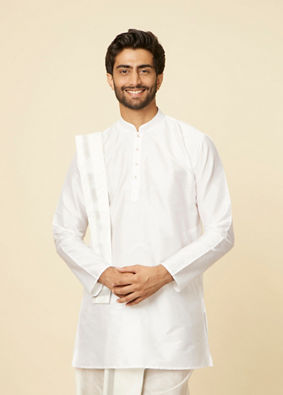
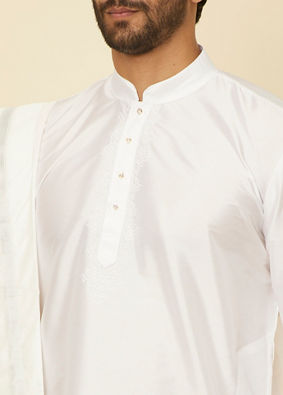
White dhoti for Men
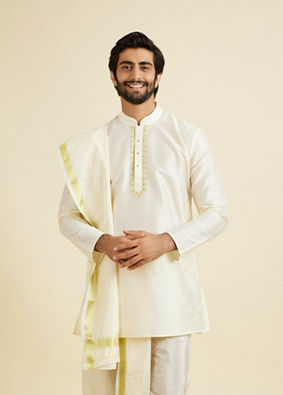
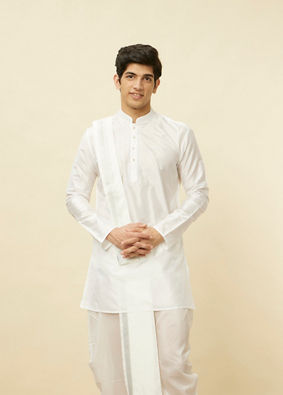
A dhoti is a wrapped lower garment, usually in soft white or warm white, draped around the waist and legs with neat pleats and a defined fall. At Manyavar, white dhoti styles are offered as ready-to-wear or pre-stitched dhoti sets with elasticated waists and pre-marked pleats, often described as South Indian or Panchakacham dhoti sets.
You’ll also find dhoti paired with matching angavastram or dupatta in certain sets, giving you a complete, temple- or mandap-ready look in one go.
Why dhoti works now
A dhoti feels especially relevant at a time when many families are going back to classic silhouettes for key rituals and temple ceremonies. It looks appropriate and respectful for homams, muhurtham, griha pravesh, and South Indian-style weddings, while still pairing beautifully with contemporary kurtas and shirts.
For men who usually wear trousers or pajamas, Manyavar’s ready dhoti format makes it easier to step into this look without needing to master complicated tying from scratch.
Fabrics and feel
Comfort is crucial in a dhoti, especially when you’re wearing it through long rituals. Manyavar focuses on:
-
Soft blended or cotton-based dhoti fabrics that drape well and feel breathable during poojas and summer functions.
-
Warm dhoti sets enriched with zari borders for a slightly richer, ceremonial look that still moves easily.
-
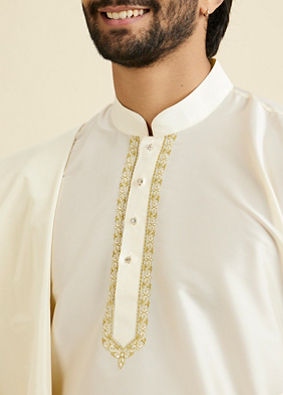
Embroidered dhoti styles with fine detailing near the borders to match worked kurtas or sherwanis.
Lengths and waists are typically free size with elastic or adjustable waistbands, so a single dhoti can comfortably fit a range of waist sizes while maintaining the right fall.
Panchakacham and South Indian influence
Several Manyavar dhoti sets take inspiration from the Panchakacham style, a revered South Indian way of draping with multiple folds and a more structured, layered look. These ready dhotis:
-
Capture the essence of Panchakacham draping while simplifying the process into a pre-stitched format.
-
Often feature golden zari borders along the edges to echo traditional temple and wedding aesthetics.
This makes a dhoti set particularly apt for muhurtham, upanayanam, major temple visits, and other auspicious days where this style is preferred.
Where to wear
A dhoti naturally fits into more traditional or ritual-focused events. It’s a strong choice for:
-
Temple visits and homams where you might be seated close to the sanctum or leading puja rituals.
-
South Indian weddings, especially during muhurtham, kalyanam, and related ceremonies where dhoti is expected or encouraged.
-
Housewarming ceremonies, Satyanarayan pooja, and special family religious functions at home.
-
Festival days like Pongal, Onam, or special aartis where a dhoti and kurta or shirt feels both comfortable and appropriate.
If you’re used to kurta pajama, shifting into a dhoti for these specific events can make the day feel more rooted in tradition.
Styling
The way you pair and accessorise a dhoti defines the overall look.
For classic temple or ritual wear:
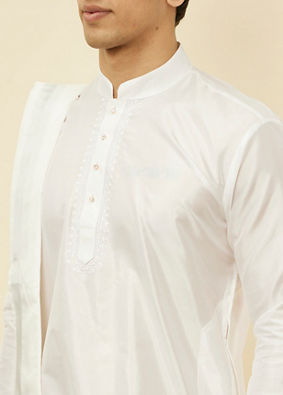
- Pair your dhoti with a plain or lightly worked white or cream kurta, or a traditional shirt depending on the custom.
- Choose simple sandals or chappals that are easy to slip off at temple or mandap entrances.
For wedding or more formal ceremonies:
- Wear a dhoti set with zari borders and match the border tone (gold, for example) with your angavastram, shawl, or stole.
- Coordinate with a worked kurta, waistcoat, or sherwani-style upper if the function leans grand, especially when you’re close family.
Because a dhoti already has strong cultural presence, you rarely need heavy accessories; a simple watch, chain, or kada is usually enough.
How a dhoti fits into your wardrobe
A dhoti may not be an everyday piece, but it quickly becomes essential for certain types of occasions. It’s the garment you’ll reach for whenever there’s:
-
A temple-centric function
-
A South Indian-style ceremony
-
A family ritual where dhoti is preferred or requested
Planning-wise, it helps to keep:
-
One simple dhoti set for temple visits, home rituals, and smaller poojas.
-
One zari-detailed South Indian dhoti set reserved for weddings and major ceremonies.
-
Matching or neutral kurtas and shirts that can pair with both sets, so you don’t have to plan new outfits each time.
With this, your dhoti becomes a dependable part of your festive wardrobe—brought out on days that matter a little more, and always ready to sit comfortably alongside your kurtas, sherwanis, and suits.
FAQs:
1. When should I choose a white dhoti over pyjamas or trousers?
Choose a dhoti for temple visits, South Indian-style weddings, homams, and major religious ceremonies where traditional draping is preferred. It feels more aligned with rituals than regular bottoms.
2. Is a white dhoti difficult to wear?
Manyavar’s dhoti sets often come in ready or pre-stitched formats with elastic waists and preset pleats, making them much easier to wear than manually tied versions.
3. What should I pair with a white dhoti on top?
You can pair a dhoti with a kurta, short kurta, or traditional shirt depending on the occasion and regional customs. For grand ceremonies, a worked kurta or sherwani-style upper looks apt.
4. Is a white dhoti comfortable for long rituals?
Yes, dhoti styles from Manyavar use soft, breathable fabrics and free-size waists so you can sit cross-legged, stand, and move comfortably over long pujas and ceremonies.
5. How do I care for a white dhoti with zari?
White dhoti pieces with zari borders are best dry-cleaned or gently hand-washed following care instructions, and stored folded carefully to protect the border from damage.

 Filter