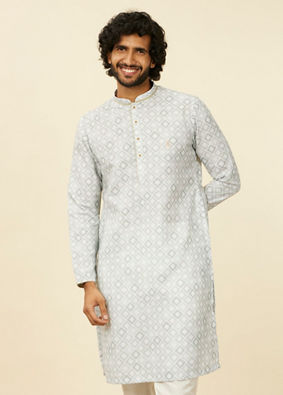
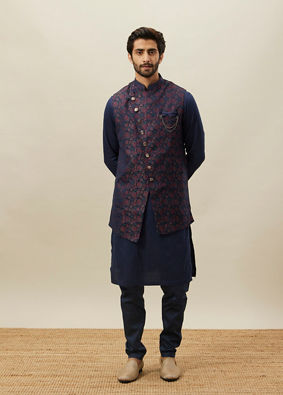
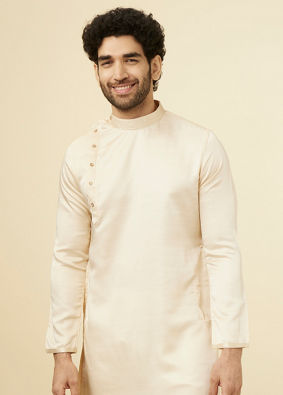
Angrakha kurta for Men
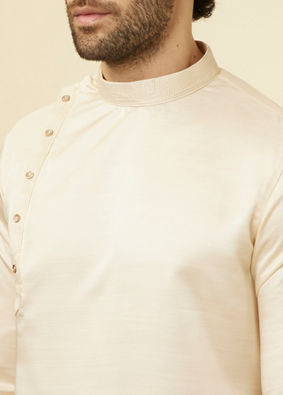
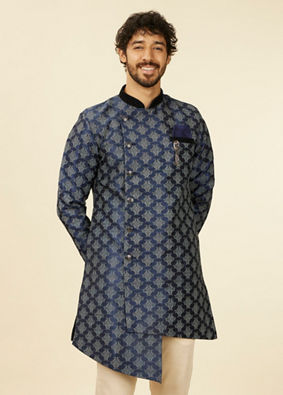
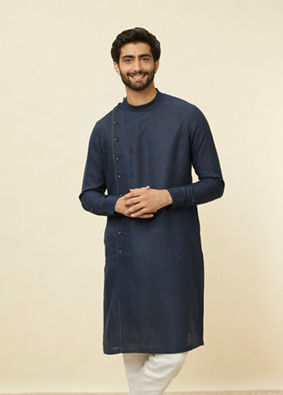
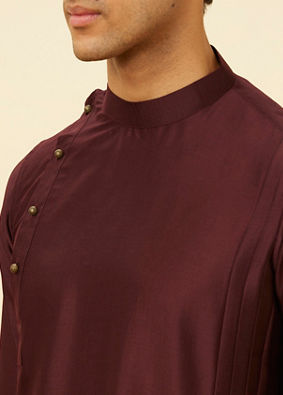
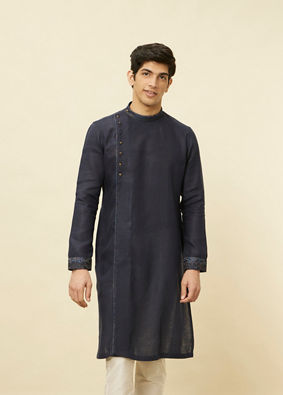
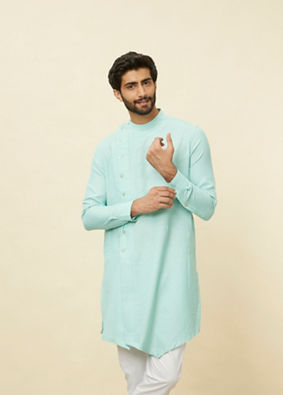
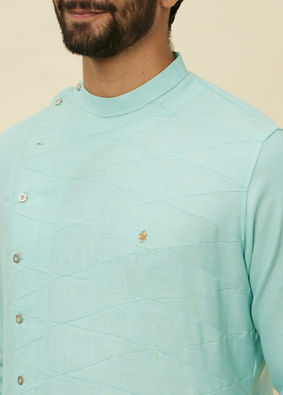
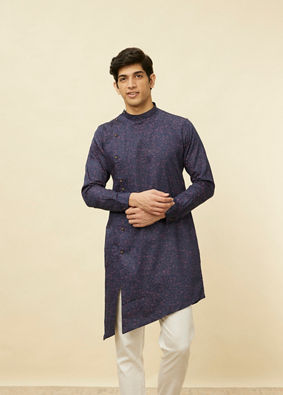
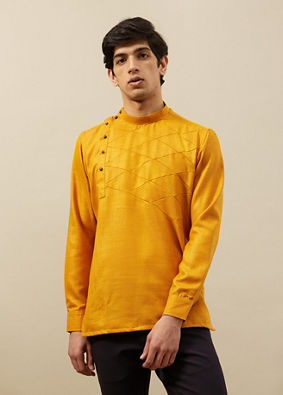
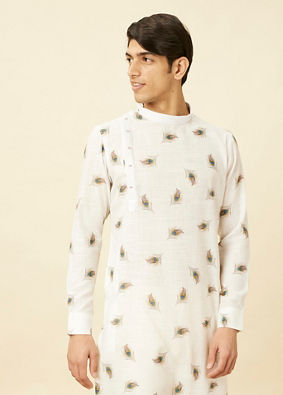
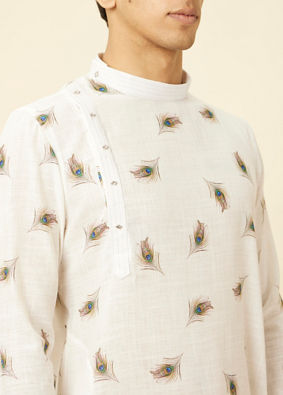
An angrakha kurta features a crossover front where one panel overlaps the other, usually fastened with buttons or a styled placket along the side or centre. Unlike a straight-front kurta, the angrakha cut creates diagonal lines across the torso, adding shape and a bit of drama to the upper body. Manyavar’s kurta pieces often come as complete sets with coordinated pyjamas or dhoti-style bottoms, giving you a ready event look in one go.
The neckline is typically a bandhgala or stand collar, and the hem can be straight, flared, or drape-detailed depending on the style. This combination makes the kurta feel like a smart middle ground between a kurta set and a more structured outfit like a jodhpuri or sherwani.
What you get with an angrakha kurta
It is trending because it instantly looks “styled” without you needing layers or heavy add-ons. In photos and videos—from haldi dance reels to sangeet entries—the crossover cut and interesting hemlines stand out more than a basic straight kurta.
Today’s celebrations are also more relaxed and mix-and-match in their dress codes; you might wear a simple cotton kurta for one function and choose a kurta for another to feel a bit more dressed up. It’s a great option if you want something statement-making but still easy to move, sit, and dance in.
How it feels on skin
Manyavar uses comfortable, celebration-friendly fabrics to make angrakha kurta styles easy to wear for longer functions. You’ll find:
-
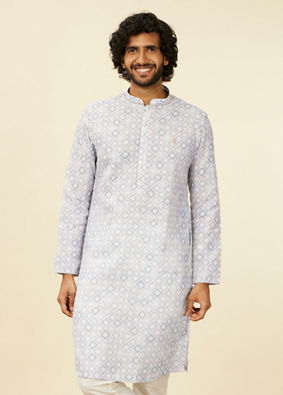
Soft blends and cotton-rich fabrics in cream-beige or lighter tones for classic, versatile kurta sets.
-
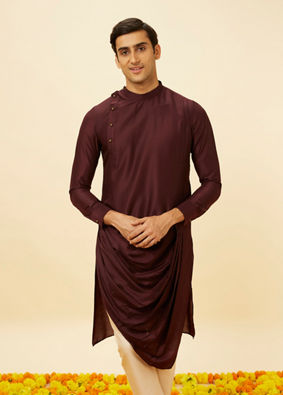
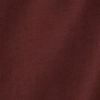
Fluid materials with good fall used in wine, black, and deeper colours, especially where drapes or cowl hems are part of the design.
-
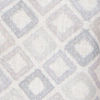
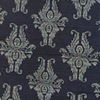
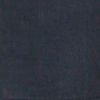
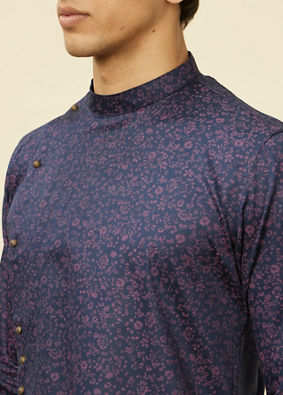
Printed or patterned fabrics, like floral or textured designs, that add interest without needing heavy embroidery.
The aim is a smooth, non-scratchy feel on the skin, with enough structure to hold the angrakha shape while still letting the garment move with you. This is important when you’re changing positions often—standing for rituals, sitting for poojas, or dancing with friends.
Designed to sit well
An angrakha kurta has a few signature design details that give it its character. Look out for:
-
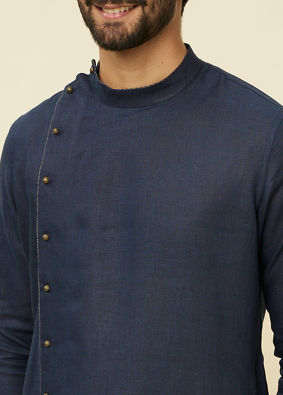
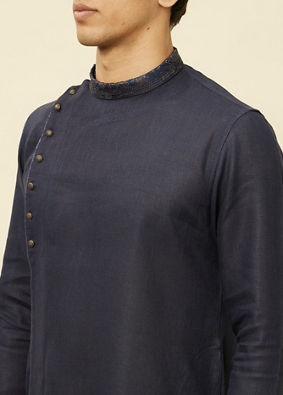
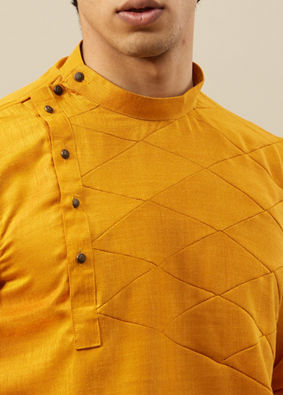
Overlapping front: The hallmark of this kurta, where one side crosses over the other and is finished with a defined placket.
-
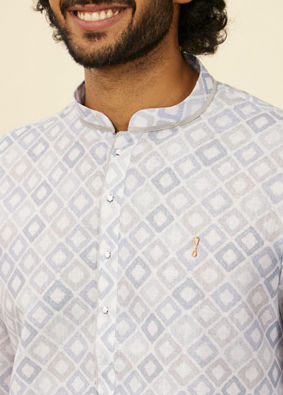
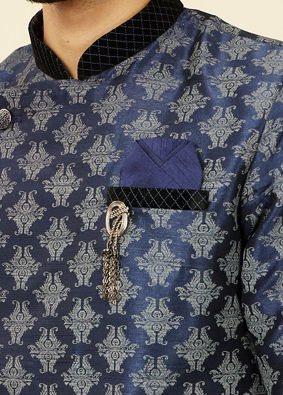
Bandhgala collar: A stand collar that keeps the neckline structured and sharp—great for slightly formal settings.
-
Shaped hem: Some kurta pieces have a classic straight hem, while others use flared or cowl-drape hemlines for added movement.
Fits are generally straight or slightly A-line, giving a bit more flare at the bottom without looking oversized. Many sets are paired with churidars, straight pyjamas, dhotis, or patiala-style bottoms, so the whole silhouette feels cohesive.
Colour Story and prints
Angrakha kurta designs at Manyavar play with different colours and surface highlights to match your event mood. You’ll see:
-
Cream and beige kurta sets that feel timeless and versatile for multiple functions.
-
Deep wine, midnight black, and similar rich shades that look striking for evening celebrations.
-
Floral patterns and prints styled in angrakha cuts, especially in darker bases like kohl or midnight black for a festive yet modern look.
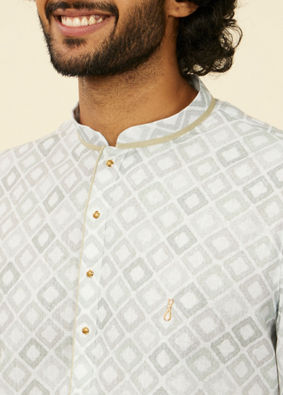
Some kurta pieces focus more on print and cut, while others add subtle metallic buttons, piping trims, or minimal detailing along the placket to enhance the crossover design.
Where to wear an angrakha kurta
Because of its built-in styling, an angrakha kurta works beautifully across many occasions. You can rely on it for:
-
Wedding functions: sangeet, cocktail, or even a slightly dressier haldi when you want something fluid yet structured.
-
Festivals and family gatherings: Diwali dinners, festive house parties, or special poojas at home.
-
Engagements and roka ceremonies: especially when the invite is at a banquet hall or hotel and you want a refined, contemporary silhouette.
-
Office and campus events: ethnic days, cultural evenings, or farewell nights where the kurta stands out without feeling too heavy.
With the right pairing, the same kurta can feel slightly formal or comfortably relaxed, depending on the function.
Dress it up or keep it easy
How you style an angrakha kurta can take it from soft and understated to almost stage-ready.
-
For classic, balanced looks: Pair a cream-beige kurta set with tonal churidar or pyjama and tan or brown mojari or sandals. Keep accessories minimal—maybe a watch and a simple kada—to let the cut and overlap do the talking.
-
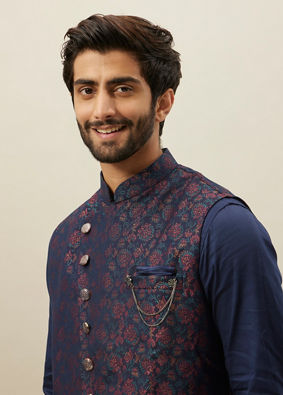
For more festive or evening events: Choose a wine or black kurta with drape detail or floral patterning, and pair it with slim bottoms and mojaris or dress juti. Add a brooch at the chest or a sleek pocket square if the kurta has a pocket to echo the event’s colour theme.
-
For a younger, playful mood: Wear an kurta with tapered pants instead of traditional churidar, especially for college or friends’ parties. Opt for minimal sneakers or open sandals if the event is more casual and music-led, keeping jewellery light.
Because the angrakha shape is already visually interesting, you rarely need heavy layering; simple, well-chosen footwear and one or two accessories are usually enough.
A repeat ready favourite
This kurta is that “special but not over-the-top” piece you pull out when you want your outfit to feel a little more styled than your usual straight-cut kurtas. It fills the gap between everyday celebration wear and very formal looks, giving you a strong option for mid- to high-importance functions. You can build around it smartly with:
-
One neutral-toned kurta set (like cream-beige) for versatile, repeatable wear.
-
One richer-coloured kurta with drape or print for evening and stage-facing events.
-
A couple of footwear options—one simple sandal and one dressier mojari or juti—to fine-tune how formal the same outfit feels.
Once you have that, your kurta becomes a go-to choice whenever an invite hints at something festive, musical, or slightly dressy.
Frequently Asked Questions (FAQs):
1. What makes an angrakha kurta different from a normal kurta?
The kurta has an overlapping front with a side or angled placket, creating diagonal lines and a more styled silhouette, unlike the straight-front cut of a regular kurta. It often pairs with coordinated bottoms for a complete, occasion-ready look.
2. For which occasions can I wear an angrakha kurta?
You can wear the kurta for weddings, sangeets, cocktails, festivals, home poojas, office ethnic days, and campus events. The cut is versatile enough to feel appropriate at both intimate family gatherings and more formal celebrations.
3. How should an angrakha kurta fit?
The kurta should sit neatly at the shoulders with a comfortable but defined shape across the chest and waist, so the overlap falls smoothly. The length and flare should allow easy movement, sitting, and dancing without the fabric pulling.
4. What bottoms work best with an angrakha kurta?
The kurta sets at Manyavar commonly pair with churidars, straight pyjamas, dhoti-style bottoms, or patialas, depending on the design. For a more contemporary twist, you can also style them with tapered trousers for certain events.
5. How do I style an angrakha kurta to make it look more festive?
Choose richer colours or printed/drape-detailed kurta styles, add mojari or juti, and include a small accessory like a brooch or bracelet. The overlap, collar, and hem already add interest, so a few well-chosen touches go a long way.

 Filter