Golden sherwani for Men
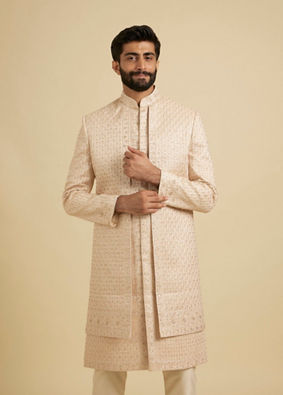
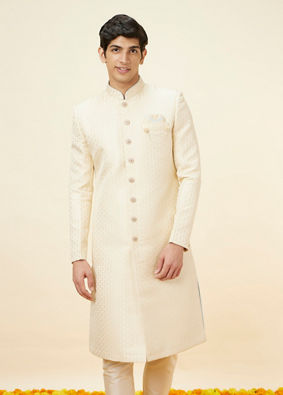
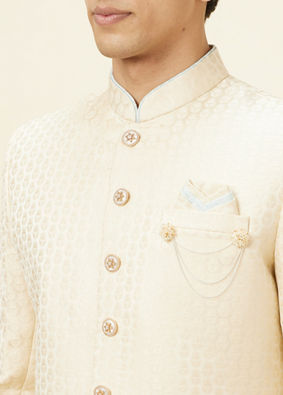
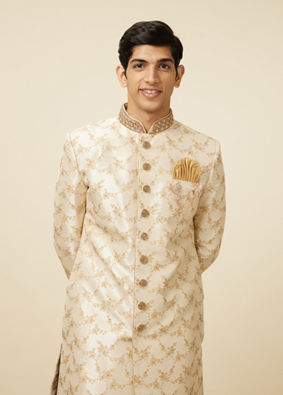
A sherwani is a long, structured jacket-style outfit in gold, antique gold, champagne, or golden-cream tones, worn over a kurta with coordinated bottoms. It usually features a bandhgala collar, front button placket, and a straight or slightly tapered silhouette that falls below the knee, often paired with churidar or slim pants.
Manyavar’s sherwani space includes open sherwanis, classic front-button styles, achkan-inspired cuts, and heavily worked sets with coordinated churidar and, in some cases, accessories like dupattas or embellished bandhgala pieces.
Why golden sherwani works now
A golden sherwani fits perfectly into modern weddings where décor, lighting, and themes are often warm and opulent—think fairy lights, chandeliers, and soft metallic accents. Gold tones reflect these surroundings beautifully, helping your sherwani stand out without clashing with the bride’s look, whether she’s wearing reds, pastels, or neutrals.
It also reads as unambiguously “ceremony-worthy.” When you wear a sherwani, the message is clear: this is a key function, and your role in it matters—ideal for grooms, brothers, and close family.
Fabrics and feel
Manyavar’s sherwani designs lean into fabrics that can carry both colour and intricate work while remaining wearable for long events. You’ll find:
-
Silk and silk-blend bases in pieces like the Golden Hue Opulence Open Sherwani, offering a rich hand-feel and smooth fall.
-
Art silk and self-design or brocade fabrics that bring in woven patterns and a refined sheen without excessive weight.
-
Sherwani sets with dense lattice patterns and stone work crafted on sturdy, premium bases to support embroidery and embellishment.
These are supported with lining and structured tailoring to help the sherwani sit well on the shoulders and chest while still letting you move, sit, and greet guests through a long ceremony.
Fits, silhouettes, and surface work
The impact of a sherwani comes from both its cut and its detailing.
Silhouette-wise, you’ll see:
-
Classic front-closure sherwanis with a straight, slightly tapered shape and side slits.
-
Open sherwani styles (like Golden Hue Opulence) designed to be layered over coordinated inner sets, giving more depth and movement.
-
Achkan-style sherwanis in golden cream tones that combine a sleeker profile with traditional length.
On the surface, work can include:
-
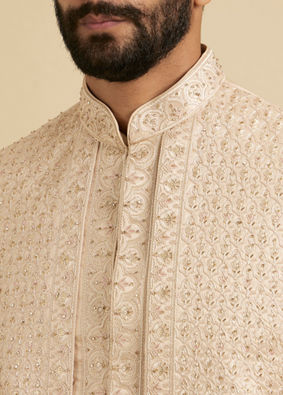
All-over self-textured brocade or buta patterns that make the sherwani look rich even without heavy embroidery.
-
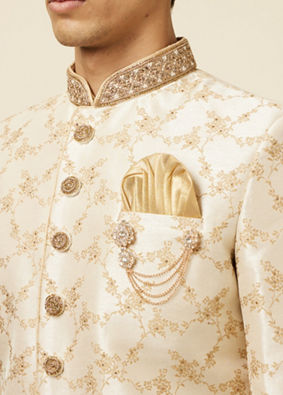
Stone work, lattice motifs, and intricate embroidery concentrated across the body and sleeves, as in antique gold stone work sherwani sets.
-
Sequins, zari, and thread work in art silksherwani designs for higher sparkle under stage and mandap lights.
Together, these elements ensure that a sherwani reads as statement-making from every angle, both in person and in photos.
Where it fits in your celebrations
A sherwani is usually reserved for the most important functions:
-
Main wedding ceremony and pheras, especially in indoor or evening settings where gold glows under artificial lights.
-
Receptions, where a sherwani with strong embroidery or stone work feels appropriate for stage time and formal couple entries.
-
Engagements or sagai and big family functions, particularly when you’re in the immediate family or core friend circle and want something grander than a kurta set or Indo-western.
If you’re the groom, a more elaborate sherwani—with heavier work or open-layered styling—anchors your main event look; if you’re a close cousin or brother, you might choose a slightly softer golden-cream or self-design sherwani that still feels rich but leaves more focus on the groom.
Styling
Styling is key to making a golden sherwani feel cohesive and personal.
Core elements:
-
Bottoms: Most sherwani sets come with matching or cream-toned churidar or slim pants; you can occasionally introduce a slightly darker contrast if the design allows, but staying within the gold–cream spectrum usually looks most polished.
-
Dupatta/stole: A coordinating or slightly contrasting dupatta with light embroidery, borders, or motifs instantly completes the sherwani for groom-level looks.
-
Safa/pagdi: Shades of maroon, rust, deep green, or a hue echoing the bride’s outfit all pair well with sherwani pieces and help pull the couple’s look together in photos.
Accessories and footwear:
-
Pearl or stone malas, brooches, and pocket squares can be layered depending on how ornate the sherwani fabric and work already are.
-
Juti or mojaris in gold, beige, tan, or champagne tones visually extend the sherwani and keep the colour story consistent from head to toe.
Because a sherwani is already visually strong, it helps to pick one or two hero accessories and let the garment’s own work remain the main focus.
How it fits into your wardrobe
A golden sherwani is rarely an everyday piece; it’s a central part of your high-occasion wardrobe. That said, you can plan it for longevity:
-
Choose a sherwani in a tone and work level that feels right for your biggest event (wedding, engagement, or milestone), but not so hyper-specific that you can’t wear it again.
-
After the main function, you can restyle it with different safas, dupattas, or jewellery to wear at a sibling’s or cousin’s wedding or another major celebration, giving it a slightly different personality each time.
-
Over time, it remains your most formal outfit—something you can rely on whenever an invite calls for true ceremony dressing rather than just festive wear.
Handled this way, your sherwani becomes less of a one-time costume and more of a signature piece for life’s biggest events.
FAQs:
1. For which occasions is a golden sherwani best suited?
A golden sherwani is ideal for main wedding ceremonies, receptions, engagements, and significant family events where you want a high-impact, regal look.
2. What fabrics are common in a golden sherwani?
Manyavar golden sherwani designs use silk, art silk, brocade, and similar premium blends, often with self-texture, stone work, sequins, and intricate embroidery.
3. How should a golden sherwani fit?
It should sit cleanly on the shoulders, follow a straight or slightly tapered line past the knee, and allow you to walk, sit, and climb steps comfortably when fully fastened.
4. How can I style a golden sherwani to match my partner’s outfit?
Keep the golden sherwani as your neutral-luxe base and echo your partner’s colours in your safa, dupatta, mala, or pocket square. This creates coordinated photos without needing identical tones.
5. How do I care for a golden sherwani?
Always dry clean a golden sherwani—especially those with stones, sequins, and zari—and store it in a breathable garment bag away from direct light to preserve colour and embroidery.

 Filter