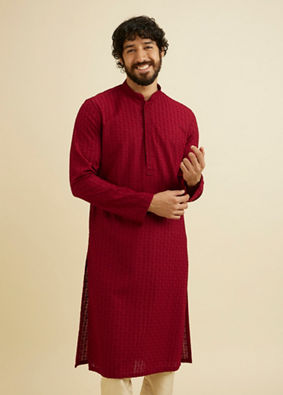
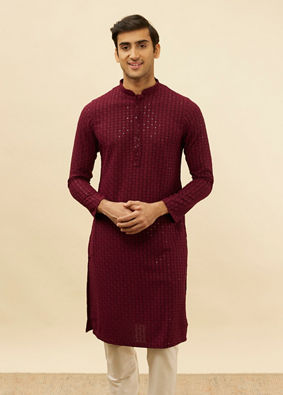
Red chikankari kurta for Men
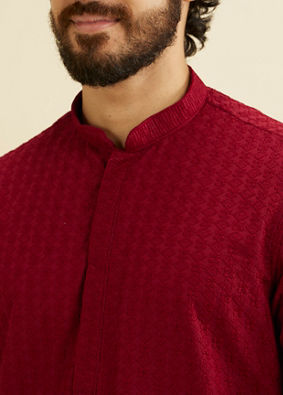
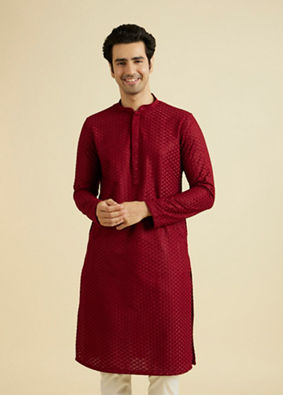
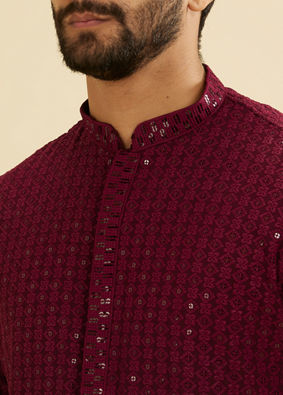
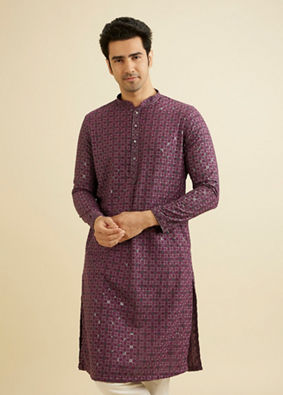
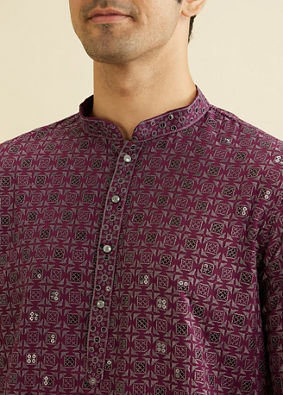
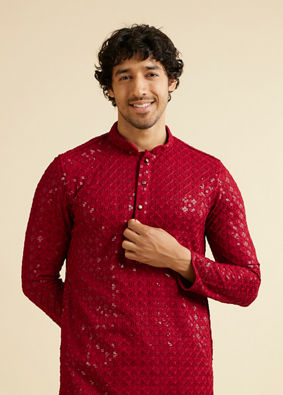
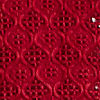
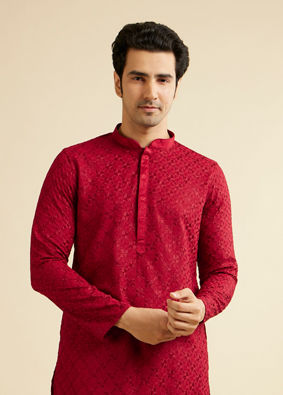
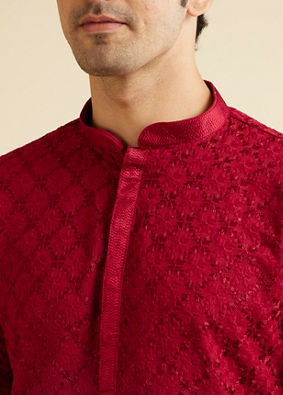
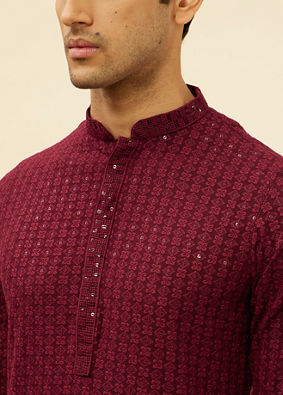
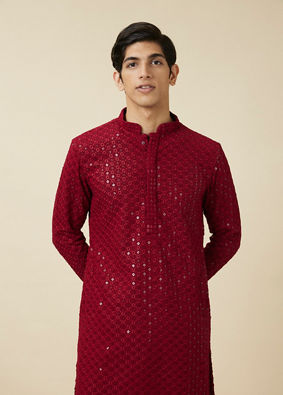
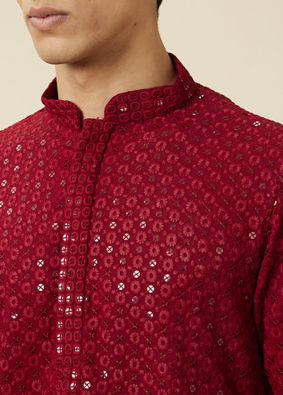
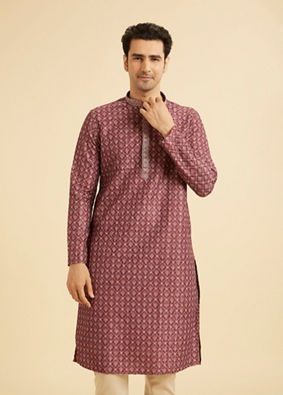
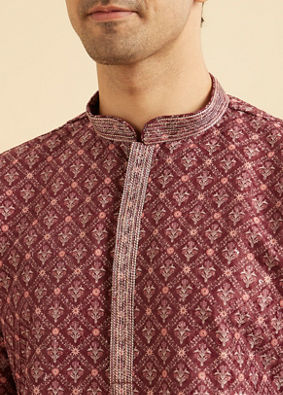
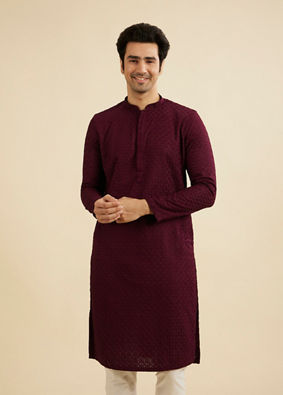
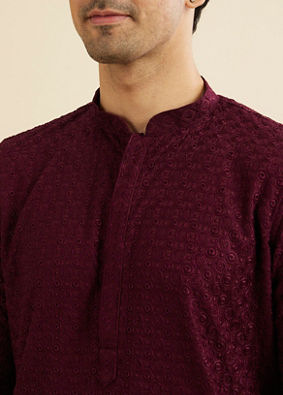
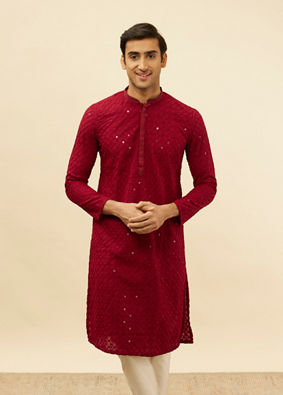
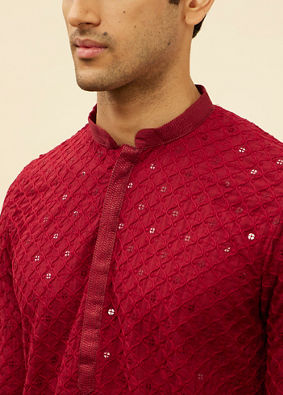
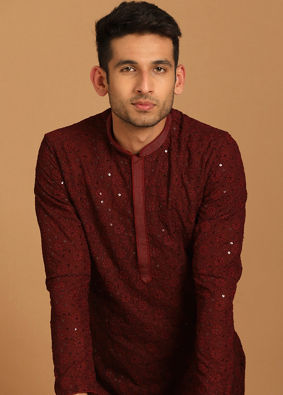
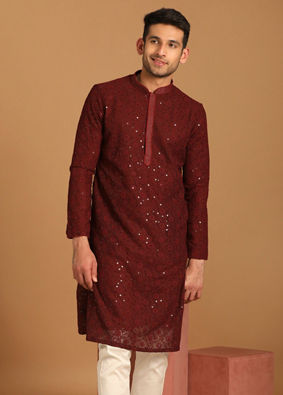
A long kurta in bright red, chilli-pepper red, or wine red, highlighted with chikankari threadwork and often a touch of sequins for extra sparkle. The silhouette usually stays straight or slightly tapered with a bandhgala neck, full sleeves, and side slits, paired with churidar or pyjama as a coordinated set.
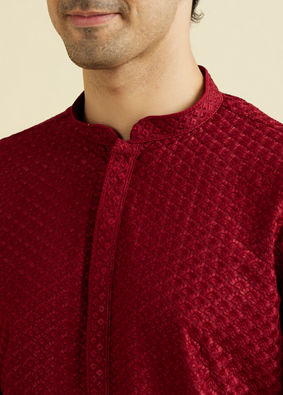
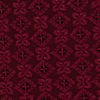
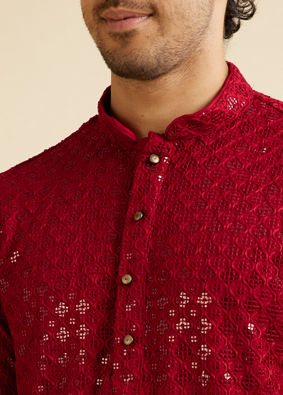
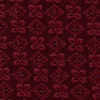
Unlike plain red kurtas, a red chikankari kurta uses floral and paisley motifs across the body, sleeves, and neckline, creating texture and interest even from a distance. This makes it instantly stand out in photos and under stage or décor lighting.
Why it works now
A red chikankari kurta feels right for today’s celebration mood because it combines colour impact with comfort. Red has always been a strong celebration colour, but heavy, stiff pieces can be tiring over long events; chikankari keeps the fabric lighter and easier to carry.
It also photographs beautifully—whether you’re at a haldi-meets-sangeet mashup, a cocktail function with fairy lights, or a friend’s engagement on a hotel terrace, this kurta holds its own without needing too many extra layers. For couples and cousins planning coordinated outfits, it also pairs nicely with gold, beige, and off-white palettes.
Fabrics and feel
Manyavar’s kurta options are designed to balance structure and drape so the embroidery shows clearly while staying comfortable for long hours. You’ll see:
-
Blended cotton bases that keep a kurta breathable and easier to wear across warm venues and crowded gatherings.
-
Viscose and other smooth blends, especially in wine kurta styles, that fall well and give a slightly dressier sheen.
-
Fabrics that support both chikankari threadwork and sequin work without becoming overly stiff, so the kurta still moves with you.
The overall feel of a kurta is meant to be soft on the skin with embroidery that lies flat, which helps when you’re sitting for rituals and then dancing later in the same outfit.
Fits, cuts, and embroidery details
A kurta keeps its shape clean so the work can stand out. Typical details include:
-
Straight or lightly tapered cuts ending around or just below the knee, flattering most body types.
-
Bandhgala necklines that frame the face and hold embroidery or detailing nicely at the collar.
-
Full sleeves with embroidery running across or concentrated near the cuffs for a balanced look.
The chikankari itself often features:
-
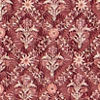
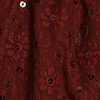
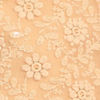
Floral vines and jaal-style patterns, sometimes all over the front and sleeves.
-
Paisley and buta motifs that repeat evenly, giving the kurta a cohesive, rich surface.
-
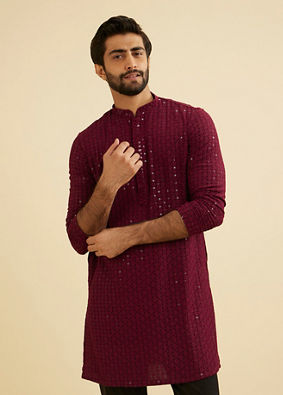
Sequin work subtly scattered within the embroidery so the kurta catches light as you move.
These details keep the kurta dressy enough for major functions even without heavy layering.
Shades of red and how they feel
Within the kurta space, different reds bring different moods. You’ll see:
-
Classic red kurta sets that feel vibrant and festive—ideal for weddings, pre-wedding events, and big family evenings.
-
Chilli pepper red floral chikankari embroidered kurta sets, which feel slightly edgy and modern, especially with sequins and detailed necklines.
-
Wine red kurta styles that feel deeper and more understated, perfect for evening cocktails, receptions, and slightly more formal functions.
Choosing between bright red and wine red kurta pieces often depends on the event’s vibe, your role, and how much you want your outfit to pop in the overall colour story.
When this outfit really shines
A red chikankari kurta naturally fits into high-energy, celebration-led moments. You can reach for it when you have:
-
Sangeet or cocktail nights where you want something colourful and detailed that still lets you move and dance easily.
-
Engagements, roka, or reception functions where a red kurta with the right styling feels smart and slightly regal.
-
Festivals like Diwali, Navratri, or special poojas where red feels auspicious, and chikankari keeps the look refined.
-
College or office celebrations—ethnic days, festive dinners, or team parties—when you want your outfit to stand out more than an everyday kurta.
Because the base is strong, a red kurta often becomes the hero piece in the outfit, with accessories and bottoms kept a little quieter.
How to make it your own
With styling, a kurta can swing from bold and festive to rich and slightly understated.
-
For a balanced festive look: Pair your kurta with off-white or cream churidar or pyjama to keep the focus on the embroidery. Add beige or tan juti or mojaris so the outfit stays cohesive from top to toe. Keep jewellery simple—a watch, kada, or small ring—letting the kurta do most of the talking.
-
For higher-impact wedding evenings: Choose a wine kurta with sequins and style it with slightly more structured bottoms and dressy footwear. Layer a neutral or tone-on-tone stole if the function is more formal or if you’re in the close friend or cousin circle.
-
For a younger, slightly experimental feel: Team a kurta with tapered trousers instead of only churidar, especially for college fest nights or music-led evenings. You can consider clean sneakers for informal functions, as long as the rest of the look is kept minimal.
Because red is already high-energy, you rarely need heavy extra colour; small metallic or neutral touches are usually enough around a kurta.
Why it’s a smart addition
A red kurta won’t be your everyday piece, but it will be the one you remember when a big invite lands. It’s the kurta you reach for when a plain style feels “too simple” and you want your outfit to match the excitement of the event. If you’re planning smartly, you might keep:
-
One classic kurta set for louder, more festive functions—sangeets, big Diwali parties, or close-friend weddings.
-
One wine kurta for slightly more formal, evening-leaning events.
-
A couple of neutral bottoms and 1–2 pairs of juti or mojaris to mix and match with other kurtas too.
With that, your kurta becomes a reliable “show-up in style” option that you can reuse across seasons and celebrations.
Frequently Asked Question (FAQs):
1. Where can I wear a red chikankari kurta?
You can wear the kurta for sangeets, cocktails, engagements, festivals like Diwali, and special office or college celebrations. It’s ideal whenever you want a more festive, high-energy look without heavy layering.
2. Is a red chikankari kurta comfortable for long events?
Yes, the kurta styles at Manyavar use blended cotton, viscose, and similar soft bases that stay comfortable through long ceremonies and dance-heavy evenings. The embroidery is designed to sit flat, so the fabric doesn’t feel overly stiff or scratchy.
3. How should a red chikankari kurta fit?
The kurta should sit cleanly on the shoulders with a straight, relaxed fall through the chest and waist, allowing you to move and sit easily. The length usually hits around the knee, with side slits that help during rituals and dancing.
4. What should I pair with a red chikankari kurta?
Neutral bottoms like cream, beige, or off-white churidars or pyjamas pair best with a kurta, along with beige or tan mojaris or juti. You can add a simple stole or light jewellery if the event is more formal.
5. Is a red chikankari kurta suitable for weddings?
A kurta is very suitable for weddings, especially for sangeet, mehndi, cocktails, or as a standout guest/cousin outfit. For grooms or very close family, richer wine red kurta styles with sequins can also be considered for select functions.

 Filter