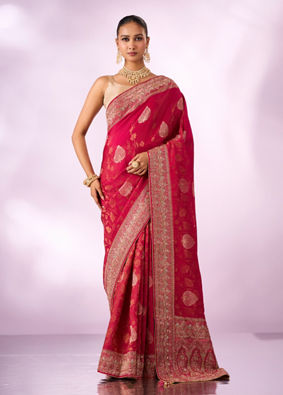
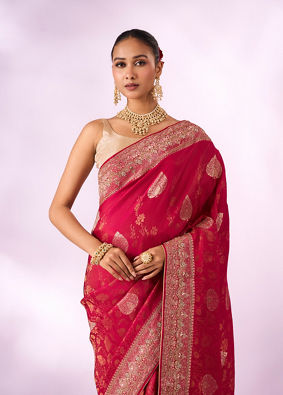
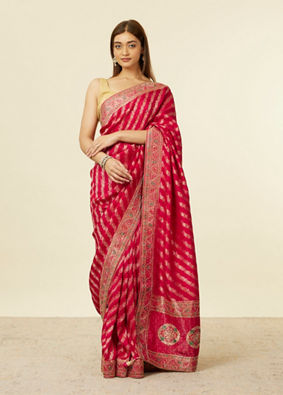
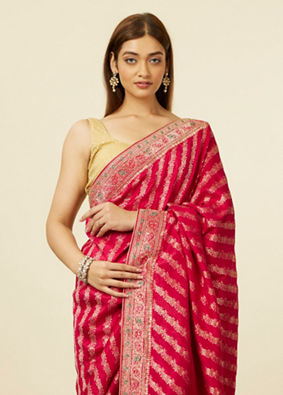
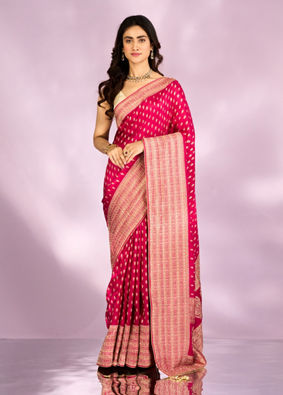
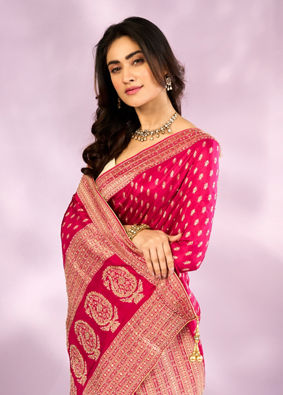
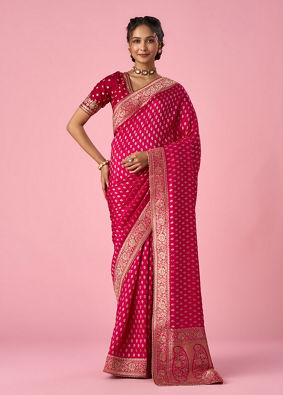
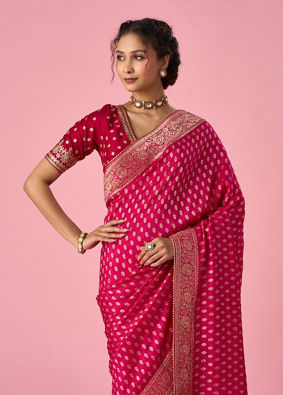
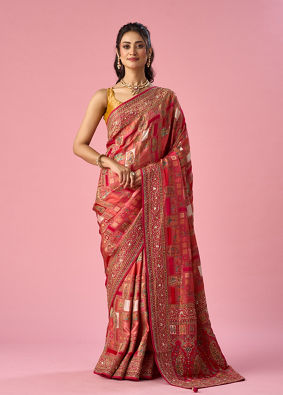
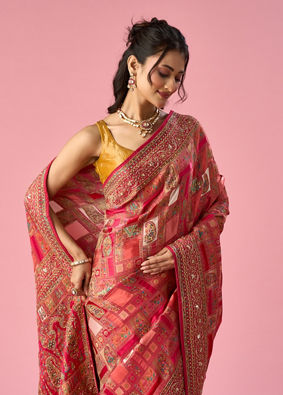
Every bride has a different vision. Some want the richness of scarlet satin or floral zari; some prefer intricate hand embroidery; others are drawn to rani pink, softer pinks or structured organza. This collection gives you room to honor your family traditions while choosing a color, fabric, and finish that feel unmistakably yours.
Begin with the ceremony that matters most, then choose the level of work, silhouette and color that will make you feel at ease—not only in photographs, but through every hour of the celebration.
Begin with your main moment
Your bridal saree should belong to the moment you will remember most. Whether it is the pheras, an intimate temple ceremony, the reception, or a post-wedding ritual, the setting helps determine the right fabric, color, and level of embellishment.
For pheras and the wedding ceremony
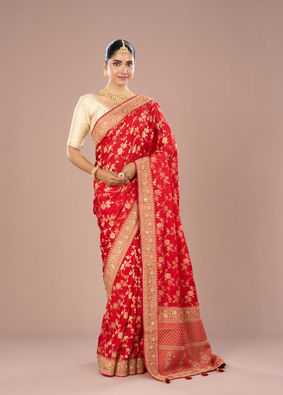
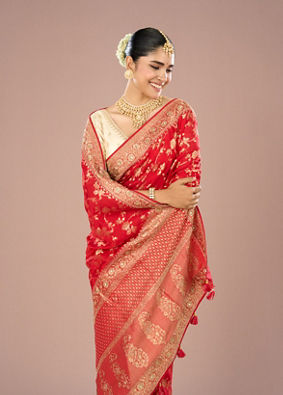
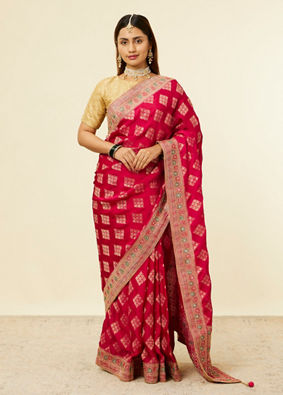
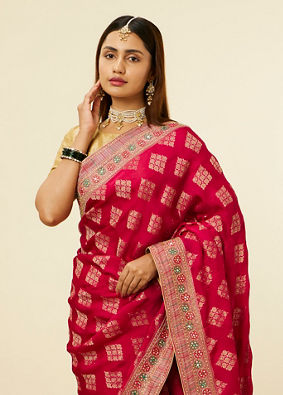
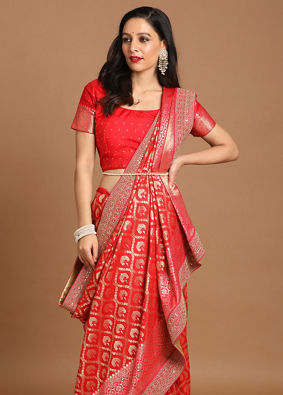
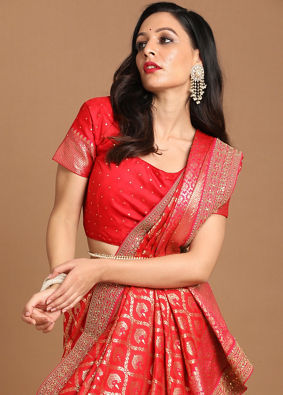
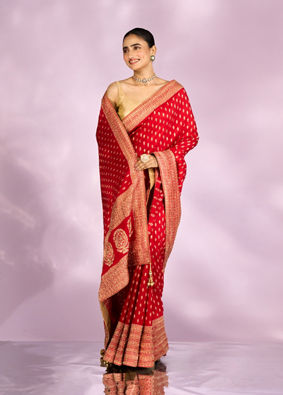
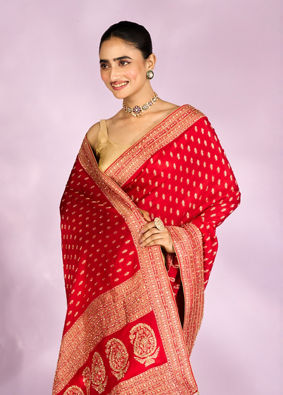
For pheras and the main ceremony, brides often choose a saree with a richer color, visible craftsmanship, and enough body to hold a formal drape through rituals, blessings, and photographs. Red remains a classic choice because it feels rooted, ceremonial, and immediately bridal.
The Radiant Red Elegance Saree suits this main-event role. Its red color provides the traditional bridal presence many brides want for pheras, while its elegant finish gives the look a polished, formal mood. Style it with gold or kundan jewelry, a secure drape, and a blouse that complements the saree without competing with it.
For a modern bridal ceremony
Some brides want the emotional weight of a bridal saree but prefer a more contemporary finish. Satin, softer colors, and controlled embellishment can add modern sensibility while retaining a sense of grandeur.
The Scarlet Satin Delight Saree brings this balance. Satin makes red look luminous and sleek, creating a bridal look that feels especially striking in evening photography or a contemporary venue. Pair it with statement earrings, a refined blouse, and a compact potli rather than excessive jewelry.
For an engagement or pre-wedding event
Engagements, roka ceremonies, and intimate family celebrations call for a lighter bridal direction. You can choose a pink or rani pink saree with intricate work, letting the look feel celebratory without using the full intensity of your main wedding saree.
The Pink Silk Saree with Hand Embroidery is a strong choice for this setting. Hand embroidery brings a sense of craftsmanship and occasion, while pink gives the outfit a romantic, joyful mood. Wear it with pearl, polki, or diamond-style jewelry for a softer finish than traditional wedding gold.
For the reception
Reception sarees can take a more fashion-led direction: organza, stone work, chiffon, georgette, sequins, and rani pinks are all natural options. Choose a saree that reflects light beautifully and allows you to move easily through greetings, dancing, and photographs.
The Exquisite Pink Organza Bridal Saree offers a structured, modern option for this moment. Its organza base creates a defined silhouette, while the pink tone keeps it bridal and celebratory. A sleek bun, statement earrings, and a sculpted pallu will keep the look polished from stage photographs to dinner.
For post-wedding rituals and celebrations
For griha pravesh, family lunches, and post-wedding rituals, a saree can still feel bridal without the same weight as the main ceremony. Choose a rich shade, moderate embellishment, and a comfortable drape that lets you move easily through a long day of family plans.
The Rani Pink Bel Buti Patterned Bridal Saree with Rhinestones is a suitable choice for this transition. Its rani pink tone and rhinestone work make it festive, while the patterned detail lets you restyle it for future wedding functions and celebrations.
The bridal color story
Bridal color is personal, but it also speaks to the mood of the ceremony. Red creates ceremony, pink brings romance, rani pink creates joyful presence, and wine gives a bride a richer, more unexpected direction.
Red, the ceremonial classic
Red remains a timeless choice for brides who want their saree to feel traditional, auspicious, and deeply connected to the wedding-day ritual. It also works beautifully in photographs, especially with gold jewelry and a richly detailed blouse.
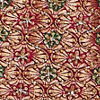
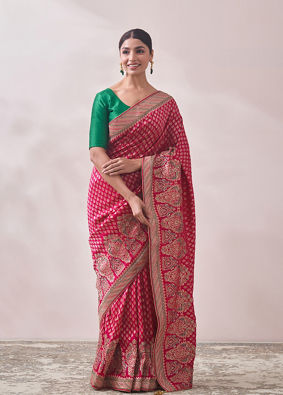
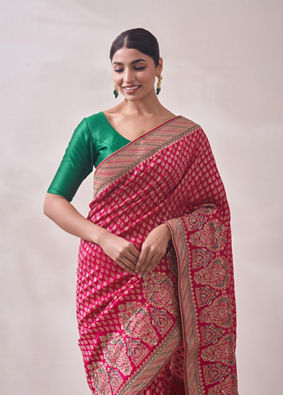
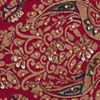
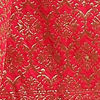
The Ruby Red Floral Zari Work Bridal Saree offers a more ornate red direction, combining floral zari work with a classic bridal shade. It is ideal for a bride who wants her saree to carry visible craftsmanship and tradition through pheras or a formal wedding ceremony.
Pink, romantic and graceful
Pink brings softness and romance to bridal dressing. From blush to brighter pink, it suits brides who want a color that feels joyful and feminine while still festive enough for a major celebration.
The Enchanting Pink Bridal Saree is a strong choice for brides who prefer this romantic direction. Style it with pearl, kundan, or rose-gold jewelry, depending on the saree's finish and the time of day of your event.
Rani pink, made for celebration
Rani pink is confident, vibrant, and instantly bridal. It is particularly effective for sangeet, reception, and wedding functions where you want color that stands out under lights and stays vivid in photographs.
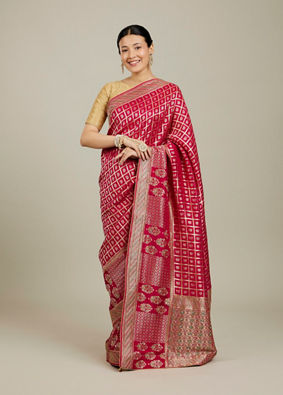
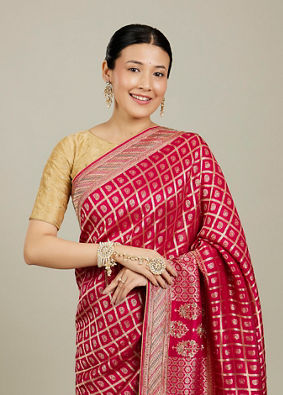
The Elegant Rani Pink Saree gives you a rich, color-led bridal look without needing a very dark palette. Pair it with gold jewelry for a traditional finish or diamond-style pieces for a reception-ready mood.
Wine, for a deeper bridal mood
Wine gives bridal dressing a warm, sophisticated alternative to red. It feels especially beautiful for evening ceremonies, receptions, and brides who want a jewel tone with depth and visual richness.
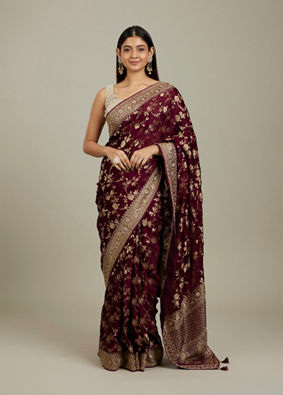
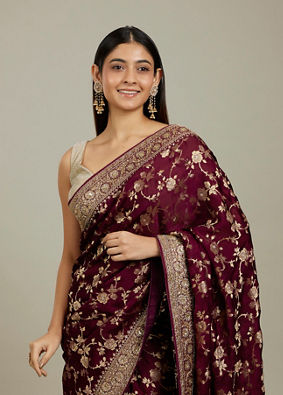
The Classic Wine Bel Buti Patterned Bridal Saree brings a traditional motif into this deeper color family. It is a beautiful option for an evening wedding event, styled with antique-gold jewelry, a defined eye look, and a low bun.
Craft that makes it bridal
A bridal saree earns its presence through detail. Hand embroidery, zari, rhinestones, stone work, thread work, and rich fabrics each create a different experience in person and in photographs.
Hand embroidery for heirloom detail
Hand embroidery brings depth, texture and a sense of individual craftsmanship to a bridal saree. It is particularly suited to brides looking for a saree that will feel special long after the wedding, whether preserved, re-styled, or passed on.
The Rani Silk Saree with Hand Embroidery strongly expresses this detail-led bridal style. Its rich rani shade and hand embroidery make it suitable for a main wedding function, reception, or a bride who wants her saree to be the central statement of the look.
Stone and thread work for light-catching drama
Stone and thread work bring sparkle and texture in a more structured, visible way. They are ideal for weddings and receptions where lighting and photography will highlight the saree’s surface detail.
The Red Organza Saree with Stone and Thread Work creates this balance. Organza holds a crisp silhouette, while stone and thread work bring ceremonial shine. Keep the blouse simple and choose one jewelry focus so the saree’s craftsmanship remains clear.
Rhinestones for reception radiance
Rhinestone details add a controlled, modern shimmer that is particularly flattering in reception and evening photography. They give a saree a celebratory finish while often keeping the drape lighter than a densely embroidered traditional saree.
The Dazzling Rani Pink Elegance Saree brings this kind of light-catching impact. It is ideal for a reception, cocktail, or post-wedding party, styled with diamond-style earrings, sleek hair, and a minimal metallic clutch.
Silk and satin for natural presence
Silk and satin create bridal richness through their texture and sheen. Silk feels more rooted and traditional, while satin has a smooth, contemporary glow. Both work beautifully for major events, depending on the mood you want.
Choose silk if you want a structured, heritage-led look for the main ceremony. Choose satin if you want clean lines, luminous color and a fashion-forward direction for a reception or modern wedding venue.
Complete the bride’s look
The bridal saree sets the foundation, but the blouse, jewelry, drape, and beauty choices make the look feel like yours.
The blouse
For heavily embroidered or stone-worked sarees, choose a clean, well-fitted blouse that lets the saree’s work remain visible. For simpler silk or satin sarees, a detailed sleeve, sculpted neckline, embroidered back, or contrasting blouse can add another layer of personality.
Red pairs naturally with gold, wine, maroon, and deep pink. Rani pink works beautifully with gold, antique gold, purple or tonal pink. Pale pink and organza can be styled with pearl, champagne, rose-gold or silver-toned blouses for a lighter finish.
Jewelry
Gold, kundan, polki and temple jewelry are natural partners for red silk, zari and traditional bridal sarees. Pearl and diamond-style sets work beautifully with pink, rani pink, organza and reception-oriented bridal looks.
Choose your main jewelry focus before you start styling. A large necklace, statement earrings, maang tikka, and bangles can all work together only when the saree and blouse are relatively controlled. If the saree has hand embroidery, rhinestones, or heavy stone work, select fewer pieces and let the craftsmanship lead.
Drape and veil
A classic Nivi drape is timeless for bridal sarees because it clearly shows the border and pallu. Secure the pleats and pallu with discreet pins so you can move confidently through rituals, photographs and greetings.
If you plan to add a dupatta or veil, choose one that frames the saree rather than covers it completely. A light net or tulle veil with a simple border can add bridal drama, while a heavily embellished veil works best with a more restrained saree.
Hair and makeup
For a traditional bridal look, choose a low bun, flowers, and warm-toned makeup with a red, berry, or rose lip. For a more contemporary reception look, a sleek bun or polished waves with defined eyes and luminous skin works beautifully.
Consider your saree color when choosing makeup: warmer reds and wines suit gold and bronze tones, while pink and rani pink work well with rose, berry, and soft gold shades. Trial the complete look with your jewelry before the event so every element feels balanced.
Build a bridal saree wardrobe
A wedding often includes more than one meaningful saree moment. Rather than choosing every piece at the same level of weight and embellishment, build a small wardrobe around the functions that matter most.
-
Main wedding ceremony: Choose a rich red or hand-embroidered silk saree with a traditional drape and heritage-led jewelry.
-
Engagement or roka: Choose a softer pink or hand-embroidered saree that feels romantic but lighter than the main bridal outfit.
-
Reception: Choose organza, satin, chiffon, or a rhinestone-detailed rani pink saree for more modern movement and evening shine.
-
Post-wedding rituals: Choose a patterned rani pink, wine, or lightly embellished saree that remains festive but offers greater comfort and repeat wear.
-
Future celebrations: Restyle your bridal sarees with a simpler blouse, lighter jewelry, or a different drape for anniversaries, sibling weddings, and major family occasions.
This approach gives every saree a distinct purpose, while ensuring your bridal wardrobe remains meaningful long after the wedding.
Preserve the memory
A bridal saree deserves thoughtful care because it is likely to become one of the most emotionally important pieces in your wardrobe.
Dry-clean it after the wedding, especially if it includes hand embroidery, zari, rhinestones, stone work, or a delicate fabric. Store it folded—not hanging—in a clean, dry place, wrapped in breathable muslin or soft cotton. Refold it occasionally to prevent permanent crease lines, and avoid direct sunlight, moisture, perfumes, and plastic storage covers.
A bridal saree can become an heirloom, but it can also remain part of your life right now. Bring it back for anniversaries, festive occasions and family weddings, styling it differently each time so its story keeps evolving.
Frequently Asked Questions (FAQs)
What makes a saree bridal?
A bridal saree usually combines a rich fabric or finish with detailed craftsmanship such as hand embroidery, zari, stone work, rhinestones, woven motifs, or a formal border. Beyond design, it is chosen for its cultural and emotional role in the wedding ceremony and its ability to create a memorable, ceremonial look
Which color is best for a bridal saree?
Red remains a classic bridal choice for its traditional and ceremonial significance, but pink, rani pink, wine, gold, cream, and modern pastel tones are also popular. The right color depends on your regional traditions, ceremony, venue, jewelry preference, and personal style.
Can I wear a pink bridal saree for pheras?
Yes. A pink bridal saree can be a beautiful choice for pheras, especially when it has rich silk, hand embroidery, zari, stone work, or a detailed border. Deeper pinks and rani pinks tend to offer more traditional visual presence, while blush and soft pinks create a lighter, modern bridal mood.
Which fabric is best for a bridal saree?
Silk is a traditional choice for main wedding rituals because it offers natural sheen, structure, and a ceremonial feel. Organza, satin, chiffon, and georgette are excellent for receptions, engagement events, and post-wedding celebrations, where lighter movement or a more contemporary silhouette may be preferred.
How should I style a bridal saree for a reception?
Choose a saree with light-catching detail—organza, satin, rhinestones, stone work or embroidery—and pair it with a structured blouse, statement earrings, a sleek hairstyle and a compact clutch. Keep the jewelry focused so the saree remains visible in evening photographs.
Can I rewear my bridal saree after the wedding?
Absolutely. Restyle it with a simpler blouse, lighter jewelry, a different pallu drape, or fewer accessories for anniversaries, family weddings, and festivals. Choosing a saree in a color and fabric you truly love makes repeat wear even more rewarding.
How should I store a bridal saree?
Dry-clean it after the event, then store it folded in a cool, dry place inside breathable muslin or cotton cloth. Do not hang it for long periods, especially if it is heavy or embellished. Refold it occasionally and protect it from moisture, perfume, direct sun, and plastic covers.
Traditional Dress for Women | Silk Saree | Mehendi Dress for Bride | Bride Dress for Engagement | Sangeet Dress for Bride | Wedding Dress for Women | Reception Dress for Bride | Bridal Lehengas | Designer Saree | Party Wear Saree

 Filter