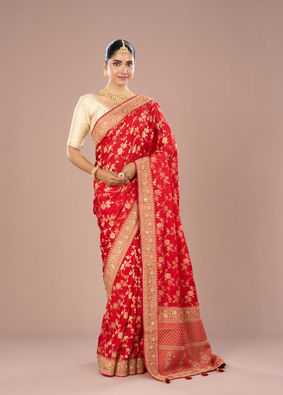
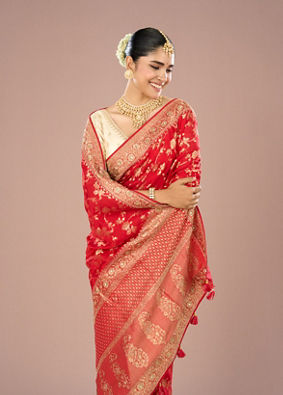
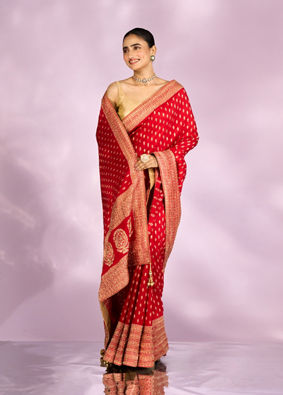
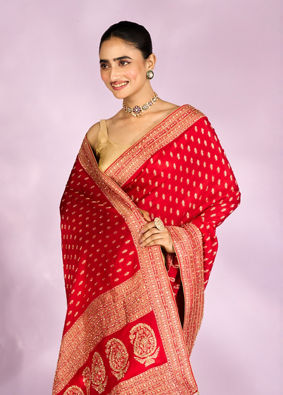
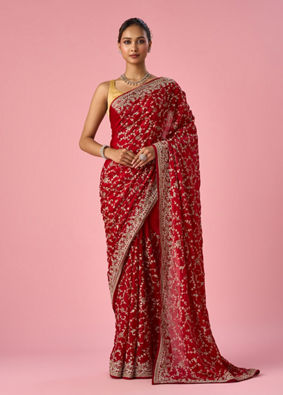
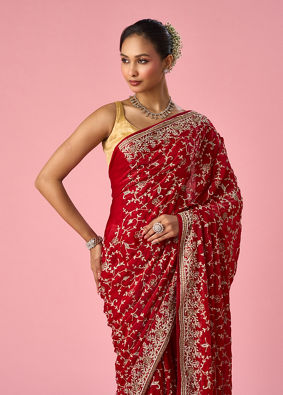
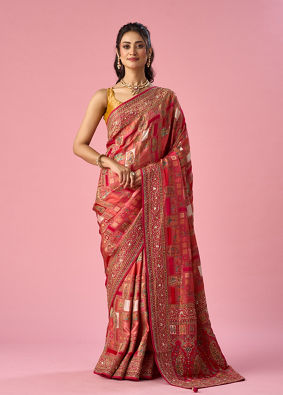
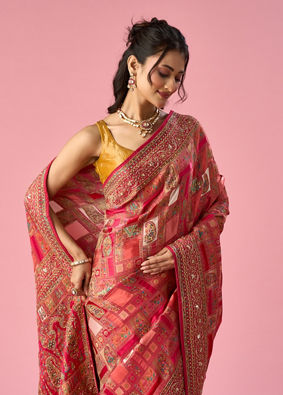
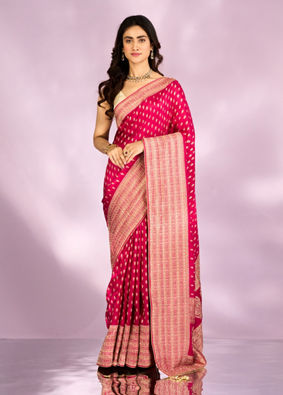
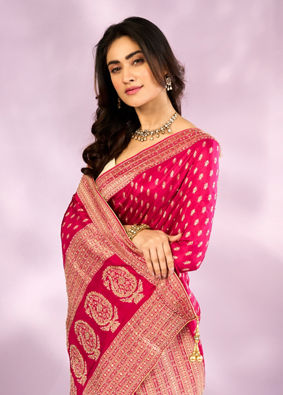
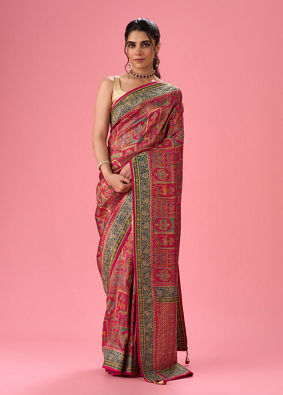
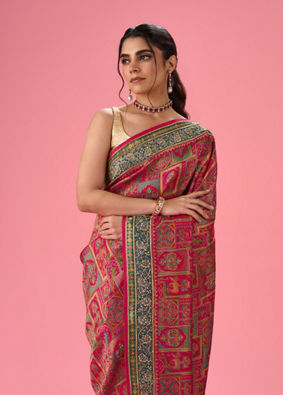
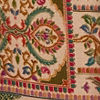
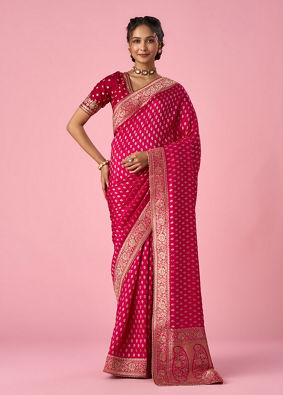
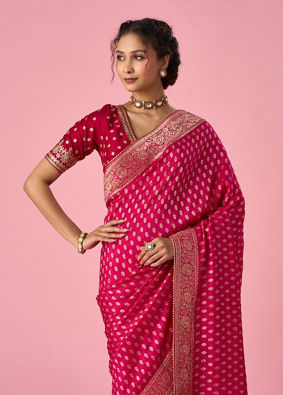
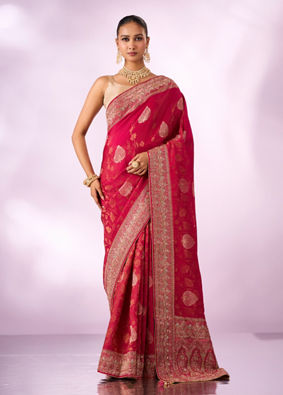
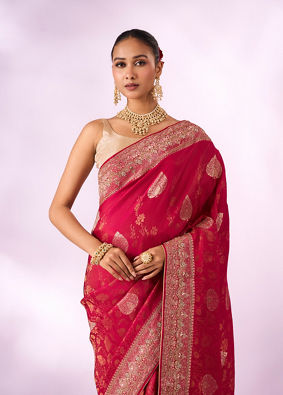
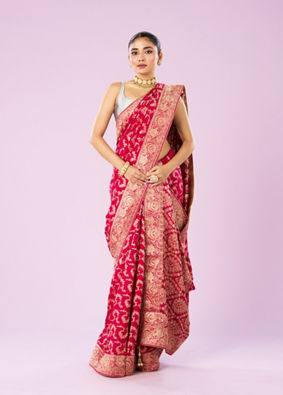
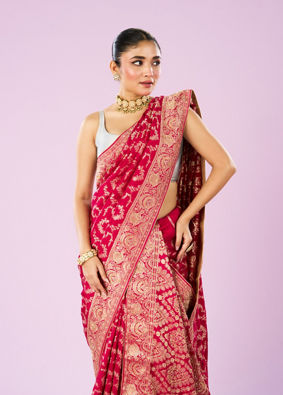
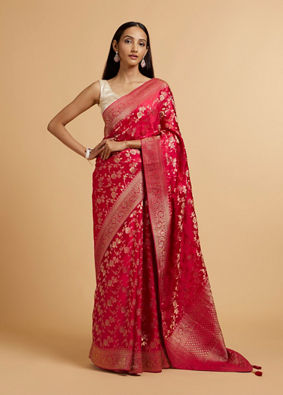
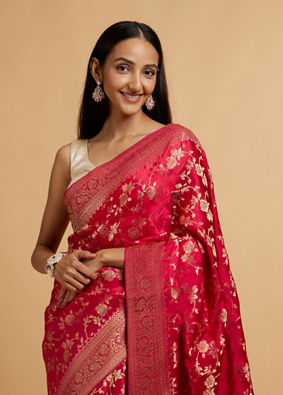
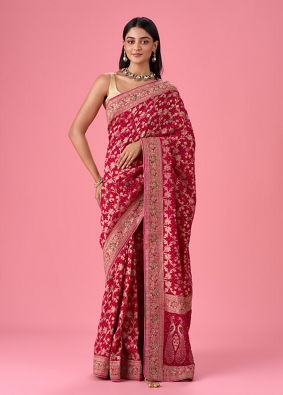
This page gathers Mohey’s sarees designed especially for brides—from customary reds and golds to softer, contemporary tones suited to different venues and ceremonies. Think of it as your bridal saree starting point before you explore the wider Mohey Wedding Collection, including bridal lehengas, reception outfits, and trousseau pieces that complete your celebration wardrobe
Bridal moments & sarees
Your bridal saree choices usually span more than one ceremony, and each moment asks for a slightly different mood.
-
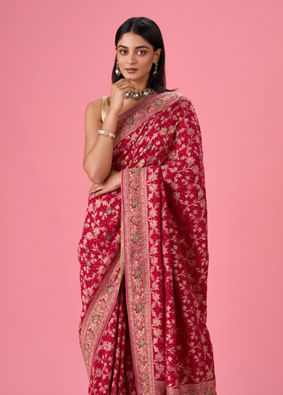
Pheras and temple weddings: This is where traditional silk and Banarasi bridal sarees shine—rich textures, woven borders, and classic motifs that feel at home around the sacred fire or in a temple mandap. Deep reds, maroons, and gold‑accented designs are a natural fit here, giving your main wedding look a timeless, ceremonial presence.
-
Reception and evening celebrations: For post‑wedding receptions, you can lean into slightly more contemporary bridal sarees—silk, organza, or tissue sarees with metallic accents, sequins, or statement pallus that hold their own under lights and in photographs. Jewel tones, elegant off‑whites with gold, or blush‑pinks can all work beautifully for this part of the night.
-
Smaller ceremonies and family rituals: Lighter bridal‑adjacent sarees in silk blends, georgette, or structured organza are ideal for pre‑wedding pujas, griha pravesh, and family gatherings. Here, you can experiment with softer colors and mid‑weight work so you stay comfortable while still looking distinctly bridal.
Bridal colors & their moods
Color is where bridal sarees speak the loudest—each shade carries its own symbolism and visual energy.
-
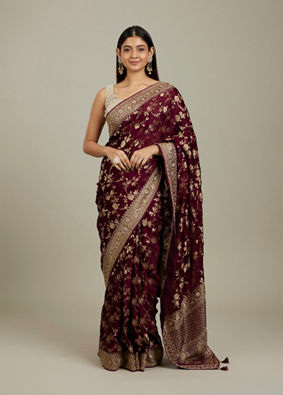
Traditional Reds and maroons: These are the classic bridal saree colors, symbolizing love, prosperity, and auspicious beginnings. In silk and Banarasi weaves, reds and maroons feel regal and rooted, making them the most common choice for pheras and temple weddings.
-
Golds, champagnes, and off‑whites: Neutral bridal tones with gold work create a sophisticated, almost heirloom feel. They’re perfect for receptions, day weddings in bright natural light, and venues where you want your jewelry and makeup to take center stage.
-
Pink and blush tones: From soft blush to deeper bridal pink, these colors are ideal for romantic, joyful energy with a slightly lighter feel than red. They work well across engagement, reception, and even pheras for brides who prefer a more modern palette.
-
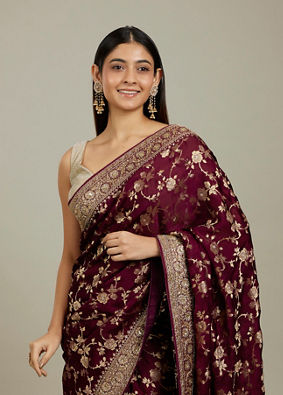
Jewel tones and modern hues: Deep wine, emerald, royal blue, or mustard can all make striking bridal sarees, especially when paired with rich zari and structured fabrics. These hues photograph beautifully and help your bridal look feel distinctive while still staying within the wedding color family.
Bridal fabrics & craftsmanship
Fabric determines how your bridal saree will drape, feel over long hours, and look on camera, while craftsmanship determines how special it looks up close.
-
Silk Saree: Pure and blended silk sarees offer natural sheen, structure, and a sense of ceremony that suits main wedding rituals. They hold pleats well, photograph beautifully, and pair effortlessly with heavy jewelry and traditional hair/makeup.
-
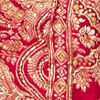
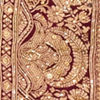
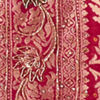
Banarasi bridal sarees: Banarasi weaves bring iconic Indian bridal motifs, intricate borders, and zari work that feels immediately heirloom‑worthy. These sarees are ideal for brides who want a deeply traditional look that can still be re‑worn for future ceremonies and family weddings.
-
Organza and tissue bridal sarees: Organza and tissue sarees are lighter yet dramatic, with crisp pallus and a subtle or metallic sheen. They’re perfect for reception looks, contemporary temple weddings, and venues where structure and shine matter in photos.
-
Georgette and embellished bridal sarees: Georgette bridal sarees and heavily embellished styles offer more fluid drapes with sequins, beads, and threadwork that catch light. They’re a good fit for brides who prioritize ease of movement, dance‑friendly receptions, or fusion looks across events.
Across this category, Mohey’s bridal sarees highlight zari, embroidery, and border detailing so even a single saree can anchor your main bridal look.
Styling your bridal saree
Once you choose your bridal saree, styling pulls everything together—from blouse design and jewelry to drape, hair, and makeup.
-
Blouse and jewelry
-
Blouse designs: For silk and Banarasi bridal sarees, classic blouses with rich sleeves, back detailing, and minimal trends age better in photographs and re‑wears. Organza and tissue sarees can pair well with more contemporary necklines or structured blouses that balance their light, airy feel.
-
Jewellery pairings: Temple jewelry, gold, kundan, and polki sets work beautifully with traditional red, maroon, and gold sarees. Diamond‑finish or mixed sets pair well with off‑whites, blush tones, and organza/tissue sarees for receptions and modern venues.
-
Drape, hair, and makeup
-
Drape: A classic Nivi drape suits most bridal sarees and keeps the focus on borders and pallu work. Slightly more structured pallus work well for organza and tissue, while softer drapes enhance georgette’s fluidity.
-
Hair and makeup: Rich reds and maroons pair well with warmer makeup tones—golden highlights, soft browns, and deep berry or red lips. Lighter sarees in off‑white, blush, or champagne look beautiful with dewy skin, softer eye looks, and rose or nude lips, letting your jewelry and saree details stand out.
Planning your bridal wardrobe
Most brides now plan a small set of key looks rather than just one outfit, and bridal sarees often anchor that plan.
-
How many bridal sarees do you need? Many brides choose one primary bridal saree for pheras or the main ceremony, plus one additional saree or lehenga for the reception or key pre‑wedding event. Others add a lighter saree for temple visits, griha pravesh, or post‑wedding family functions, keeping the bridal thread running through their celebrations.
-
Budget and priority: A common approach is to dedicate a significant share of the bridal wardrobe budget to the main wedding saree, then choose slightly lighter or more versatile pieces for other ceremonies. Silk and Banarasi sarees are strong investments because they can be re‑worn later for siblings’ weddings, anniversaries, and major festivals.
-
Coordinating with lehengas and other outfits: If you’re also choosing a Mohey bridal lehenga or pre‑wedding outfits, think about color flow: for example, a classic red or maroon saree for pheras, a jewel‑tone or softer neutral lehenga for the reception, and a lighter saree for intimate rituals. Repeating certain jewelry pieces across these looks can make the wardrobe feel cohesive without needing entirely separate sets
Frequently Asked Question (FAQs)
1. What is the best fabric for a main bridal saree?
Silk and Banarasi sarees are the most traditional and reliable choices for main wedding ceremonies because they offer rich texture, natural sheen, and strong structure for pleats and pallus.
2. Are lighter fabrics like organza or tissue suitable for brides?
Yes. Organza and tissue bridal sarees are ideal for receptions, modern venues, or brides who want a lighter, more contemporary look with crisp drapes and metallic or textured accents.
3. Do I have to choose a red bridal saree?
Red and maroon are classic bridal colors, but many brides now choose blush, gold, off‑white, jewel tones, or mustard, especially for receptions or certain regional traditions.
4. How can I make sure my bridal saree photographs well?
Look for fabrics with a balanced sheen (like silk, Banarasi, tissue, or organza) and details along the border and pallu that frame you in photos. Trying to see reels or real wedding images of similar sarees can help you understand how they look under different lights and camera angles.
5. Can I re‑wear my bridal saree after the wedding?
Absolutely. Many brides restyle their bridal sarees with simpler blouses and lighter jewelry for future weddings, festivals, or anniversaries. Choosing a fabric and color you genuinely love makes it easier to keep bringing that saree back into important family occasions.
6. How should I decide between a bridal saree and a bridal lehenga?
It often comes down to personal comfort, tradition, and venue; bridal sarees feel deeply rooted in many regional customs, while lehengas offer a more voluminous silhouette. Some brides choose a saree for the main ceremony and a lehenga for the reception, letting each outfit shine in its own moment.
Traditional Dress for Women | Silk Saree | Mehendi Dress for Bride | Bride Dress for Engagement | Sangeet Dress for Bride | Wedding Dress for Women | Reception Dress for Bride | Bridal Lehengas | Designer Saree | Party Wear Saree

 Filter